How to Choose a Heating and Air Conditioning System
How to choose a heating and air conditioning system, comparing furnaces, heat pumps, and mini-splits by climate, sizing, and efficiency rating.
How to Choose a Heating and Air Conditioning System
Choosing a heating and air conditioning system is one of the biggest home comfort decisions you will make, and it is easy to feel lost among the options: furnaces, heat pumps, central air, ductless mini-splits, and more. The right choice depends on your climate, your home's construction, your existing setup, and your budget. Getting it right means lower energy bills and reliable comfort for 15 years or more, so it is worth understanding the key factors before you buy.
The Main Types of Heating and Cooling Systems
Start by understanding the main system types:
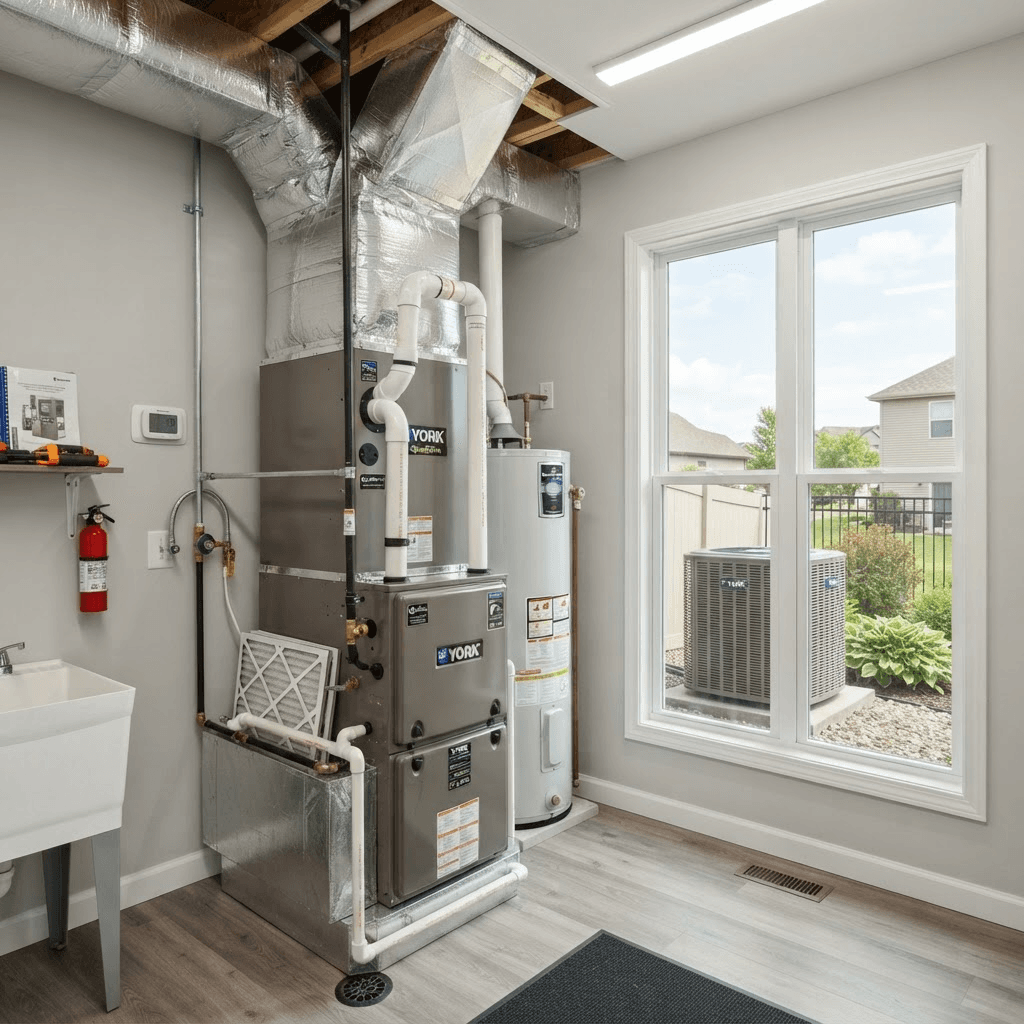
- Furnace plus central air conditioner: the classic combination. The furnace, gas, oil, or electric, provides heat while a separate AC unit provides cooling, both distributing conditioned air through ductwork.
- [Heat pump](/blog/what-is-a-heat-pump-and-thermostat-how-they-go-together): does both jobs in one system, moving heat into the home in winter and out in summer, and is highly efficient in mild and moderate climates.
- [Ductless mini-split](/blog/how-much-does-it-cost-to-install-a-mini-split-ac-system-cost-of-new-furnace-with-air-conditioner): delivers heating and cooling without ductwork, ideal for additions, older homes, or room-by-room zoned control.
- Packaged system: combines heating and cooling in a single outdoor unit, useful where indoor space is tight.
- Boiler with radiators or radiant floors: heats with hot water rather than forced air, common in older and colder-climate homes.
Knowing these categories frames every other decision you will make.
Match the System to Your Climate
Climate is the single most important factor in the decision:
- Hot climates: cooling efficiency dominates, and a heat pump or a high-efficiency AC paired with a modest heater often makes the most sense.
- Very cold climates: you need robust heating, so a gas furnace, or a cold-climate heat pump engineered to work at low temperatures, is usually the better fit.
- Mild or mixed climates: a standard heat pump often shines because it handles both moderate heating and cooling efficiently on a single system.
Match the system's strengths to the weather your home actually faces, not to a general rule of thumb, and you will avoid paying for capacity you never use.
Why Proper Sizing Matters
Proper sizing is where many installations go wrong, and it matters as much as the system type itself. A unit that is too small cannot keep up on the hottest or coldest days and runs constantly, wearing out early. A unit that is too large is worse than it sounds: it short-cycles, turning on and off rapidly, which wastes energy, fails to remove humidity, and stresses the equipment. A reputable contractor performs a load calculation (often called a Manual J) that accounts for your home's square footage, insulation, windows, orientation, and air leakage, rather than guessing from square footage alone.
Understanding Efficiency Ratings
Efficiency ratings tell you how much comfort you get per dollar of energy. Cooling efficiency is measured by SEER2 (Seasonal Energy Efficiency Ratio), heat-pump heating efficiency by HSPF2, and gas-furnace efficiency by AFUE (Annual Fuel Utilization Efficiency). Higher numbers mean lower operating costs. A more efficient unit costs more up front but pays back through lower monthly bills, and the payback is fastest in extreme climates where the system runs many hours a year. In mild climates, a mid-efficiency unit may make more financial sense.
Ductwork, Fuel, and Existing Infrastructure
Your existing setup shapes the decision. If your home already has good ductwork, a furnace-and-AC or ducted heat pump slots right in. If it has no ducts, or the ducts are leaky and hard to reach, ductless mini-splits can be far cheaper and more efficient than installing all-new ductwork. Fuel availability matters too: homes with natural gas service often favor a gas furnace for cold-climate heating, while all-electric homes and those adding solar lean toward heat pumps to run on clean, self-generated power.
Comfort Features Worth Considering
Beyond the basics, modern systems offer features that improve comfort and efficiency: variable-speed or two-stage compressors that run at partial capacity for steadier temperatures and quieter operation, smart thermostats that learn your schedule, and zoning systems that condition different areas of the house independently. These add cost but can dramatically improve day-to-day comfort and cut waste.
Insulate First, Then Size the System
The smartest money-saving move happens before you buy: seal and insulate your home first. A tighter, better-insulated house has a lower heating and cooling load, which lets you install a smaller, cheaper system that costs less to run for its entire life. Upgrading the envelope first and the equipment second is almost always the most cost-effective path to comfort.
Our whole-home upgrade sequencer is built around this idea, and will tell you whether insulation or the system itself should come first in your house.
Final Thoughts
Choosing a heating and air conditioning system comes down to matching the right type to your climate, sizing it correctly with a proper load calculation, weighing efficiency ratings against your local weather, and working with your existing ductwork and fuel. Take the time to get multiple quotes and insist on a load calculation rather than a guess. Done right, the system you choose will deliver dependable comfort and manageable energy bills for well over a decade.
For deeper detail on each system type mentioned here, browse our system selection guides.