How to Repair Your Furnace (Find Local Air Conditioning Replacements)
A guide to safe DIY furnace troubleshooting and when to call for repair or replacement.
How to Repair Your Furnace, and When to Consider AC Replacement
When your furnace quits on a cold day, the instinct is panic, but a surprising number of furnace problems have simple causes you can check yourself before calling for help. Knowing which issues are safe DIY troubleshooting and which demand a licensed technician saves you money on unnecessary service calls while keeping you safe around gas and electrical components. And since heating and cooling systems are often paired, it's worth understanding when a repair makes sense versus when it's time to replace.
Safe DIY Checks Before You Call for Help
Start with the safe, simple checks, because they solve a huge share of furnace no-heat calls:
- Confirm the thermostat is set to heat and above room temperature, and replace its batteries if it has them.
- Check the power switch is on and that no breaker has tripped.
- Look at the air filter. A clogged, dirty filter is one of the most common causes of poor heating and short-cycling, and replacing it is the easiest fix there is.
- For gas furnaces, make sure the gas supply is on.
These basic checks are completely safe and fix problems more often than people expect.
Basic Furnace Maintenance You Can Do Yourself
A dirty or neglected furnace causes many performance issues, so basic maintenance is legitimate DIY territory:
- Replace the filter regularly, typically every one to three months during heavy use.
- Keep the area around the furnace clear.
- Make sure supply and return vents throughout the house aren't blocked by furniture or rugs.
- Gently vacuum visible dust from around the unit to ensure good airflow.
Regular filter changes alone prevent a large fraction of the breakdowns technicians get called for.
Furnace Repairs to Leave to a Professional
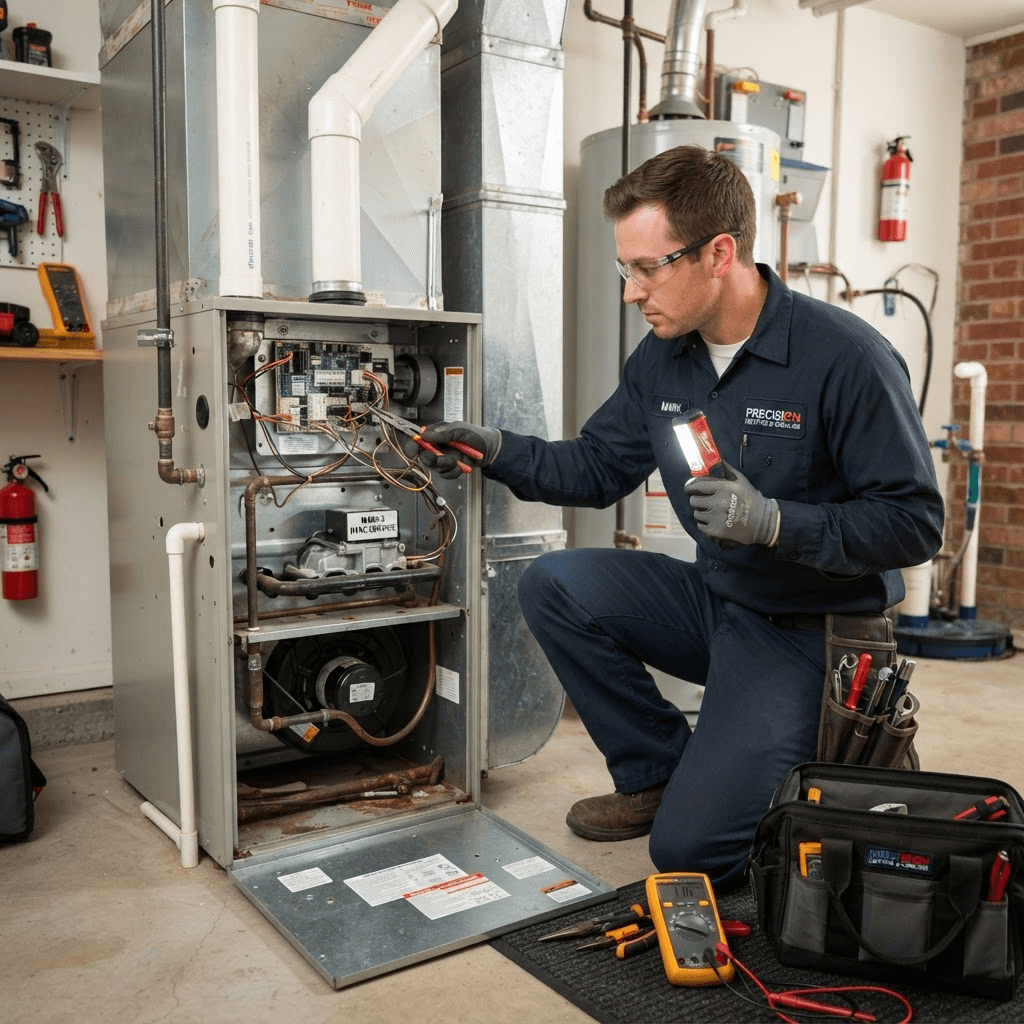
Knowing your limits is the most important safety rule with furnaces. Anything involving the gas line, the burners, the heat exchanger, the electrical wiring, or the ignition and control components should be left to a licensed HVAC technician, full stop.
A cracked heat exchanger can leak carbon monoxide, and improper gas or electrical work is genuinely dangerous. If you smell gas, leave the house immediately and call your gas company. And if you ever suspect a carbon monoxide problem, get out and call for help, which is exactly why every home with a furnace needs working CO detectors.
Warning Signs You Need a Furnace Technician
Call a professional when the simple checks don't restore heat, or when you notice warning signs:
- Strange noises, like banging or screeching.
- Frequent short-cycling that filter changes don't fix.
- A yellow, instead of blue, burner flame.
- Soot or rising energy bills.
- The furnace failing to ignite.
A technician can safely diagnose and repair ignition systems, blower motors, gas valves, and control boards. When you hire one, use the standard vetting, licensed, insured, well-reviewed, and get a clear estimate before major work begins.
When to Replace Your Furnace or AC Instead of Repairing
At some point repair gives way to replacement, and this is where the heating-cooling connection comes in. If your furnace is more than 15 to 20 years old, needs a very expensive repair, or breaks down repeatedly, replacement is often the smarter investment, and a new, high-efficiency system pays back through lower energy bills.
Because heating and air conditioning frequently share ductwork and are commonly replaced together, it's worth asking a contractor to evaluate both, especially if your AC is also aging.
Our furnace replacement checker weighs the age, repair history and symptoms of your system to make that call.
The Bottom Line
Get multiple quotes from licensed local HVAC companies, ask about properly sizing the new system and about efficiency rebates, and you'll turn an emergency breakdown into a well-planned upgrade that keeps your home comfortable for years.
If the furnace is part of a larger system decision, our furnace and heating repair guides cover replacement and sizing too.
Frequently Asked Questions
Is it worth repairing an old furnace or should I replace it? Repair usually makes sense when the furnace is under about 15 years old, the fix is affordable, and it has been reliable. Replacement becomes the smarter choice when the unit is aging, repairs are frequent or expensive, efficiency is low, or your energy bills keep climbing. A good rule of thumb is that if a repair costs more than a third of a new unit and the furnace is well into its life, replacement is often the better long-term value.
How long does a furnace last? Most furnaces last 15 to 20 years with regular maintenance. Gas furnaces tend to last longer than electric in terms of component wear, but annual servicing, clean filters, and good airflow are what really extend life. Once a furnace passes 15 years and starts needing repairs, it is wise to start budgeting for a replacement.
Can I replace just the furnace or do I need a new AC too? You can replace them separately, but pairing a new furnace with a matching air conditioner often improves efficiency, since the indoor and outdoor units are designed to work together. If your AC is also old, replacing both at once can save on labor and give you a properly matched, more efficient system.
How do I find a reliable HVAC contractor? Look for licensed, insured technicians with strong local reviews, ask for written estimates that spell out equipment and labor, and confirm they offer a warranty on both parts and workmanship. Getting multiple quotes helps you compare fairly and avoid overpaying for a furnace or AC replacement.