How to Restore Your Home From Water Damage (Find Local Contractors)
Here's what to do immediately, how the restoration process works, and how to find a trustworthy contractor fast.
How to Restore Your Home From Water Damage and Find a Local Contractor
Water damage is uniquely urgent among home disasters because it gets worse by the hour, not the day. Whether from a burst pipe, an overflowing appliance, a roof leak, or a flood, standing water and lingering moisture quickly ruin materials and, within a day or two, invite mold. Knowing what to do in the first hours, how professional restoration works, and how to find a trustworthy contractor fast can be the difference between a manageable repair and a devastating, mold-ridden mess.
Step 1: Prioritize Safety and Stop the Source
Your first priority is safety and stopping the source:
- If the water could be near [electrical outlets or wiring](/blog/how-to-find-local-electricians-electrician-job-and-salary-explained), shut off the power to the affected area before entering, and stay out of any deep or contaminated water.
- Stop the water at its source if you safely can, shutting off the main water supply for a burst pipe or overflowing fixture.
Be aware that water is categorized by how contaminated it is, from clean supply-line water to gray water from appliances to dangerous black water from sewage or flooding, and the dirtier categories require professional handling and protective equipment.
Step 2: Act Fast in the First 24 to 48 Hours
Once it's safe, act fast to limit the damage, because the first 24 to 48 hours are critical:
- Document everything thoroughly with photos and video before you move or remove anything, since your insurance company will need this evidence.
- Remove standing water with a wet vacuum, mop, or buckets.
- Move furniture, rugs, and valuables out of the wet area to dry.
- Open windows and run fans, and a dehumidifier if you have one, to start drying the space.
This quick response significantly reduces both the damage and the chance of mold taking hold.
Step 3: Contact Your Insurance Company Early
Contact your insurance company early, ideally right after documenting the damage. Many homeowners policies cover sudden, accidental water damage, though typically not gradual leaks or flooding, which needs separate flood insurance, so report the claim promptly and ask what your policy covers and what documentation they require.
Keep records of everything: damaged items, your mitigation efforts, and any receipts. Good documentation and early communication make the claims process far smoother and improve what you'll be reimbursed.
Step 4: Know When to Call in Professional Restoration
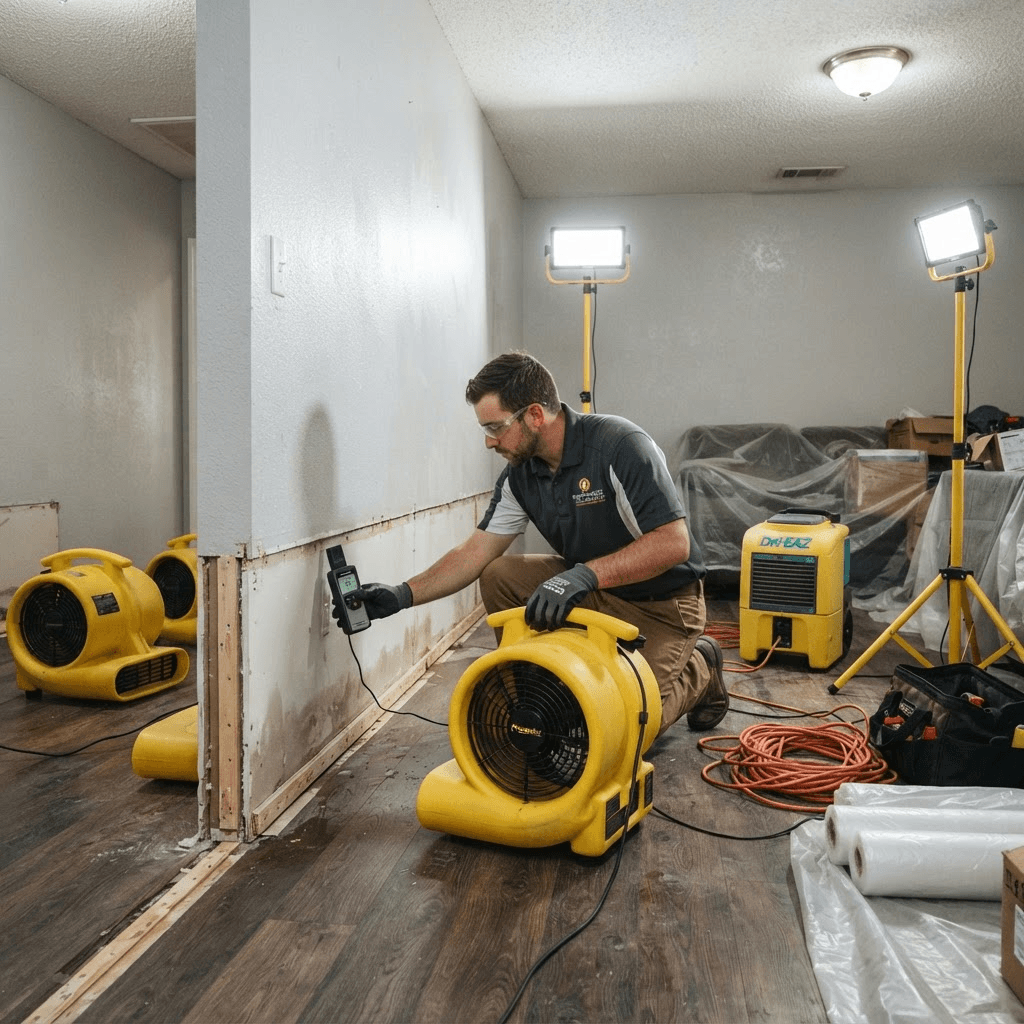
For anything beyond a small, clean spill, professional water damage restoration is worth it, because pros do what DIY can't. Restoration companies use industrial extractors, high-powered air movers, and commercial dehumidifiers, plus moisture meters to find water hidden inside walls, floors, and ceilings that you'd never detect on your own.
Their process typically runs:
- Inspection and assessment
- Water extraction
- Structural drying and dehumidification
- Cleaning and antimicrobial treatment
- Repairs and restoration
Hidden moisture is exactly what causes mold and rot weeks later, so thorough professional drying is the key to a safe recovery.
How to Find and Vet a Water Damage Restoration Contractor
Because the situation is urgent, finding a good contractor fast matters, but don't skip vetting:
- Many restoration companies offer 24/7 emergency service, so search for local, well-reviewed firms and call several.
- Ask friends, neighbors, or your insurer for referrals, since insurers often have preferred providers.
- Confirm each is licensed, insured, and certified in water damage restoration, look for IICRC certification.
- Ask about their emergency response time, their process, and whether they work directly with insurance.
- Get the scope and estimate in writing, and be wary of anyone demanding large upfront cash payments or pressuring you to sign over your insurance claim.
The Bottom Line
Move quickly, but choose a certified, reputable, insured professional, and you'll restore your home safely and thoroughly while keeping mold and long-term damage at bay.
For more on vetting the trades you will be hiring under pressure, see our restoration contractor guides.
Frequently Asked Questions
What should I do first after water damage? Safety comes first: shut off the water source and, if needed, the electricity to affected areas, then stop the flow and remove standing water quickly. Document everything with photos for insurance, move valuables to dry areas, and begin drying immediately. The faster you act, the less secondary damage and mold you will face.
How do I choose a water damage restoration contractor? Look for licensed, insured, and certified restoration companies with fast response times, good reviews, and experience working with insurance claims. Confirm they use professional extraction and drying equipment and moisture meters, and get a clear written scope of work. In an emergency, availability and speed matter, but do not skip verifying credentials.
Will insurance cover the restoration cost? Coverage depends on the cause. Sudden, accidental events like a burst pipe are typically covered, while gradual leaks and outdoor flooding often are not (flooding usually needs separate coverage). A reputable restoration contractor can help document the damage and work directly with your insurer, but always confirm what your policy includes.
Can water-damaged materials be saved? Some can. Structural elements, hardwood, and furniture caught and dried quickly may be salvageable, while porous materials like soaked drywall, insulation, and carpet padding often must be removed to prevent mold. Professionals assess what can be dried versus what must be replaced, prioritizing your health and preventing hidden long-term damage.