Low Pile Carpet vs Plush Carpet (Different Carpet Types Explained)
Low pile vs plush carpet explained, plus cut pile, loop pile, and Berber construction types, so you can match the right carpet to each room.
Low Pile Carpet vs. Plush Carpet: Carpet Types Explained
Shopping for carpet quickly reveals that "carpet" is really a whole family of very different products. The single biggest factor in how a carpet looks, feels underfoot, and holds up over time is its pile, the height and construction of the fibers. Understanding pile, especially the difference between low pile and high or plush pile, along with the main construction types, fiber choices, and padding, makes it far easier to choose the right carpet for each room instead of being overwhelmed by showroom options. This guide breaks down every major carpet type so you can match the right product to the right space and budget.
What Is Carpet Pile?
Pile height simply refers to how long the carpet fibers are, and pile construction refers to how those fibers are attached to the backing.
- Low pile carpet has short, dense, tightly packed fibers, giving it a flat, firm surface, usually under about a quarter inch tall.
- High pile (plush) carpet has longer, looser fibers that create a soft, deep, luxurious feel, often half an inch or more.
This one difference drives most of the practical trade-offs, so it is the first thing to consider based on where the carpet will go and how much traffic and mess it will see. Everything else, fiber, density, and padding, builds on this foundation.
Low Pile Carpet: Pros and Best Uses
Low pile carpet is the workhorse for busy areas. Because its fibers are short and dense, it is durable, resists crushing, and is much easier to clean and vacuum, since dirt stays near the surface rather than sinking deep into the fibers. Vacuums also roll smoothly over it and pull debris out more effectively.
It is also more stain- and traffic-resistant, which makes it ideal for hallways, stairs, home offices, playrooms, and homes with kids or pets. Low pile carpet also works well under rolling office chairs and in rooms where furniture moves frequently, because the dense surface does not snag or flatten as easily.
The trade-off is comfort: low pile feels firmer and less cushiony underfoot and looks a bit more utilitarian than a soft, deep carpet. If plushness is your top priority, a low pile may feel too thin.
Plush Carpet: Pros and Best Uses
Plush or high pile carpet is all about comfort and luxury. Those longer fibers feel wonderfully soft and warm, making high pile a favorite for bedrooms, living rooms, and other low-traffic spaces where coziness matters more than heavy-duty durability. It also provides better insulation and sound absorption, making rooms quieter and warmer.
The downside is maintenance: longer fibers trap dirt and debris deeper in the pile, show footprints and vacuum tracks, and can crush or matt in high-traffic paths over time. Plush carpet generally needs more frequent, thorough vacuuming and benefits from professional deep cleaning to stay looking its best.
Carpet Construction Types
Beyond pile height, carpet is made in two broad construction styles, cut pile and loop pile, and several popular variations within each:
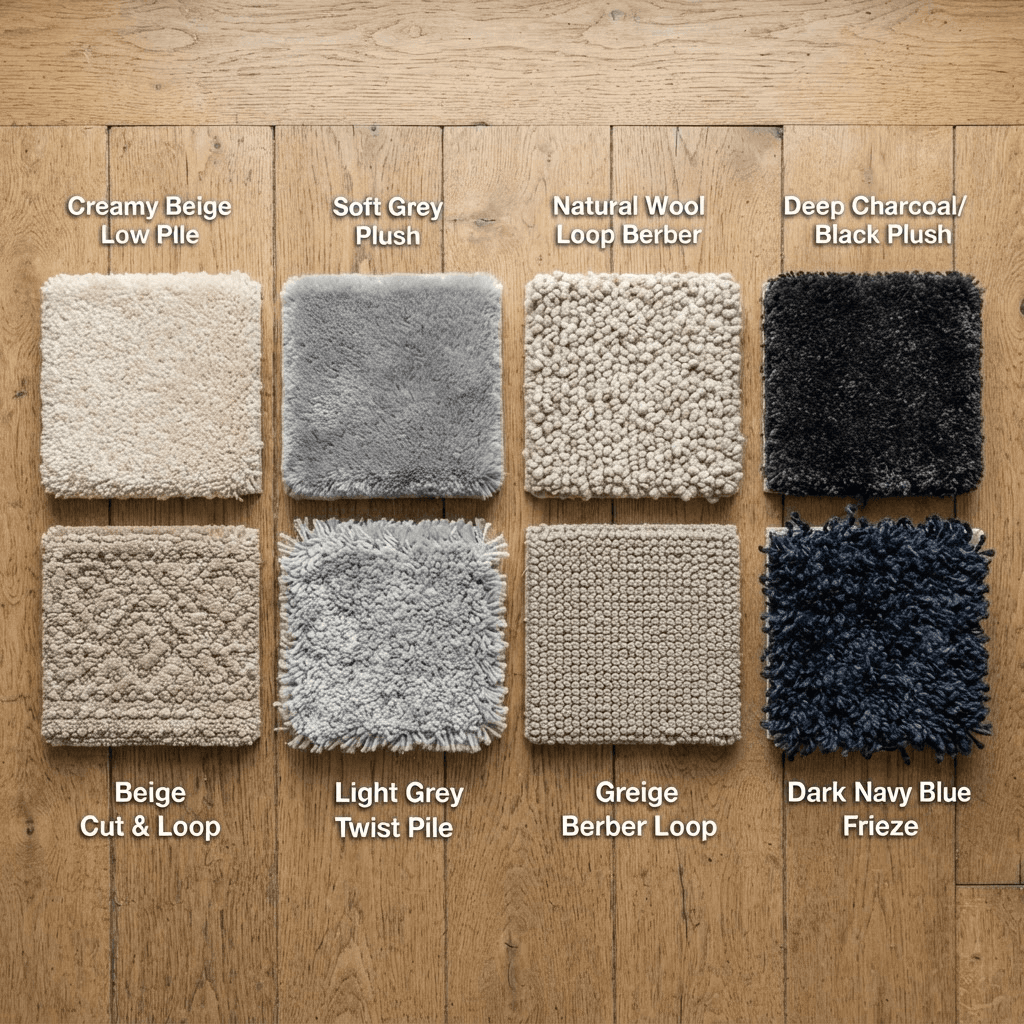
- Cut pile has the fiber loops sheared at the top, creating an upright, soft surface. Common cut-pile styles include plush/velvet (smooth and formal), saxony (dense and slightly twisted), and frieze (tightly twisted, casual, and great at hiding footprints).
- Loop pile leaves the fibers as uncut loops, which is extremely durable. Berber is the best-known loop carpet, prized for hiding dirt and resisting crushing.
- Cut-and-loop combines both to create patterns and texture that hide wear and add visual interest.
Choosing a construction style is really about balancing softness against durability for the room in question.
Carpet Fiber Types
The fiber a carpet is made from affects durability, stain resistance, feel, and price:
- Nylon is the most popular, durable, resilient, and good for high-traffic areas, though it can be more expensive.
- Polyester (PET) is soft, stain-resistant, and budget-friendly, but less resilient under heavy traffic.
- Olefin (polypropylene) resists moisture and fading, making it common in basements and outdoor settings.
- Wool is the premium natural option, soft, durable, and naturally stain-resistant, at a higher cost.
Matching fiber to use is just as important as matching pile height.
Do Not Forget the Padding
Carpet padding is the hidden layer that dramatically affects comfort and lifespan. Good padding cushions your steps, insulates the room, absorbs sound, and protects the carpet backing from wear. Denser, firmer padding is best under low pile carpet in high-traffic areas, while slightly thicker padding suits plush carpet in bedrooms. Skimping on padding shortens the life of even an expensive carpet, so treat it as part of the purchase, not an afterthought.
Room-by-Room Recommendations
- Bedrooms: plush or saxony cut pile for softness and warmth.
- Living rooms: a durable cut pile or frieze that balances comfort and wear.
- Stairs and hallways: low pile or dense loop for maximum durability.
- Basements: olefin loop pile for moisture resistance.
- Home offices and playrooms: low pile for easy cleaning and chair movement.
Cost and Value Considerations
Carpet is priced per square foot, and total cost includes the carpet, padding, and installation. Low pile and synthetic fibers tend to be more affordable, while plush wool carpets sit at the premium end. When comparing prices, factor in longevity, a durable nylon low pile in a busy area may cost more upfront but outlast a cheaper option that mats and wears quickly. Always measure carefully and add a bit extra for waste and seams.
Final Thoughts
The choice between low pile and plush carpet comes down to how a room is used. Low pile wins on durability and easy cleaning for busy, messy spaces, while plush carpet delivers unmatched comfort in quiet rooms. By also weighing construction type, fiber, and padding, you can select a carpet that looks great, feels right, and lasts for years in every room of your home.
For how carpet stacks up against hard surfaces room by room, see our carpet selection guides.