Waterproof Flooring Explained (Luxury Vinyl Plank vs Luxury Vinyl Tile)
Waterproof flooring has transformed what's possible in kitchens and baths. A guide to how it works, plus luxury vinyl plank vs. luxury vinyl tile.
Waterproof Flooring Explained (Luxury Vinyl Plank vs. Luxury Vinyl Tile)
Waterproof flooring has transformed the way homeowners approach kitchens, bathrooms, basements, and busy living areas, delivering the look of wood or stone with none of the worry about spills, moisture, and humidity. At the center of this revolution are two closely related products: luxury vinyl plank (LVP) and luxury vinyl tile (LVT). Understanding what makes them waterproof, how they differ, and where each shines helps you choose the right floor for every room in your home.
What Makes Flooring Waterproof?
True waterproof flooring is made from materials that water simply cannot damage, unlike traditional hardwood or laminate, which swell, warp, and delaminate when exposed to moisture. Luxury vinyl products are built on a plastic (PVC) core that does not absorb water, so spills, splashes, and humidity roll right off without harming the floor. This is why waterproof vinyl has become the go-to choice for spaces where water is a constant threat, and why it can be installed in places where wood and laminate should never go.
Luxury Vinyl Plank (LVP)
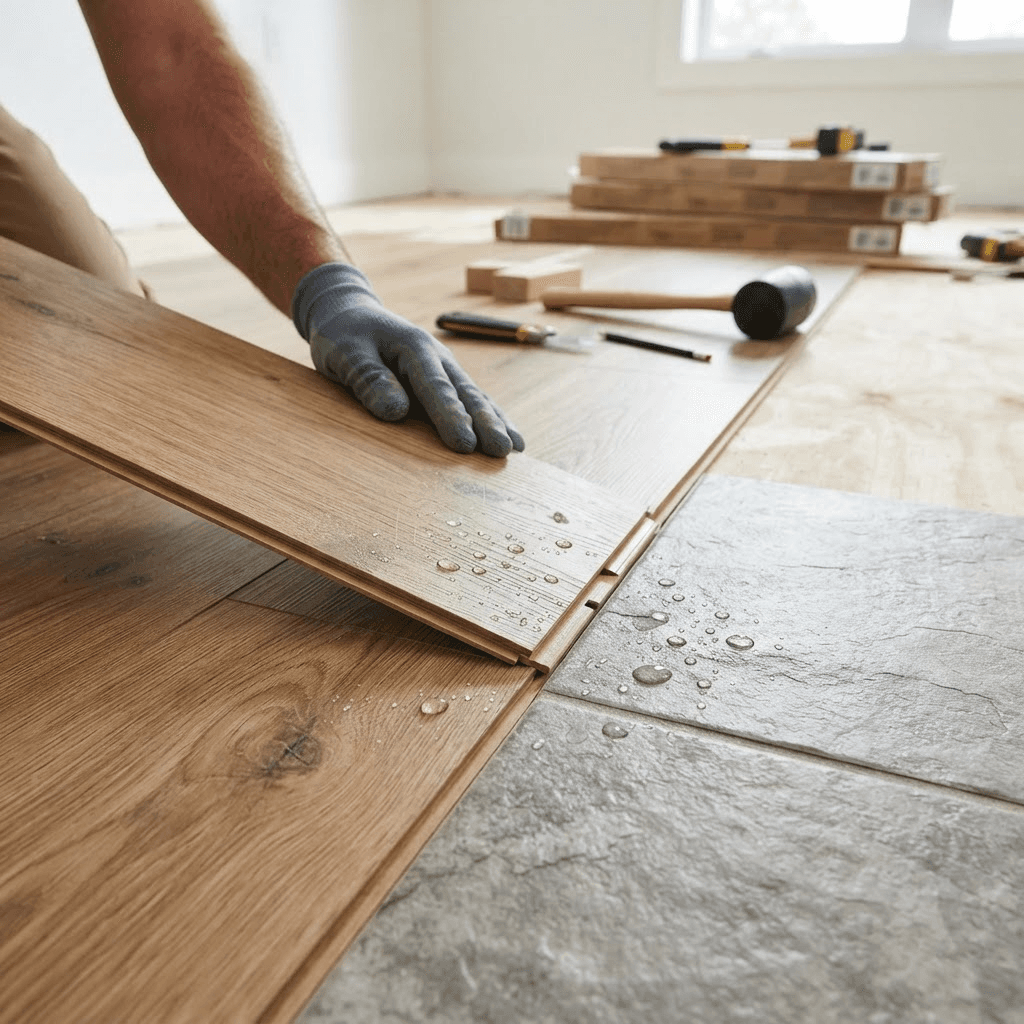
Luxury vinyl plank is designed to look like hardwood flooring. It comes in long, narrow planks that mimic the size, grain, and texture of real wood boards, and modern printing and embossing technology makes the effect remarkably convincing, complete with realistic grain lines and a textured surface you can feel. LVP is ideal for anyone who wants the warm, classic look of wood floors throughout the home but needs the durability and water resistance that real wood cannot offer. It is especially popular in open-concept living spaces, kitchens, and hallways.
Luxury Vinyl Tile (LVT)
Luxury vinyl tile is the same core technology in a different shape and style: it is designed to look like ceramic tile or natural stone. LVT comes in squares or rectangles that replicate the appearance of marble, slate, travertine, or classic tile, often with the option to install it with grout lines for an even more authentic stone-tile look. LVT is a favorite for bathrooms, laundry rooms, entryways, and anywhere you want the elegant look of stone or ceramic without the cold, hard, and sometimes slippery feel of the real thing.
LVP vs. LVT: The Key Difference
The core difference between the two comes down to appearance and format, not performance:
- LVP mimics wood and comes in long planks.
- LVT mimics stone or ceramic tile and comes in squares or rectangles.
Both share the same waterproof PVC core, similar durability, and similar installation methods, so the choice between them is largely aesthetic. Many homeowners even mix the two, using wood-look LVP in living areas and stone-look LVT in bathrooms, for a cohesive yet varied look throughout the home.
Why Homeowners Love Vinyl Flooring
Beyond being waterproof, luxury vinyl offers a compelling list of benefits:
- Durability: a tough wear layer resists scratches, dents, and stains, standing up to kids, pets, and heavy traffic.
- Comfort: it is warmer and softer underfoot than tile or stone, and quieter to walk on.
- Easy maintenance: it cleans up with a simple sweep and damp mop, no sealing or special products required.
- Easy installation: many products use a click-lock floating system that snaps together over most existing floors, making it DIY-friendly.
- Value: it delivers a high-end look at a fraction of the cost of the real wood or stone it imitates.
Understanding the Layers and Wear Layer
Quality vinyl flooring is built in layers: a backing layer, a rigid or flexible core, a printed design layer that creates the wood or stone look, and a clear wear layer on top that protects against scratches and wear. The thickness of that wear layer is the single most important indicator of durability, thicker wear layers hold up better in high-traffic areas and homes with pets. You will also see products labeled SPC (stone plastic composite) and WPC (wood plastic composite), which describe the rigidity and feel of the core; rigid SPC cores are especially dent-resistant and stable.
Where to Use Each
Match the product to the room for the best results. Use LVP in living rooms, bedrooms, hallways, and open-concept spaces where a warm wood look ties everything together. Use LVT in bathrooms, laundry rooms, mudrooms, and entryways where a stone or tile look suits the space and moisture is heaviest. Both perform beautifully in basements and kitchens, precisely the rooms where traditional wood and laminate struggle, thanks to their waterproof cores and stability in humid, temperature-variable environments.
Final Thoughts
Waterproof flooring, led by luxury vinyl plank and luxury vinyl tile, gives homeowners the best of both worlds: the beautiful look of wood or stone with total resistance to water, plus durability, comfort, and easy care. The choice between LVP and LVT is mostly about style, planks that look like wood versus tiles that look like stone, while both share the same worry-free, waterproof performance. Whether you floor a single bathroom or your entire home, luxury vinyl is a smart, versatile, and cost-effective way to get a floor that looks great and lasts.
If you are still deciding room by room, our flooring comparison guides weigh vinyl against carpet, tile, and hardwood.