Solar Panel Kits: Should you do it yourself
Thinking about a DIY solar panel kit? Here's what's actually included, where the real savings come from, and how to know if DIY is right for you.
Solar Panel Kits: Should You Do It Yourself?
Solar panel kits have made do-it-yourself installation genuinely possible for handy homeowners, and the appeal is obvious: skip the installer's labor and permitting markup, and you could save a meaningful chunk of the total cost. But DIY solar is not the same as assembling flat-pack furniture.
Before you order a kit, it's worth understanding exactly what you'd be signing up for, and being honest about whether it's the right move for you.
What Is a Solar Panel Kit?
A solar panel kit is a bundled package containing most of what you need for an installation, typically:
- Panels
- An inverter or microinverters
- Mounting hardware
- Wiring
Kits are sold together and sized for a target output, ranging from small off-grid setups for a cabin or RV to full grid-tied systems meant to power a house. The idea is to give you a coordinated set of compatible components rather than making you source each part separately.
Where the DIY Solar Savings Actually Come From
The savings are real, and they come mostly from labor. Installation and related soft costs — permitting, sales, overhead — can account for a large share of a professionally installed system's price.
Do the physical work yourself and you keep that portion, which is why DIY kits can look dramatically cheaper on paper. For an experienced, motivated homeowner, that difference can add up to thousands of dollars.
What You're Responsible for as a DIY Installer
The savings come with a stack of responsibilities that installers normally handle. You become the project manager, responsible for:
- Design of the system
- Permits, which most jurisdictions require for a grid-tied system
- Plans that meet electrical code
- A utility interconnection agreement before you're allowed to connect anything
Navigating that paperwork is often the hardest part of DIY, harder than the physical installation.
The Physical Work: Roofing and Electrical Risk
The actual work is a mix of construction and electrical trades:
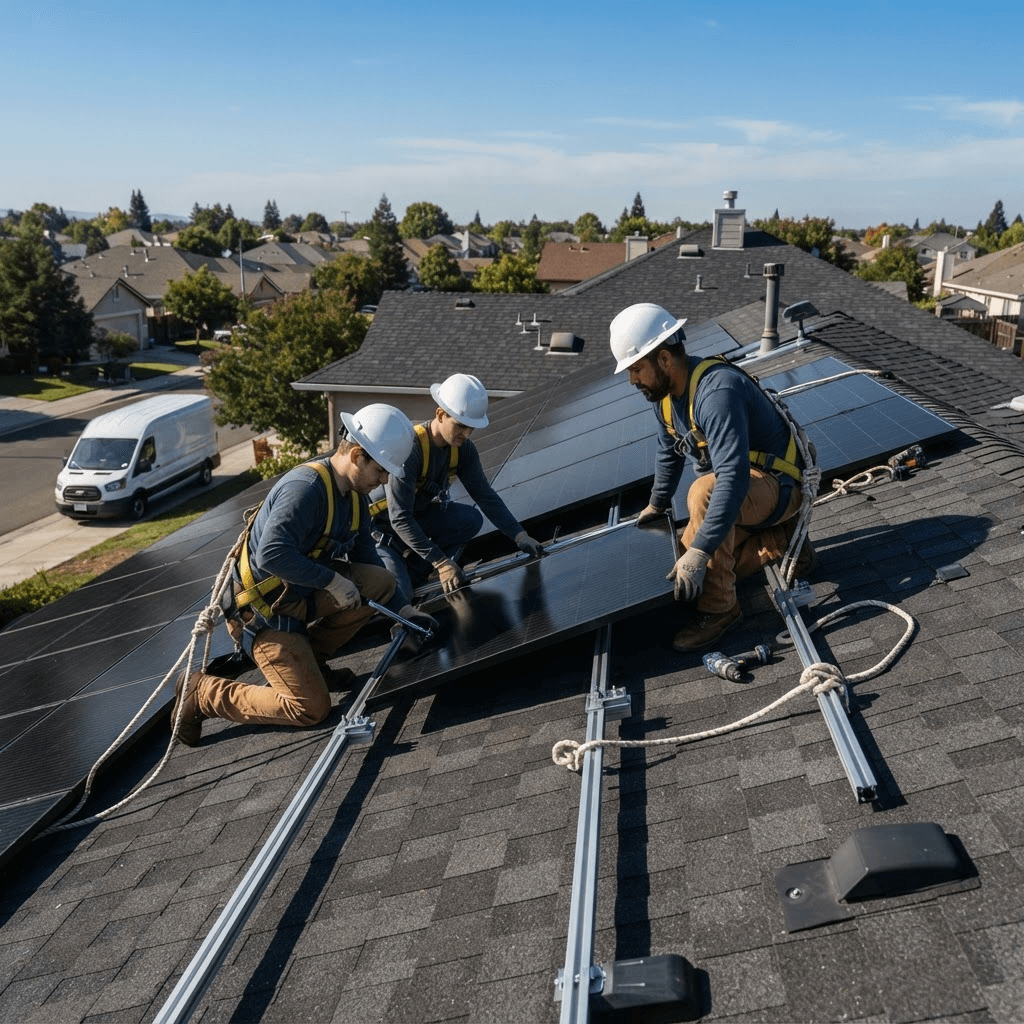
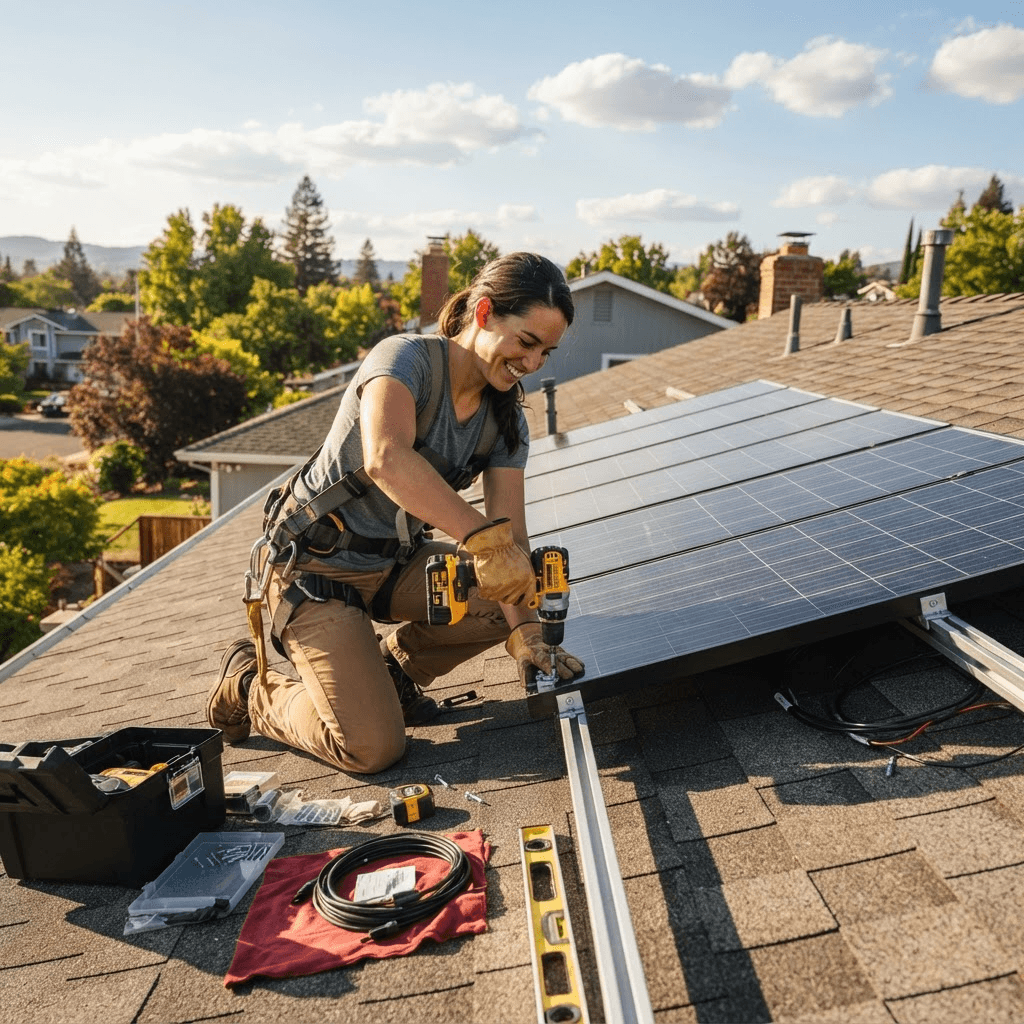
- Working on your roof, drilling into it and flashing penetrations correctly so it doesn't leak for the next 25 years
- Running conduit and wiring
- Connecting to your home's main electrical panel
Roof work carries fall risk, and improper electrical work carries fire and shock risk, so this is not a low-stakes weekend project.
Why the Grid Connection Is the Biggest Dividing Line
The single biggest dividing line is the connection to the grid. Wiring a system into your home's main service panel almost always requires a licensed electrician, both for safety and to satisfy code and utility rules.
Even committed DIYers frequently do the mounting and panel work themselves and then hire an electrician for the final tie-in — a sensible hybrid that keeps the riskiest step in professional hands.
When DIY Solar Makes Sense
DIY genuinely makes sense in certain situations:
- [Off-grid and low-voltage projects](/blog/off-grid-solar-system-guide-portable-panels-for-camping-and-trailers) — an RV, a shed, a cabin, a small battery bank — are far more DIY-friendly because they often avoid utility interconnection and high-voltage tie-ins entirely.
- You're experienced with construction and basic electrical work, comfortable on a roof, and have the time to manage permits. A DIY grid-tied system can be very rewarding in this case.
When to Hire a Professional Instead
Just as often, DIY is the wrong call:
- Your roof is steep, tall, or complex
- You're not confident with electrical work
- You don't have time to shepherd permits and inspections
In these cases, the professional route is safer and often not as much more expensive as it first appears. Professionals also handle warranties, workmanship guarantees, and any problems that arise, which is worth a lot over a 25-year system life.
The Fine Print to Watch For
Be aware of a few risks before committing to DIY:
- Some equipment warranties are only valid with professional installation, and mistakes can void them.
- A botched roof penetration can cause leaks that cost far more than you saved.
- Errors in a grid-tied system can fail inspection, delay your interconnection, or create genuine hazards.
The downside of getting it wrong can easily erase the labor savings that motivated DIY in the first place.
Before you commit either way, it is worth reading through our solar installation guides to see exactly which steps a professional handles.
Frequently Asked Questions
What's included in a solar panel kit? Most kits bundle the panels, an inverter or microinverters, mounting hardware, and wiring together, sized for a target output. What's not included is typically the labor, permitting, and — for grid-tied systems — the final electrical tie-in.
Can I install a solar panel kit myself without an electrician? For off-grid or low-voltage projects like an RV, shed, or cabin, often yes. For a grid-tied home system, wiring into your main electrical panel almost always requires a licensed electrician to meet code and utility interconnection rules.
Does DIY solar installation void the warranty? It can. Some equipment warranties are only valid with professional installation, so it's worth checking the manufacturer's terms before starting a DIY project.
Is a hybrid approach — DIY plus a hired electrician — a good option? Yes. Many DIYers handle the mounting and panel work themselves and then hire a licensed electrician for the final grid tie-in, keeping the riskiest step in professional hands while still saving on labor.
The Bottom Line
So, should you do it yourself? If you're taking on a modest off-grid or low-voltage project, or you're a skilled DIYer willing to hire an electrician for the tie-in, a kit can save you real money and be a genuinely satisfying build.
If you're facing a complex roof, a full grid connection, and limited time or electrical experience, hire a professional, or at minimum use the hybrid approach. Match the ambition of the project to your actual skills, and DIY solar can be smart rather than risky.
Who Is a Good Candidate for DIY Solar?
DIY solar rewards a specific kind of homeowner: someone comfortable with electrical work, permits, and project management, with a simple, unshaded roof and time to devote to the job. Off-grid and small ground-mount projects, like a cabin, RV, or shed, are the friendliest starting points because they often avoid utility interconnection entirely. A complex grid-tied rooftop system on a steep or multi-plane roof is a far bigger undertaking and is where many DIY attempts stall.
The Hidden Costs of Going It Alone
DIY savings can shrink once you account for the extras. You may need to buy or rent specialized tools, pay permit and inspection fees, and cover the cost of any mistakes, from a miswired string to a roof leak. Perhaps most importantly, doing the work yourself usually means forgoing the workmanship warranty a professional installer provides, so any future problem is yours to diagnose and fix at your own expense.
Safety and Code Considerations
Rooftop solar combines two genuinely dangerous elements: working at height and high-voltage DC electricity. Solar arrays can produce lethal voltages even when disconnected from the grid, and improper wiring is a fire risk. Every grid-tied system must meet electrical code and pass inspection, and the utility interconnection agreement exists precisely because your system interacts with the shared grid. These are not areas to improvise, which is why honest self-assessment matters.
A Middle Path: Hybrid Installation
Many homeowners find a middle ground that captures much of the savings with less risk. You can handle the parts you are qualified for, such as mounting racking and running conduit, then hire a licensed electrician for the final connections, permitting, and interconnection. Some companies even sell kits with permit-ready plans and remote engineering support, giving DIYers professional backup without full installer pricing.
Frequently Asked Questions
Is DIY solar actually cheaper? It can be, since you save on labor and installer overhead, but hidden costs like tools, permits, and the loss of a workmanship warranty narrow the gap. The savings are real mainly for capable, motivated homeowners.
Can I install a grid-tied solar kit myself? Technically yes, but you must secure permits, meet electrical code, and sign a utility interconnection agreement. Many homeowners hire a licensed electrician for the final connections even on a DIY project.
What kind of solar project is best for beginners? Small off-grid setups for a cabin, RV, or shed are the friendliest, since they often skip utility interconnection and involve lower voltages and simpler design.
What are the biggest risks of DIY solar? Falls from the roof, dangerous DC voltages, fire risk from faulty wiring, and voiding warranties. Honest assessment of your skills and a licensed electrician for critical steps reduce these risks.