Wall Art for Landscape and Abstract Paintings
How to choose between landscape and abstract wall art, plus the sizing, placement, and arrangement rules that make paintings look intentional instead of random
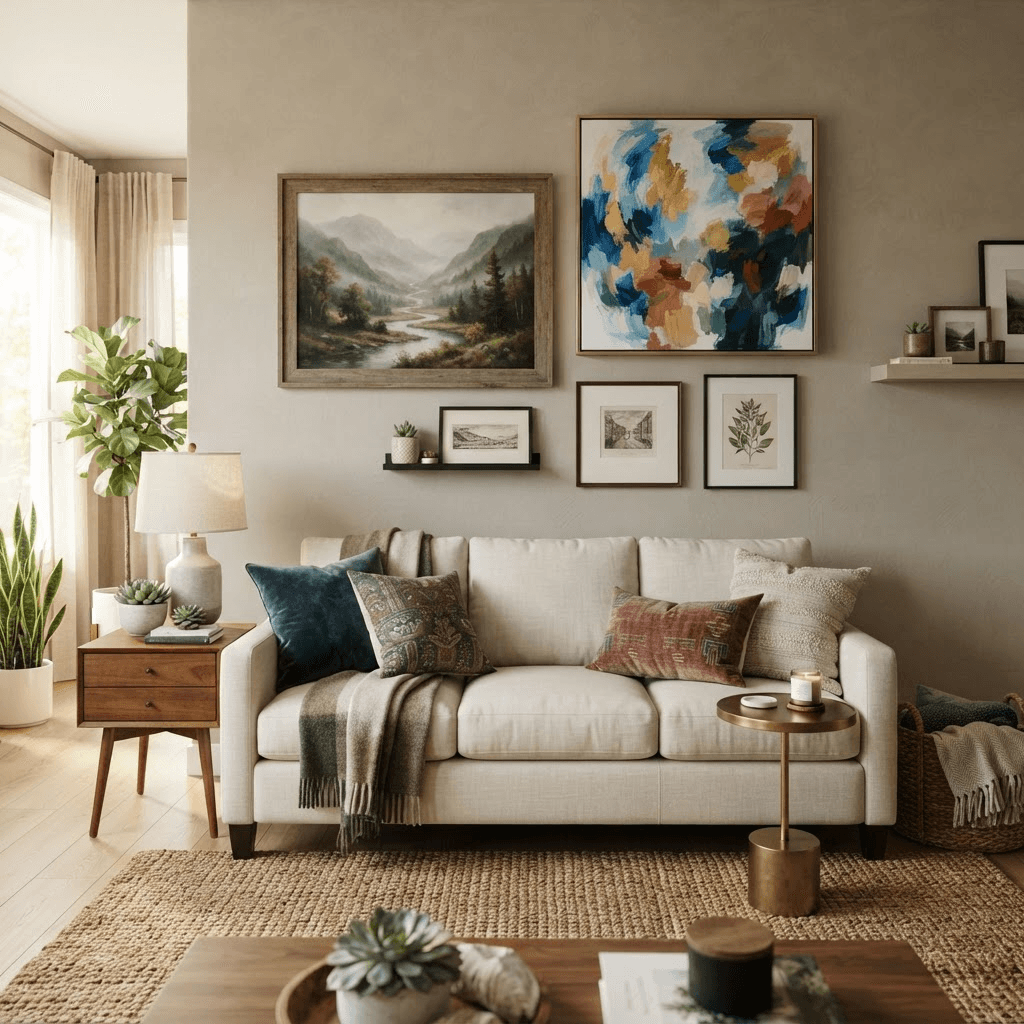
Wall Art Guide: Landscape and Abstract Paintings, and How to Hang Them Right
Wall art is the finishing touch that turns a house into a home, yet it is the step people most often get wrong, hanging pieces too high, too small, or seemingly at random. Landscape and abstract paintings are two of the most popular choices, and each brings a different energy to a room. Understanding what each style does, and how to choose, size, and arrange it, lets you decorate with confidence instead of guesswork.
Landscape Paintings: A Sense of Place and Calm
Landscape paintings bring a sense of place, depth, and calm to a space. Because they depict recognizable scenes, mountains, coastlines, forests, fields, they create a window-like effect that visually opens up a room and adds tranquility, which makes them especially well suited to bedrooms, living rooms, and offices where you want a restful mood.
Landscapes also tend to carry a color palette, blues and greens of nature, warm sunset tones, you can pull from to tie the artwork into the rest of the room's colors, and their horizontal orientation pairs naturally with sofas, beds, and consoles.
Abstract Paintings: Energy, Color, and a Modern Edge
Abstract paintings work differently, adding energy, color, and a modern, personal edge without depicting anything literal. Because they are about color, shape, and movement rather than a specific subject, abstracts are incredibly versatile: they can inject a bold splash of color into a neutral room, echo an existing accent color, or serve as a dramatic focal point over a mantel or bed.
They suit contemporary and eclectic interiors particularly well, and because there is no "correct" subject, you have total freedom to choose based purely on the mood and colors you want the piece to bring.
How to Size Your Wall Art
Whichever style you choose, sizing is the factor that most determines whether art looks intentional or awkward. The most common mistake is going too small. A good rule of thumb is that a piece or grouping should span roughly two-thirds to three-quarters of the width of the furniture below it, a sofa, bed, or console. Over a large sofa, that means a big statement piece or a well-planned grouping, not a lone small frame floating in the middle of the wall.
For empty walls without furniture beneath, scale the art to fill a generous portion of the available space, leaving comfortable margins rather than leaving vast blank areas around a tiny frame.
The Right Height to Hang Art
Height is the other frequent misstep, most people hang art too high. The gallery standard is to center the artwork at eye level, roughly 57 to 60 inches from the floor to the center of the piece. When hanging art above furniture, keep the bottom of the frame about 6 to 10 inches above the top of the sofa or console so the two feel visually connected rather than drifting apart. Consistency in this centerline is what makes a room feel professionally styled.
Creating a Gallery Wall
A gallery wall, several pieces arranged together, adds personality and lets you mix landscapes, abstracts, photos, and objects. The key is to treat the whole grouping as a single unit: lay the arrangement out on the floor first, keep consistent spacing (about 2 to 3 inches between frames), and maintain a shared centerline for the overall composition. A mix of frame sizes with a unifying element, matching frames or a consistent color story, keeps it cohesive rather than chaotic.
Matching Art to the Room
Consider the room's existing palette and mood when choosing. Pull a color from the art into the room, or vice versa, so the piece feels integrated. Match the scale and formality too: a serene landscape suits a calm bedroom, while a bold abstract energizes a modern living room or entryway. Lighting matters as well, position art away from harsh direct sunlight that can fade it, and consider accent lighting to make a focal piece glow.
Final Thoughts
Great wall art is about more than picking a pretty painting, it is about choosing the right style for the mood, sizing it generously, hanging it at the correct height, and arranging groupings with intention. Whether you lean toward the calm of landscapes or the energy of abstracts, following these simple principles for scale, height, and composition ensures your art looks deliberate and polished, giving every room that finished, lived-in feeling.
Art is one piece of a room's character, and our interior styling ideas cover the paint, lighting, and finishes around it.
Frequently Asked Questions
How do I choose wall art for a room? Consider the room's size, style, and color palette. Large walls suit a big statement piece or a grouped gallery arrangement, while smaller spaces work with a single well-scaled piece. Match the mood, calm landscapes for restful rooms, bold abstracts for energetic spaces, and pull one or two colors from the art into the room to tie everything together.
What size art should I hang above a sofa or bed? As a general rule, art above furniture should span roughly two-thirds to three-quarters of the furniture's width for a balanced look. Hang the center of the piece at about eye level, and leave a modest gap between the top of the furniture and the bottom of the frame so the two feel connected rather than crowded.
Are abstract or landscape paintings better? Neither is better; they set different moods. Landscape paintings bring a sense of place, depth, and calm, and suit traditional and transitional interiors. Abstract paintings add color, energy, and a modern, expressive feel, and work well as focal points. Choose based on the atmosphere you want and how the piece complements your furnishings.
How high should I hang wall art? A reliable guideline is to center artwork at about 57 to 60 inches from the floor, roughly gallery eye level. When hanging above furniture, keep the piece visually connected to it rather than floating too high. For a gallery wall, treat the whole grouping as one unit and center that arrangement at eye level.