Above Ground Pool Guide: Cost, Draining and Winterization
Above ground pools are affordable and fast to set up, but they need proper care. A guide to costs, when (and when not) to drain, and how to winterize.
Above Ground Pool Guide: Cost, Draining, and Winterization
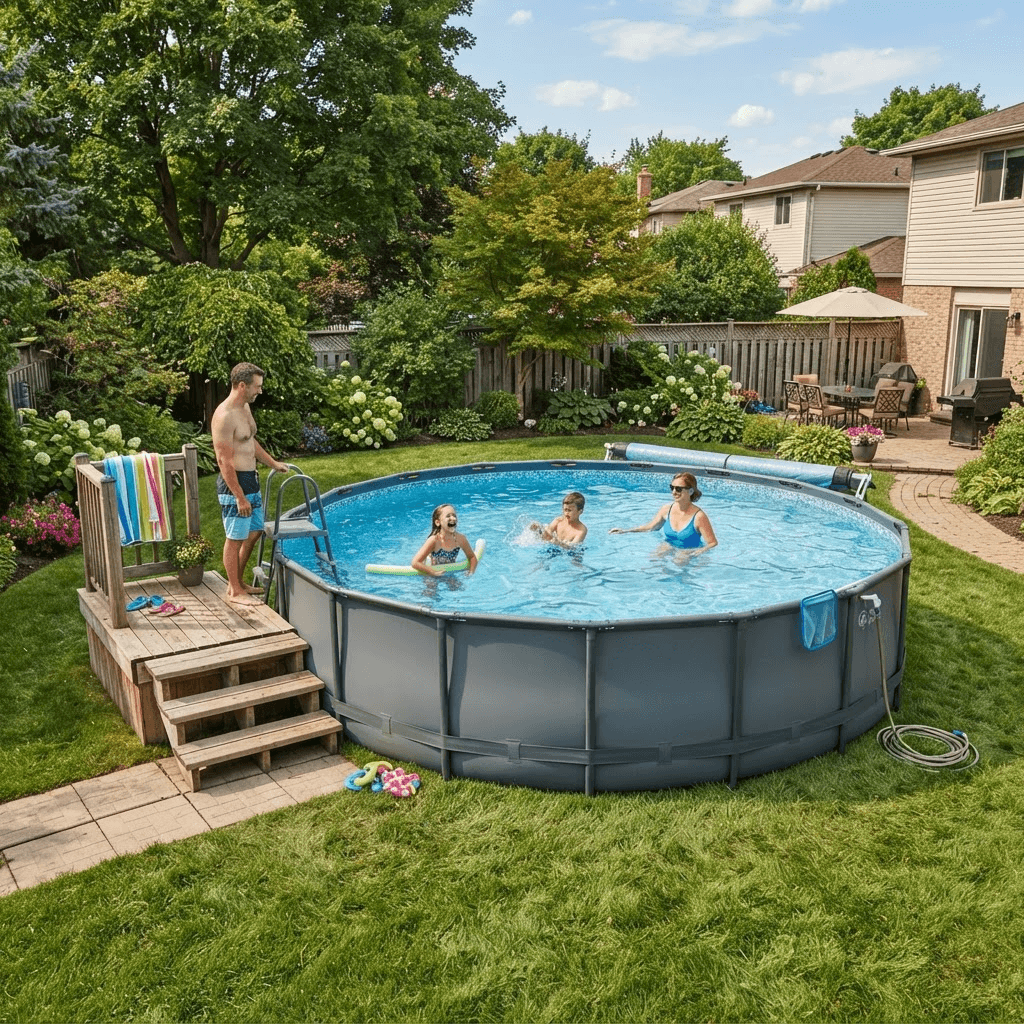
Above ground pools are the fastest, most affordable way to bring swimming to your backyard, which is exactly why they're so popular. They install quickly, cost a fraction of an inground pool, and can be taken down or moved if needed. But getting the most out of one means understanding three things owners ask about constantly: what they really cost, when you should (and shouldn't) drain them, and how to winterize them properly so they survive the off-season and last for years.
How Much Does an Above Ground Pool Cost?
On cost, above ground pools span a wide but approachable range. Simple, smaller kits are genuinely inexpensive, while large, high-quality pools with sturdy frames and resin components cost more but still stay far below inground prices.
Remember to budget beyond the kit:
- Leveling the ground, essential for safety and longevity.
- A pump and filter.
- A ladder or steps.
- A cover.
- Often a surrounding deck and fencing, which may be legally required.
Ongoing costs include chemicals, electricity for the pump, water, and eventual liner replacement, but overall an above ground pool is one of the most economical ways to own a pool.
Should You Drain Your Above Ground Pool?
One of the most common mistakes owners make is draining the pool when they shouldn't. As a rule, you should not fully drain an above ground pool for winter or routine maintenance.
Draining removes the water weight that helps the pool structure stay stable, and an empty pool can shift, collapse, or have its liner shrink, crack, and become unusable, especially vinyl liners that are meant to stay wet.
You only fully drain in specific situations, like:
- Replacing the liner.
- Relocating the pool.
- Correcting water chemistry so severe it can't be fixed with treatment.
The rest of the time, you lower the level modestly and keep water in the pool.
When Partial Draining Makes Sense
For routine care, partial draining is sometimes useful, but do it thoughtfully. You might lower the water a few inches to adjust for heavy rain, to work on the skimmer, or as part of winterizing, but you keep the bulk of the water in place.
If you ever do need to fully drain, plan it for mild weather, never leave the liner exposed to hot sun, which makes it brittle and shrink, or freezing cold, and refill promptly. When in doubt, treat and balance the water rather than dumping it.
How to Winterize an Above Ground Pool
Winterizing is the key seasonal task in cold climates, and doing it right protects your investment:
- Clean the pool and balance the water chemistry, correct pH, alkalinity, and calcium, a week or so before closing.
- Add winterizing chemicals or a shock and algaecide to keep the water clear through the off-season.
- Lower the water level to just below the skimmer and return jets, not empty.
- Remove, drain, and store the pump, filter, hoses, and skimmer basket so no water is left inside to freeze and crack them.
Protecting the Pool From Ice and Debris
Finish by protecting the pool from ice pressure and debris:
- Add a floating ice compensator, or float several sealed jugs, to absorb the expansion of freezing water and keep it from pushing on the walls.
- Cover the pool tightly with a winter cover secured against wind.
- Use a cover pump or cable to keep it taut and clear of standing water.
Come spring, you'll uncover a pool that's clean, intact, and ready to reopen with minimal effort.
The Bottom Line
Skip these steps, or make the classic mistake of draining it completely, and you risk a damaged liner or frame. Care for it properly and an above ground pool delivers years of affordable backyard fun.
If you are comparing this against a permanent build, our pool care and cost guides lay out both paths.
Frequently Asked Questions
How long does an above-ground pool last? With good care, a quality above-ground pool typically lasts 7 to 15 years. The liner is usually the first component to wear out, often needing replacement every 5 to 9 years, while the frame and wall can last considerably longer if protected from rust and harsh weather. Draining fully in freezing climates, keeping the water balanced, and storing equipment over winter all extend its life.
Can I leave an above-ground pool up all winter? In most climates, yes. Rather than fully draining, you winterize it: balance the water, lower the level below the skimmer, add winter chemicals, and cover it. Completely draining an above-ground pool in winter can actually cause the liner to shrink, crack, or the walls to collapse from ground movement, so partial winterization is usually safer than emptying it.
Do above-ground pools add value to a home? Because they are considered temporary and removable, above-ground pools rarely add appraised value the way an inground pool might. Their appeal is affordability and enjoyment rather than resale return. Some buyers even see them as something to remove, so install one for your own use and budget, not as a home investment.
How much does it cost to run an above-ground pool? Ongoing costs include electricity for the pump, chemicals to keep the water safe, occasional replacement parts, and water for refills. These seasonal running costs are modest compared to an inground pool, but they add up, so factor the pump, filter, and chemical budget into your decision before buying.