Aluminum Roof Panels vs Corrugated Roof Panels Explained
Aluminum and corrugated — one is the material, the other is the shape. Here's how to choose both for your climate, budget, and style.
Aluminum and corrugated aren't competing roof panel options — one is the material, the other is the shape. Here's how to choose both for your climate, budget, and style.
Aluminum Roof Panels vs. Corrugated Roof Panels Explained
Metal roofing shoppers constantly run into the terms "aluminum panels" and "corrugated panels" as if they're competing options, but they actually describe two different characteristics of a metal roof. Aluminum refers to the metal the panel is made from, while corrugated refers to the panel's shape or profile. A panel can be both, aluminum and corrugated, so understanding these two separate choices, material and profile, is the key to picking the right metal roof for your project.
Material: What Is the Panel Made Of?
Let's start with the material question, since aluminum is one of several metals roofing panels come in.
Aluminum Panels
Aluminum panels are prized for being lightweight, naturally corrosion-resistant, and especially well suited to coastal and high-moisture environments because they won't rust the way steel can. They reflect heat well, contributing to energy efficiency, and they last a very long time with minimal maintenance. The main trade-offs are cost, aluminum typically costs more than steel, and that it's softer, so it can dent more easily under impact like hail or falling branches. For seaside homes and humid climates, though, aluminum's rust immunity is a major advantage.
Steel and Other Metal Options
The main alternative material is steel (usually galvanized or coated), which is stronger and more affordable than aluminum but relies on protective coatings to prevent rust, making it less ideal in salty coastal air. There are also premium metals like zinc and copper. The point is that "aluminum" answers the question of what the panel is made of, and that choice is driven mainly by your climate, especially proximity to salt water, your budget, and how concerned you are about denting versus rusting.
Profile: What Shape Is the Panel?
Now the profile question: corrugated describes the panel's shape, not its metal.
Corrugated Panels
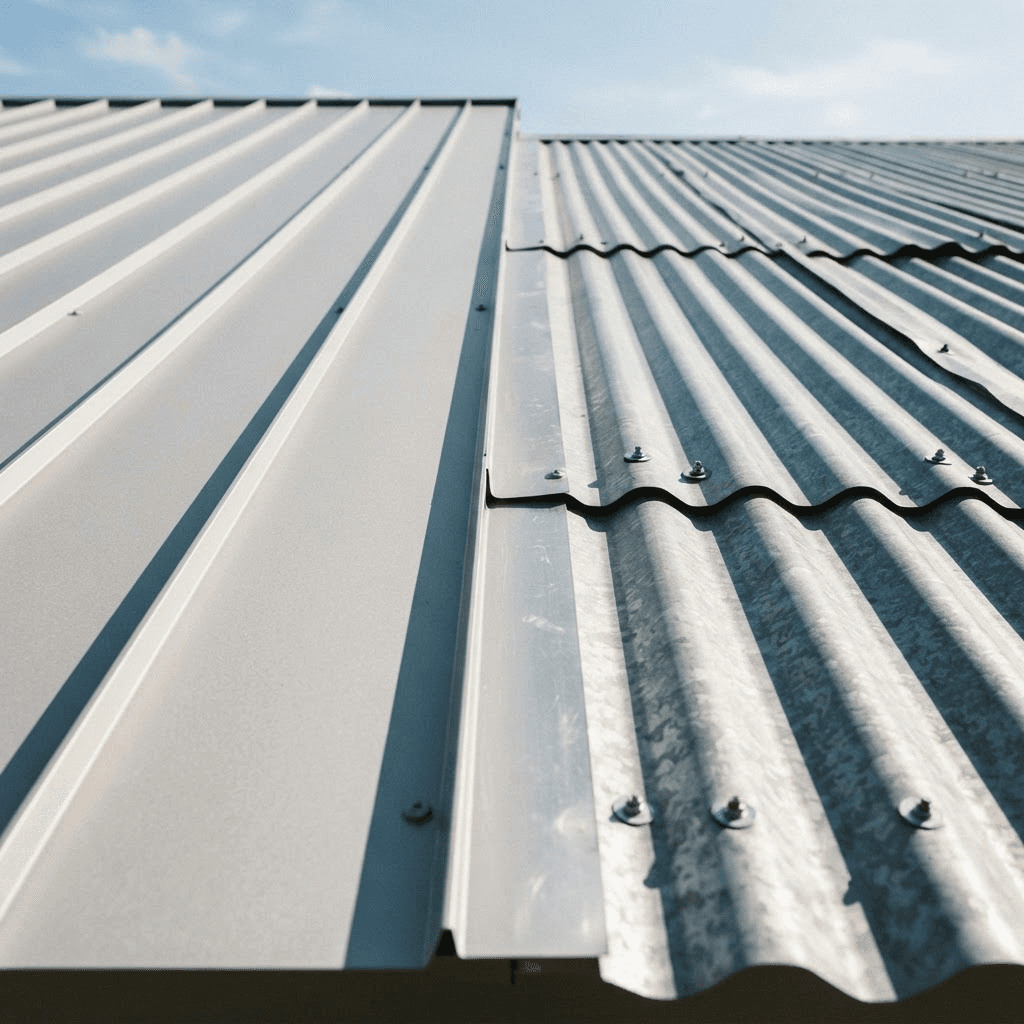
Corrugated panels have the classic wavy, rippled profile, repeating rounded ridges and valleys, that many people picture on barns, sheds, and increasingly on homes. That corrugation isn't just for looks: the waves add rigidity and strength to a relatively thin panel and channel water efficiently off the roof. Corrugated panels are typically installed with exposed fasteners, screws driven through the face of the panel, which makes them economical and relatively DIY-friendly, though the exposed fasteners are a maintenance point to watch over the decades.
Standing Seam Panels
The main profile alternative is standing seam, where flat panels are joined by raised vertical seams that conceal the fasteners underneath. Standing seam gives a sleek, modern, clean-lined look, has no exposed fasteners to loosen or leak over time, and is generally considered a premium option, but it costs more and usually requires professional installation. Corrugated, by contrast, offers a more rustic or agricultural aesthetic, lower cost, and easier installation. So "corrugated" answers the question of what shape the panel is, and that choice is driven by looks, budget, and installation approach.
Choosing Both: Material and Profile Are Independent Decisions
Because these are two independent decisions, you choose both:
- Pick the material based on climate, budget, and dent-versus-rust priorities, aluminum for coastal and humid areas, steel for strength and lower cost.
- Pick the profile based on aesthetics, budget, and fastening preference, corrugated for economical, rustic, DIY-friendly roofs with exposed fasteners, standing seam for a sleek, premium, low-maintenance look.
You can absolutely have aluminum corrugated panels or steel standing seam, and everything in between.
Getting Quotes for Your Metal Roof
Get multiple quotes from reputable metal roofing installers, ask about panel gauge (thickness), coatings, and warranties, and match both the metal and the profile to your home's needs. You'll end up with a durable, long-lasting metal roof that fits your climate, style, and budget.
For help narrowing down profiles and metals before you call installers, browse our metal roofing comparisons.
Frequently Asked Questions
What is the difference between aluminum and corrugated roof panels? Aluminum refers to the metal the panel is made from, prized for being lightweight, rust-proof, and corrosion-resistant, especially in coastal areas. Corrugated describes the wavy, ridged shape of a panel, which adds strength and sheds water well, and corrugated panels can be made from aluminum, steel, or other metals. So the two terms describe different things: one is the material, the other is the profile.
Which metal roof panel is best for coastal areas? Aluminum is often the top choice near the ocean because it naturally resists salt-air corrosion far better than steel. If you prefer steel for its strength or cost, look for panels with strong protective coatings. Corrugated aluminum panels combine corrosion resistance with a strong, water-shedding profile, making them popular in salty, humid climates.
How long do metal roof panels last? Metal roofing is among the longest-lasting options, commonly lasting 40 to 70 years depending on the metal, coating, and installation. Aluminum resists corrosion for decades, and quality coatings protect against fading and rust. Proper installation and occasional maintenance help metal panels reach the top of their lifespan range.
Are corrugated panels noisy in the rain? Metal roofs can be louder than shingles, but proper installation over solid decking and underlayment, plus attic insulation, greatly reduces rain noise. Many homeowners with well-installed metal roofs barely notice the difference, and some even enjoy the sound. Skimping on decking and insulation is what tends to make a metal roof noisy.