Glass Doors and Fiberglass Doors Explained
Glass doors and fiberglass doors aren't competing options, one is a material, the other is defined by glazing. Here's what each really means and how to choose.
Glass Doors vs. Fiberglass Doors Explained
When shopping for doors, two terms come up constantly and often get muddled: glass doors and fiberglass doors. They sound similar but refer to very different things, one describes what the door is made of, the other describes a door defined by its glazing. Understanding what each really is, along with their strengths and weaknesses, helps you choose the right door for light, security, efficiency, and style.
What Is a Fiberglass Door?
A fiberglass door refers to the door's material, and it has become one of the most popular choices for exterior entry doors. Fiberglass doors are made from a molded composite skin over an insulated core, and they are prized for being extremely durable, low-maintenance, and energy-efficient.
Unlike wood, they will not rot, warp, crack, or swell with moisture and temperature swings, and unlike steel, they will not dent or rust. Modern fiberglass can be molded to convincingly mimic real wood grain and stained or painted to match your home, giving you the look of wood with far less upkeep.
Fiberglass Doors: Performance and Value
The appeal of fiberglass comes down to performance and value over time. Their insulated cores make them excellent at keeping conditioned air in and weather out, which helps with energy bills, and they stand up to harsh climates and heavy use with minimal care, no repainting or refinishing every few years like wood.
They typically cost more up front than steel or basic wood doors but less than high-end solid wood, and their durability and efficiency often make them the best long-term value for a front entry. The main knock is that a molded panel, while convincing, is not quite the real thing to a discerning eye, and a severe impact can crack (rather than dent) the skin.
What Is a Glass Door?
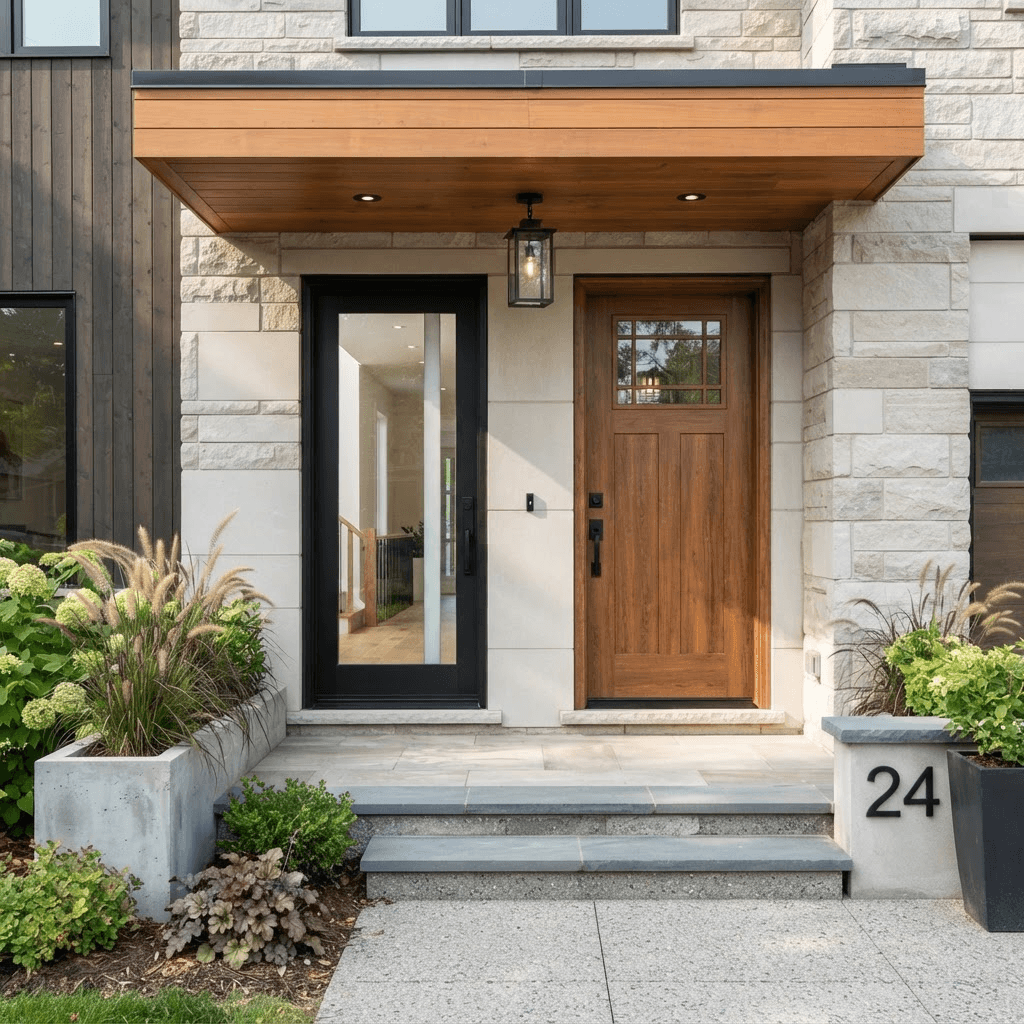
Glass doors, by contrast, are defined by their glazing: the door is built around glass panels to let in light and provide views. This is a broad category that includes sliding patio doors, French doors, storm doors, and entry doors with large glass inserts. The frame around the glass can be made of many materials, including wood, steel, vinyl, aluminum, or fiberglass, so "glass door" and "fiberglass door" are not opposites; a fiberglass entry door can absolutely include glass panels.
Glass doors are all about light, openness, and connection to the outdoors, making them popular for patios, sunrooms, and bright, welcoming entryways.
Glass Doors: Strengths and Trade-Offs
The great strength of glass doors is the light and sense of space they bring, transforming dark rooms and blurring the line between indoors and out. The trade-offs are privacy, security, and energy efficiency. Large glass areas offer less privacy and can be a weaker point for security and heat transfer unless you choose the right glazing.
Fortunately, modern options address these concerns: double or triple glazing with low-emissivity (Low-E) coatings and insulating gas fills dramatically cut heat loss, tempered or laminated safety glass resists breakage and improves security, and frosted or textured glass restores privacy where you need it.
How to Choose Between Them
The choice is not really either-or, because the two categories overlap. Decide first on the job the door needs to do:
- For a durable, efficient, low-maintenance entry door, a fiberglass door is an excellent material choice, and you can add as much or as little glass as you like.
- For maximizing light and views, a glass-forward door (patio slider, French, or a full-lite entry) is the way to go, and you can pick a frame material, including fiberglass, that suits your climate and budget.
In other words, choose the material (fiberglass, steel, wood) for durability and efficiency, and choose the amount of glazing for light and style.
Energy Efficiency and Security Tips
Whichever you choose, look for good weatherstripping, a solid threshold and sweep, and, for glass, Low-E insulated units rated for your climate. For security, favor laminated or tempered glass, multi-point locking hardware, and reinforced frames. A well-built fiberglass door with efficient glass inserts often delivers the best of both worlds: light, durability, security, and low energy bills.
Final Thoughts
The key to the glass-versus-fiberglass question is realizing they describe different things: fiberglass is a door material known for durability and efficiency, while a glass door is any door built around glazing for light and views. The best exterior doors often combine the two, a fiberglass door with efficient glass panels. Decide what matters most, durability, light, privacy, security, efficiency, and you can choose a door that delivers it for decades.
For the other materials worth considering at the entryway, see our entry door material guides.
Frequently Asked Questions
Are fiberglass doors better than wood? Fiberglass doors resist warping, rotting, denting, and moisture far better than wood, need little maintenance, and are energy efficient thanks to their insulated cores. Wood offers unmatched natural beauty and can be refinished, but it demands more upkeep. For durability and low maintenance, fiberglass usually wins; for classic looks and character, wood still appeals.
Do glass doors make a home less energy efficient? Not necessarily. Modern glass doors use insulated double or triple glazing with Low-E coatings that greatly reduce heat transfer, so a quality glass door can be quite efficient. The key is choosing an energy-rated door and ensuring proper installation and sealing, since drafts around a poorly installed door cause more loss than the glass itself.
Are fiberglass doors secure? Yes, fiberglass entry doors are strong and secure, especially when paired with a solid frame, quality deadbolt, and reinforced strike plate. Their tough construction resists impacts and does not rot or weaken over time like some wood doors can, making them a reliable choice for exterior entrances.
Can fiberglass doors look like real wood? Modern fiberglass doors are molded with realistic wood-grain textures and can be stained or painted to closely mimic natural wood. Many people cannot tell the difference at a glance, so you get the warm appearance of wood with the durability and low maintenance of fiberglass, an appealing combination for entry doors.