How Much Energy Does a Solar Panel Produce?
Learn how much energy a solar panel really produces, from watts and peak sun hours to real-world monthly and annual output for your home.
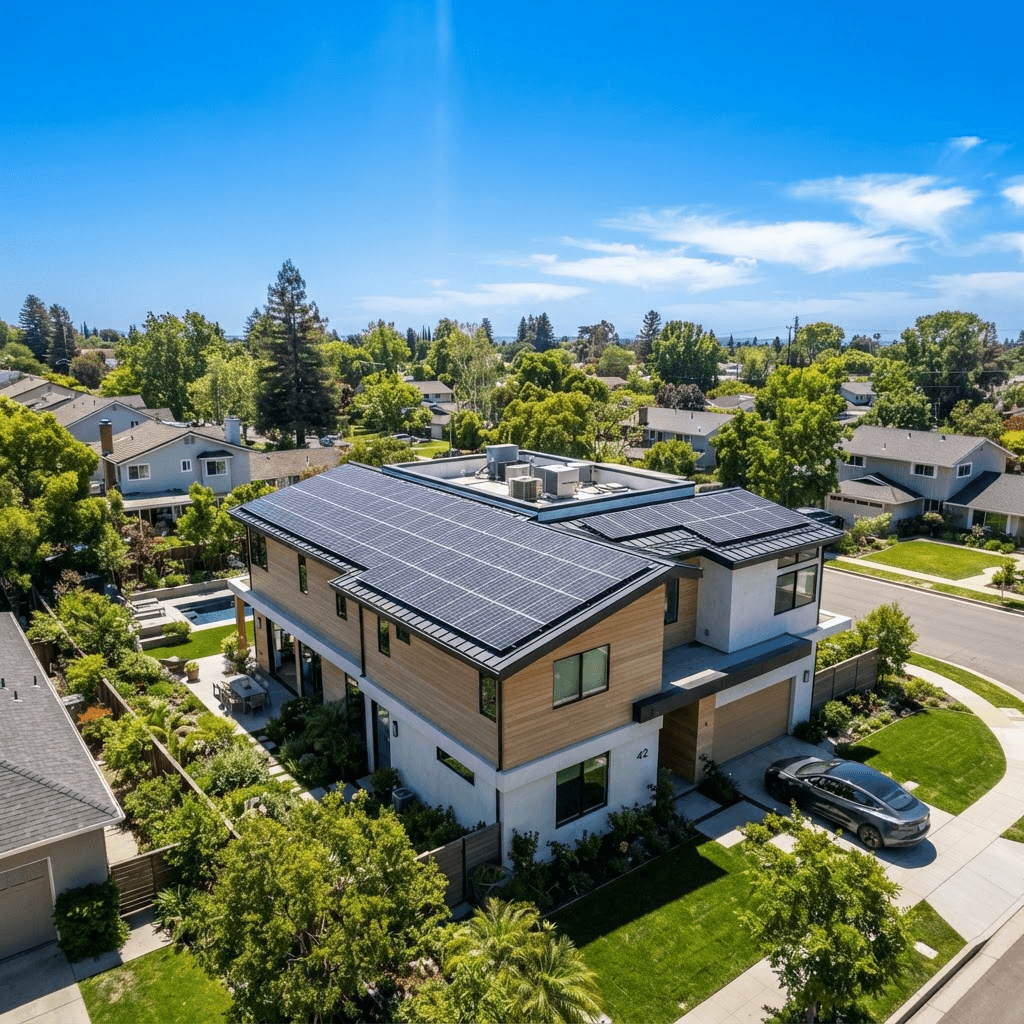
How Much Energy Does a Solar Panel Produce?
"How much energy does a solar panel produce?" is one of the first questions anyone considering solar asks, and it's a great one, because the answer determines how many panels you need, how much money you'll save, and whether solar makes sense for your home. The honest answer is "it depends," but the factors are straightforward once you understand them.
Let's break down how much a solar panel actually produces, and what drives those numbers up or down.
Solar Panel Power Ratings: Watts vs. Kilowatt-Hours
Every solar panel has a power rating measured in watts (W), which tells you its output under ideal test conditions. Today, most residential solar panels are rated somewhere in the range of roughly 350 to 450 watts each, with high-efficiency models pushing higher.
This wattage is the panel's peak instantaneous output in full, direct sunlight — think of it as the panel's maximum horsepower. But what you really care about is energy produced over time, measured in [kilowatt-hours (kWh)](/blog/solar-electricity-explained-kw-kwh-voltage-current-power), which is what shows up on your electricity bill and what powers your home day to day.
How to Calculate Real-World Solar Panel Output
To estimate real-world energy production, the key concept is peak sun hours — the number of hours per day that sunlight is strong enough to generate at the panel's full rated output. This isn't the same as daylight hours; it's a way of condensing a full day's variable sunlight into an equivalent number of full-strength hours.
Most locations average somewhere around 4 to 6 peak sun hours per day, depending on climate and season.
The Basic Formula
> Panel wattage × peak sun hours = watt-hours produced per day
For example, a 400-watt panel getting 5 peak sun hours produces about 2,000 watt-hours, or 2 kWh, per day.
How Much Energy Does a Solar Panel Produce Over Time?
Scaling that up gives you a realistic picture:
- Per day: A 400-watt panel producing about 2 kWh per day
- Per month: Roughly 60 kWh
- Per year: Around 700 to 730 kWh
Since a typical U.S. home uses somewhere around 850 to 900 kWh per month, you can see why homeowners install many panels together as a system.
What a Full Home Solar System Produces
A common residential solar system might be 6 to 10 kilowatts (that's 6,000 to 10,000 watts of panels), which could produce roughly 800 to 1,300+ kWh per month depending on location — often enough to cover most or all of a household's electricity use.
Factors That Affect Solar Panel Output
Several real-world factors cause actual production to differ from the ideal ratings, and it's important to be realistic:
- Sunlight and location: Sunny regions like the Southwest produce far more than cloudier northern areas, and output naturally dips in winter and on overcast days.
- Roof orientation and tilt: South-facing panels perform best in the Northern Hemisphere.
- Shading: Trees, chimneys, or nearby buildings can significantly reduce output.
- Panel efficiency and temperature: Panels actually lose some efficiency when very hot.
- Dirt and dust buildup: Reduces the amount of sunlight reaching the panel surface.
- System losses: Wiring and inverter losses shave off a bit of the theoretical maximum.
Real systems typically deliver somewhat less than the theoretical maximum for these reasons.
The Bottom Line: Estimating Your Solar Panel's Output
As a rule of thumb, a single modern residential panel produces on the order of 1.5 to 2.5 kWh per day, adding up to roughly 500 to 900 kWh per year, with a full home system producing many times that.
To estimate your own situation:
- Multiply your panels' wattage by your local peak sun hours.
- Trim the result a bit for real-world losses.
- Or use an online solar calculator or a reputable installer's assessment, which factors in your exact location, roof, and shading.
Understanding these numbers empowers you to size a system correctly, set realistic expectations, and see clearly how much of your electricity bill solar can offset — which is the whole point of going solar in the first place.
Factors That Push Output Up or Down
Real-world production rarely matches the lab rating, and several factors explain the gap. Orientation and tilt matter most: a south-facing roof at a tilt near your latitude captures the most sun, while east or west faces produce less. Temperature has a counterintuitive effect, panels actually lose a little efficiency as they get very hot, so a mild sunny day can outproduce a scorching one. Shading from trees, chimneys, or neighboring buildings can cut output sharply, and even partial shade on one panel can drag down a whole string unless optimizers or microinverters are used.
Monthly and Annual Production
Scaling the daily formula up, a single 400-watt panel producing 2 kWh per day generates about 60 kWh per month and roughly 700 kWh per year in a location with five peak sun hours. A full 6 kW system of fifteen such panels would produce on the order of 9,000 to 10,000 kWh annually. Production is not even across the year, though; expect significantly more in the long, high-sun days of summer and less in winter, which is why annual totals matter more than any single month.
How Panel Output Determines System Size
Once you know a single panel's annual output, sizing a system becomes arithmetic. Divide your yearly electricity usage by the annual production of one panel to estimate how many panels you need to offset your usage. A home using 10,000 kWh per year in a five-peak-sun-hour climate would need roughly fourteen to sixteen modern panels. This is why installers always start with your past twelve months of utility bills.
Our system sizing calculator works backward from your annual usage to the number of panels and kilowatts required.
Degradation Over the Panel's Life
Output also declines slowly with age, typically 0.4 to 0.7 percent per year. A panel producing 700 kWh in year one might produce around 620 kWh in year twenty-five. Manufacturers account for this with performance warranties guaranteeing a minimum output, usually 85 to 90 percent, at the 25-year mark. This gradual decline is predictable and built into long-term savings projections.
For help turning these production estimates into a full system design, browse our solar energy resource hub.
Frequently Asked Questions
How much energy does one solar panel produce per day? A typical 400-watt panel produces roughly 1.6 to 2.4 kWh per day, depending on your location's peak sun hours and the panel's orientation and condition.
Why does my system produce less than its rated size suggests? Ratings assume ideal lab conditions. Real output is reduced by temperature, imperfect orientation, shading, wiring losses, and inverter conversion, typically landing 15 to 25 percent below the theoretical maximum.
Does a higher-wattage panel always produce more energy? For the same conditions, yes, a 450-watt panel outproduces a 350-watt one. But total system production depends on the number of panels and their placement, not just individual wattage.
How do I estimate my home's total production? Multiply your system size in kilowatts by your location's peak sun hours to get daily kWh, then multiply by 365 and apply a modest real-world loss factor for an annual estimate.