How to Get a Job as a Carpenter (Carpentry Explained)
Carpentry splits into rough framing and finish work, and they reward different people. Here is what each involves and how to get hired in either.
How to Get a Job as a Carpenter (Carpentry Explained)
Carpentry is the trade most people picture when they think about building things, and it is one of the easiest to enter with no experience. Framing crews hire people who show up and work. What most newcomers do not realize is that carpentry is really two trades wearing one name.
Knowing which half you are aiming at changes how you should look for work.
Rough carpentry versus finish carpentry
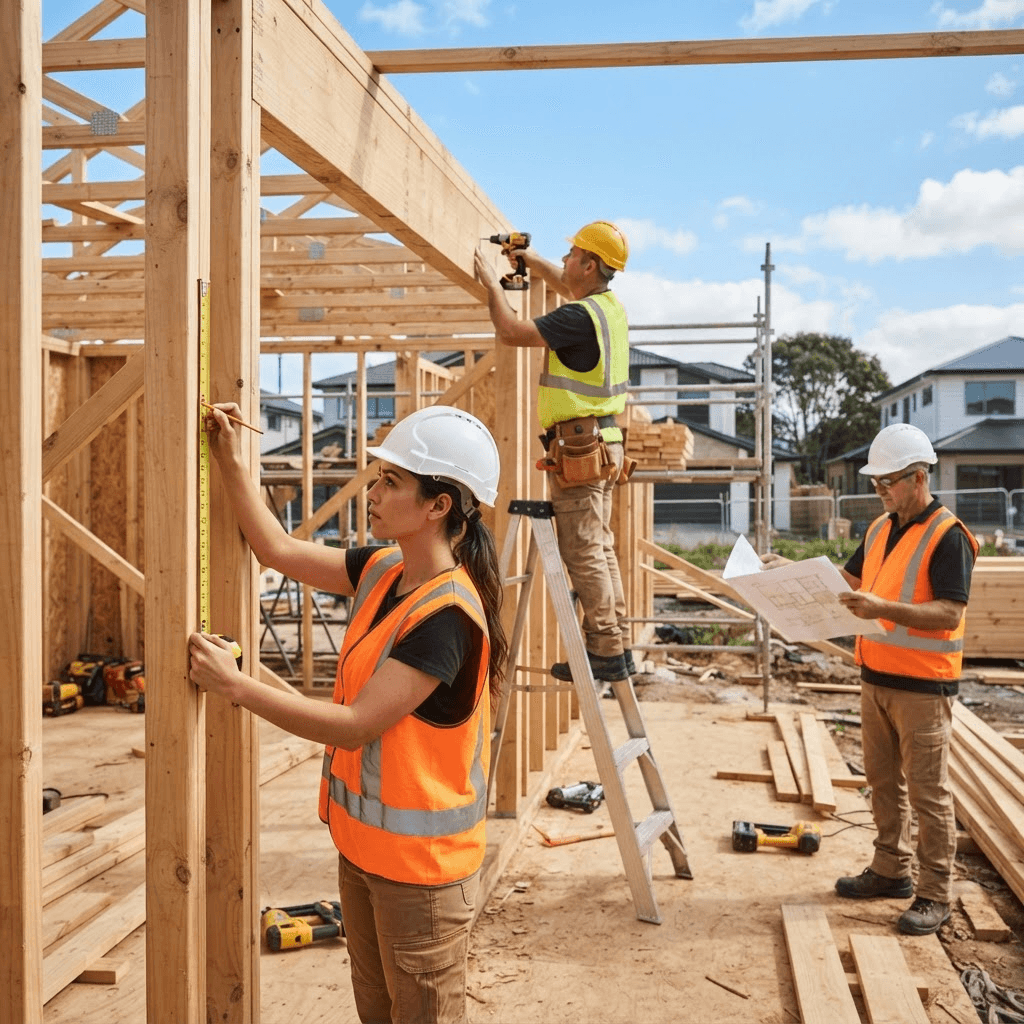
Rough carpentry is structure. Framing floors, walls, and roofs, setting sheathing, building the skeleton that everything else attaches to. The work is fast, physical, and outdoors. Tolerances are measured in fractions of an inch and the satisfaction is watching a building appear over days.
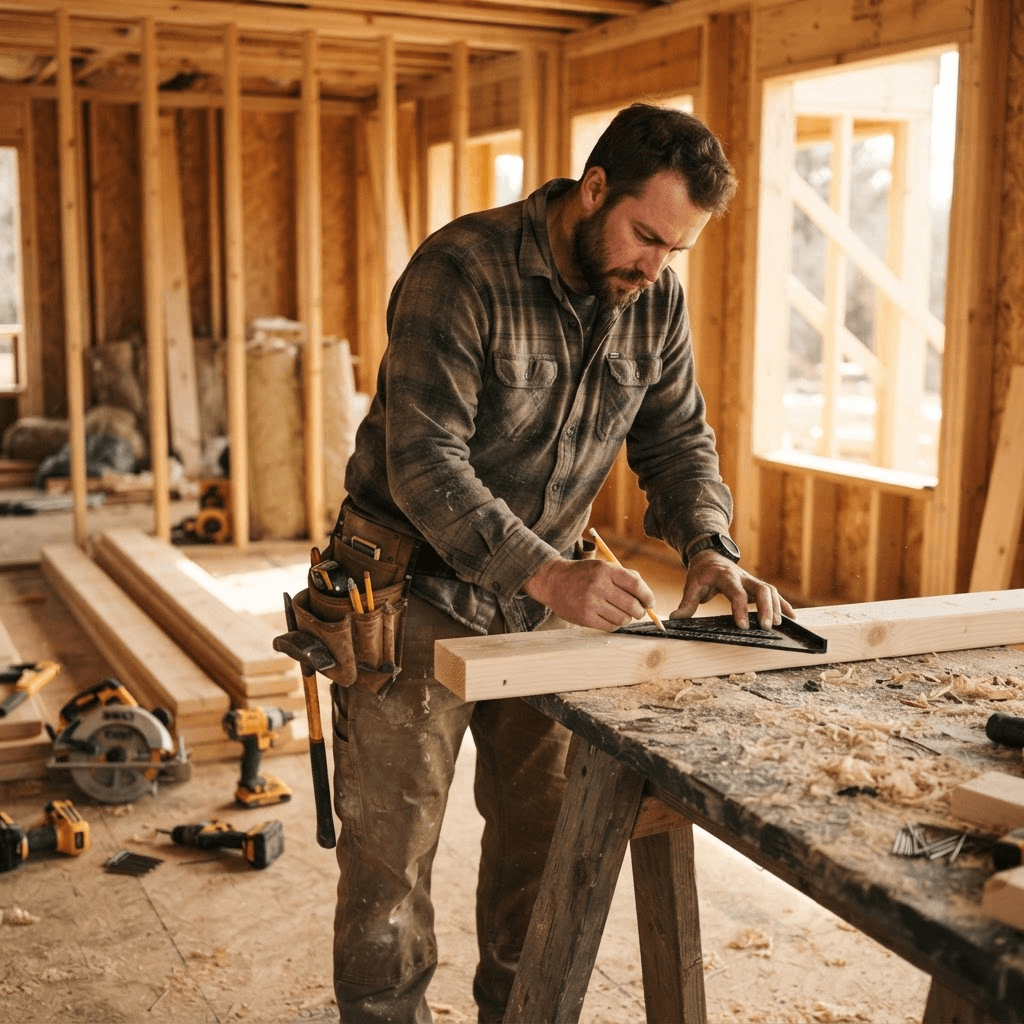
Finish carpentry is everything visible after the walls close. Trim, doors, cabinets, stairs, built-ins, molding. The pace slows down and the tolerances tighten dramatically — a gap that would be invisible in framing is a callback in finish work. It is quieter, mostly indoors, and much more about patience.
Most carpenters start rough because it hires more freely, and some drift toward finish as their skill and eye develop. Neither is more prestigious. They are genuinely different jobs.
How to get hired with no experience
Framing crews are one of the few places in construction where showing up at the right time is close to sufficient. Small residential builders are chronically short on labor.
Practical approaches that work:
- Apply directly to small builders and framing subs. Not the giant general contractors — the five-to-fifteen person outfits doing houses and additions. They hire faster and teach more.
- Start as a laborer on a framing crew. Carrying lumber, sweeping, cutting to given dimensions. You will be framing within months if you pay attention.
- Union carpenter apprenticeship. The UBC runs formal apprenticeships with structured classroom training and a wage ladder. More competitive to enter, more predictable to progress.
- Trade school or community college. A one-semester carpentry certificate is not required, but it teaches tool safety and reading plans, which makes you employable faster.
Basic hand tools, a tape measure, and steel-toed boots are usually the expected starting kit. Employers supply the expensive power tools.
The skills that actually matter early
Nobody expects a new carpenter to know joinery. They expect:
- Accurate measuring and marking. Most early mistakes are measurement mistakes.
- Cutting square and to the line. Consistency matters more than speed at first.
- Reading a plan. Knowing where you are on a drawing and what dimension governs.
- Basic math. Fractions, feet and inches, simple geometry. Rafter and stair layout is where math becomes unavoidable.
- Keeping the site clean and material staged. Sounds trivial. It is the fastest way to become the helper everyone wants.
Speed comes on its own. Precision has to be deliberate from the beginning, because sloppy habits are hard to unlearn.
The wage and career ladder
Apprentices and helpers start modestly and move up quickly relative to other entry work, because productivity is visible. A carpenter who can be handed a wall section and left alone is worth substantially more than one who needs direction all day.
From journeyman carpenter the common branches are:
- Lead carpenter or foreman. Running a crew and a schedule.
- Finish and cabinet specialist. Higher rates for higher precision.
- Superintendent. Managing an entire site, less tools more coordination.
- Contractor. Your own remodeling or framing business. Our guide on working as a general remodeling contractor covers what that transition involves.
Carpentry is one of the best trades for eventually working for yourself, because the tool investment is moderate and homeowners hire carpenters directly for small work.
What the work asks of your body
Rough carpentry is genuinely hard physical work. Lifting sheet goods and lumber, working at height, kneeling and squatting all day, and doing it in whatever weather arrives. Knees and shoulders take the most wear.
Finish carpentry is easier on the body but harder on the hands and eyes. Long periods of detailed work, awkward positions to scribe a piece of trim, and a lot of time on your knees installing base.
Both trades reward people who take care of themselves. Good knee pads, lifting properly, and hearing protection are not optional if you plan to do this for decades.
Is carpentry right for you?
The trade fits people who like tangible progress and can hold a standard when nobody is watching. If you enjoy seeing what you built at the end of the day and you have some patience for getting things straight and level, carpentry is deeply satisfying work.
If you would rather diagnose systems than build objects, look at electrical instead. If you like being outdoors but not at height, landscaping may suit you better.
Getting started this week
Buy a decent tape measure, a speed square, and boots. Then call every small residential builder and framing contractor in your area and ask if they need a hand. That directness works better in carpentry than in almost any other trade.
The skill quiz can help you sort between rough and finish work based on how you like to spend a day.