How to get jobs as an Electrician (Electrical Apprentice Jobs)
Electrical is one of the few trades with a formal, paid, four-year path from zero experience to a licensed journeyman card. Here is how apprenticeships actually hire.
How to get jobs as an Electrician (Electrical Apprentice Jobs)
Electrical work is one of the most structured trades in the country. That is a real advantage when you are starting out, because it means the path from no experience to a licensed journeyman is written down. You do not have to guess what comes next.
The tradeoff is that structure comes with a front door. Most electrical apprenticeships have an application window, a test, and an interview. Miss the window and you wait a year. Knowing the calendar matters as much as knowing the trade.
What electricians actually do
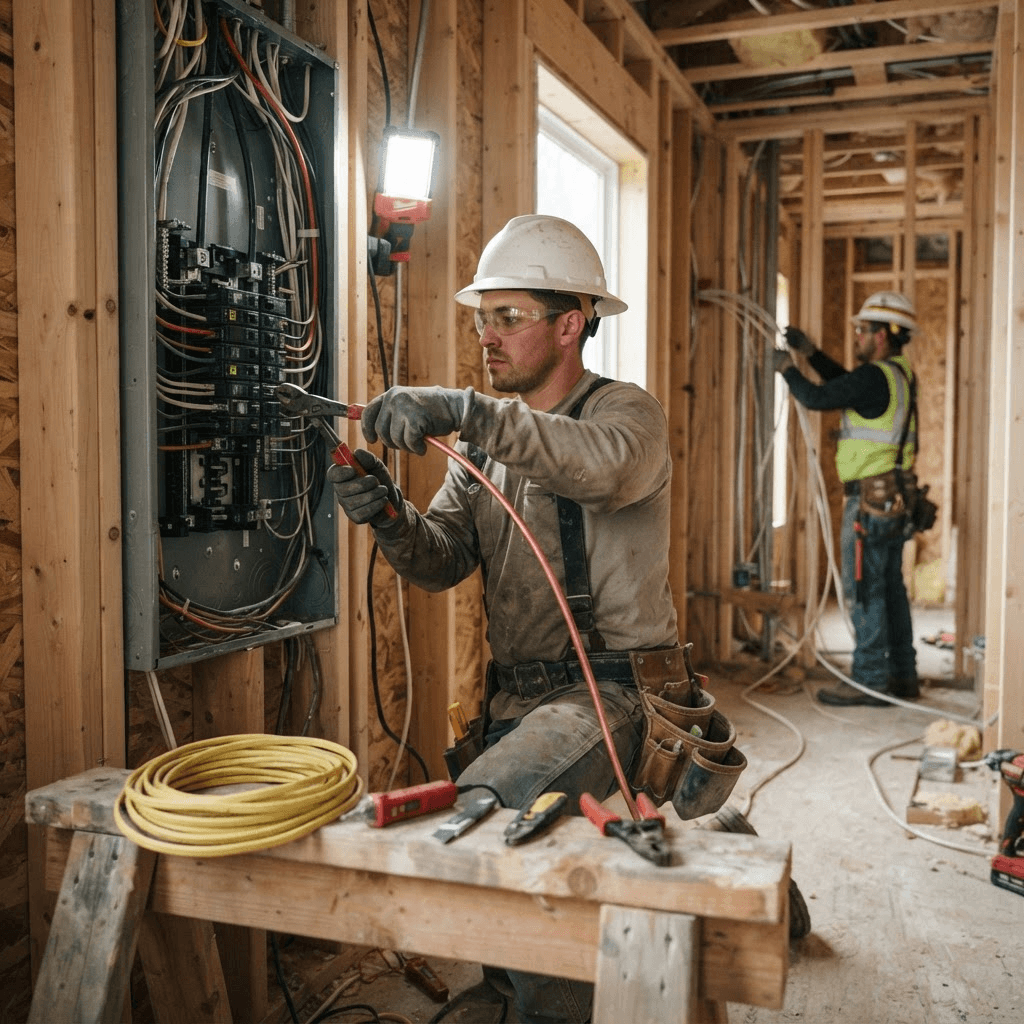
The job is installing and maintaining the systems that carry power through a building. On a residential job that means running cable through framing, mounting boxes, wiring devices and panels, and troubleshooting circuits that stopped working. On commercial and industrial jobs it means conduit, larger feeders, motor controls, and increasingly low-voltage and data.
A great deal of the work is layout and problem-solving before anything gets installed. Electricians read plans, figure out where circuits need to land, and think several steps ahead so the walls can close on schedule. It is one of the more mental trades, which is part of why the training is long.
The two apprenticeship paths
Union apprenticeship (IBEW/JATC). You apply to a local Joint Apprenticeship and Training Committee. The typical process is an aptitude test heavy on algebra and reading comprehension, then an oral interview, then placement on a ranked list. Accepted apprentices work for signatory contractors during the day and attend classes at night, usually for four to five years. Pay starts as a percentage of the journeyman rate and steps up automatically as you log hours.
Non-union apprenticeship. Independent contractors and associations like IEC and ABC run their own programs. The entry is often less competitive and the timing more flexible, since you can be hired whenever a contractor needs help. The classroom portion still meets state requirements for licensure.
Both paths get you to the same license. The union route is more competitive to enter but has a very predictable wage ladder. The non-union route is easier to start and varies more by employer.
What the aptitude test actually covers
If you apply to a JATC, the test is the gate most people worry about. It is not an electrical knowledge test — they are not expecting you to know the trade yet. It covers algebra and functions, plus reading comprehension.
If your algebra is rusty, this is the single highest-return thing you can study before applying. Work through basic equation solving, ratios, and word problems until they feel routine. Community colleges and free online course material are more than sufficient. People who study for a few weeks pass at dramatically higher rates than people who walk in cold.
How to get hired before your apprenticeship starts
The strongest apprenticeship applications come from people already working near the trade. A few ways to get there:
- Electrical helper or material handler with a residential or commercial contractor. You learn the vocabulary and the tools while you wait for the application window.
- Low-voltage and data cabling. Structured cabling, security, and fire alarm work overlap with electrical and hire with little experience.
- Solar installation. Rooftop PV work involves racking, panels, and DC wiring. It is a common on-ramp, and some solar electricians move into full electrical apprenticeships. Our guide on how to get jobs in solar covers that entry point.
- General construction labor. Even unrelated site work teaches you how a job site runs, which shortens your learning curve later. See how to work in construction.
Six months as a helper also gives you something concrete to talk about in the interview, which is where a lot of otherwise strong applicants fall flat.
The license ladder
- Apprentice. Earning hours under supervision, in class part-time.
- Journeyman. Passed the state or local exam after completing required hours. Can work unsupervised and supervise apprentices.
- Master electrician. Additional years plus another exam. Usually required to pull permits and run a contracting business.
The hour requirements are set by your state, and they are tracked carefully. Keep your own records in addition to whatever your employer keeps — hour disputes are a common and avoidable headache.
What to expect physically
The work is easier on the body than roofing or concrete but harder than most people expect. You will spend time in attics and crawlspaces, on ladders, and kneeling on concrete. Drilling overhead and pulling wire through long runs is genuinely demanding.
Attics in summer are the part nobody warns you about. Residential electricians in hot climates start early for exactly that reason.
Deciding if the trade fits
Electrical rewards people who like diagnosing problems and thinking in systems. If you enjoy tracing why something does not work and you can stay careful and methodical when you are tired, the trade tends to fit well. If you want to see a finished result every single day, framing or finish carpentry may satisfy you more.
The safety element is real and worth stating plainly. Electricity does not offer second chances the way a miscut board does. Every good electrician is deliberate about lockout, testing before touching, and never assuming a circuit is dead.
Getting started
Find your local JATC and note the application window now, because it may be months away. In the meantime, get hired as a helper somewhere and start brushing up on algebra. Those two moves together put you ahead of most applicants.
Not sure electrical is the one? The skill quiz compares it against the other trades based on what you actually want out of the work.