How to Work in Construction (Entry Level Laborer)
General labor is the front door to every construction trade. What the job involves, which trades to aim for, and how to turn a labor position into a career.

How to Work in Construction (Entry Level Laborer)
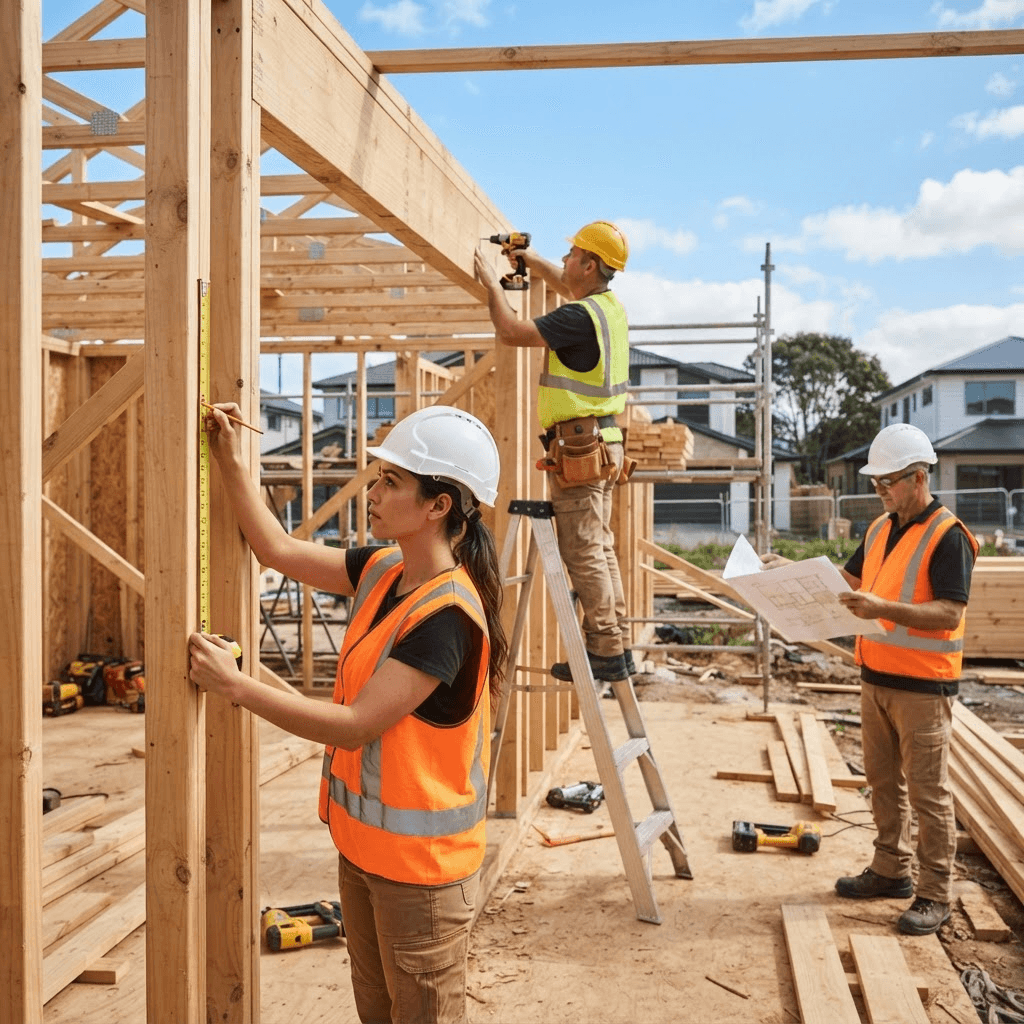
Construction is the largest skilled-trade employer in the country, and almost everyone in it started the same way: as a general laborer, carrying material and cleaning up after people who knew more than they did. It is not a glamorous entry point, but it is an extraordinarily effective one, because a labor position puts you on a jobsite where every trade is working at once and lets you choose which one you want.
The trick is treating labor as a paid tour of the industry rather than as a destination.
What a general laborer actually does
The job is whatever the site needs, which is genuinely broad:
- Moving and staging material — lumber, drywall, block, pipe, fixtures.
- Site cleanup and debris removal, constantly.
- Digging, backfilling, and trench work.
- Demolition and tear-out on renovation jobs.
- Mixing mortar and grout, tending masons.
- Operating small equipment: mixers, compactors, saws, breakers.
- Traffic control, barricades, and safety setup.
- Assisting whichever trade is short-handed that day.
That last item is the important one. A laborer who volunteers to help the electricians on Tuesday and the framers on Thursday is running an apprenticeship no one is charging them for.
The two kinds of jobsite
Where you start shapes what you learn.
Residential — houses, additions, remodels. Smaller crews, more variety, faster pace, and you see a whole project from foundation to finish. Renovation work in particular teaches diagnostic thinking, because you are constantly discovering what is behind a wall. Our guide to what remodeling actually involves covers the scope.
Commercial and industrial — larger structures, bigger crews, strict sequencing, more paperwork and safety oversight. Pay and benefits are usually better, unionization is more common, and the work is more specialized.
Both are valid. Residential teaches breadth quickly; commercial pays better and has clearer advancement structures.
Choosing a trade to aim for
Within a season on a site you will have seen most of these. The main options:
- Carpentry — framing, forms, finish, trim. The most transferable trade of all. See how to get hired in carpentry.
- Electrical — highest earning ceiling, longest apprenticeship, most classroom work. See electrical apprentice jobs.
- Plumbing and pipefitting — comparable pay to electrical, similar licensing structure, always in demand.
- HVAC — mechanical systems and controls, strong service-side career. Worth reading what HVAC covers and how HVAC apprenticeships work.
- Masonry and concrete — block, brick, flatwork, foundations. Physically hardest, good money, real craft.
- Drywall and finishing — fast-paced, often piece rate, strong earnings for skilled hangers and tapers.
- Roofing — highest entry pay, hardest conditions. See roofing labor and sales.
- Insulation and building envelope — growing steadily, and insulation is often the highest-return upgrade on a building.
- Heavy equipment operation — excavators, loaders, dozers. Certification-based and well paid.
Union or non-union
This is a genuine fork, and the answer depends on your region.
Union apprenticeships provide structured training, defined wage progression, benefits, and a pension. Admission is competitive and typically involves an application window, an aptitude test, and an interview. If you can get into one, the training quality is usually excellent and the wage scale is transparent.
Non-union or open-shop employers hire faster and with fewer hurdles. Advancement depends on your employer rather than a contract, which means it can be quicker or considerably slower.
The practical approach is to apply to union apprenticeships when their windows open while working a non-union labor job in the meantime. Nothing about that is contradictory, and field experience helps your application.
What it pays and how it climbs
General labor starts modestly — usually at or slightly above the local minimum for construction work — but the progression is what matters:
- Laborer to skilled laborer or trade helper: a meaningful bump within a year.
- Apprentice: scheduled raises, often every six months or 1,000 hours.
- Journeyman: full trade rate, typically a large multiple of your starting wage.
- Foreman, superintendent, or licensed contractor: management and ownership pay.
Overtime is common and often substantial. Many trades also pay a per diem or travel premium on out-of-town work.
Safety is the actual job requirement
Construction has a high injury rate, and the causes are well understood: falls, being struck by objects, caught-in or between incidents, and electrocution. Concretely:
- Get OSHA 10 before you apply — it is inexpensive, and many sites require it to set foot on the property.
- Wear the boots, glasses, gloves, and vest without being asked.
- Learn ladder and scaffold setup properly rather than by imitation.
- Never work under a suspended load, and never assume a circuit is dead.
- Speak up about unsafe conditions. Sites that punish this are sites to leave.
How to get hired this week
- Apply directly to general contractors and specialty subs, not only to job boards. Small subs hire on the spot.
- Try a construction staffing agency for immediate placement and exposure to multiple sites, then convert to a direct hire.
- Show up in work boots to the interview. It reads as serious.
- Emphasize reliability over skill. Transportation, punctuality, and passing a drug screen are what most employers are actually screening for.
- Buy a basic hand-tool set — tape, hammer, utility knife, speed square, tool bag.
- Ask about the apprenticeship path in the interview and note who has a real answer.
The honest summary
Construction labor is hard on your body, weather-dependent, and starts near the bottom of the pay scale. In exchange, it requires no degree or debt, it pays from day one, it places you inside an industry with a persistent shortage of skilled workers, and it offers a genuine path to a licensed trade or your own business within a decade.
Treat the first year as reconnaissance. Work hard, watch every trade, pick the one that holds your interest, and then commit to it deliberately.