How to Improve Home Insulation (Crawl Space and Foam Board Insulation)
How to improve home insulation, with a focus on crawl space insulation and encapsulation, and how to install rigid foam board for better R-value and moisture control.
How to Improve Home Insulation: Crawl Space and Foam Board Insulation
Improving your home's insulation is one of the highest-return home improvements you can make, cutting energy bills, evening out drafty rooms, and making the whole house more comfortable year-round. Insulation works by slowing the transfer of heat, keeping warmth inside during winter and outside during summer, and its effectiveness is measured by R-value, where higher numbers mean better resistance to heat flow. Two areas offer especially good payoffs for the effort: the crawl space and, as a versatile material, rigid foam board.
Where Homes Lose the Most Energy
Before adding insulation, it helps to know where homes lose the most energy so you spend effort where it counts. The biggest culprits are typically:
- The attic.
- Air leaks around windows, doors, and penetrations.
- Uninsulated or under-insulated crawl spaces and basements.
Air sealing goes hand in hand with insulation, since insulation slows heat transfer but does little against air actually leaking through gaps, so sealing cracks and gaps with caulk and spray foam first makes whatever insulation you add far more effective.
Crawl Space Insulation: Two Approaches
The crawl space is one of the most overlooked yet impactful areas to address. A cold, damp, or vented crawl space pulls heat out of the floors above and can let moisture and musty air rise into the home. There are two main approaches:
- Traditional floor insulation: insulates between the floor joists above the crawl space with batt insulation, keeping the crawl space itself outside the insulated envelope.
- Encapsulation, the increasingly preferred method: seals the crawl space with a vapor barrier across the ground and insulates the perimeter walls, which brings the space inside the home's conditioned envelope and controls moisture.
Why Rigid Foam Board Is a Versatile Insulator
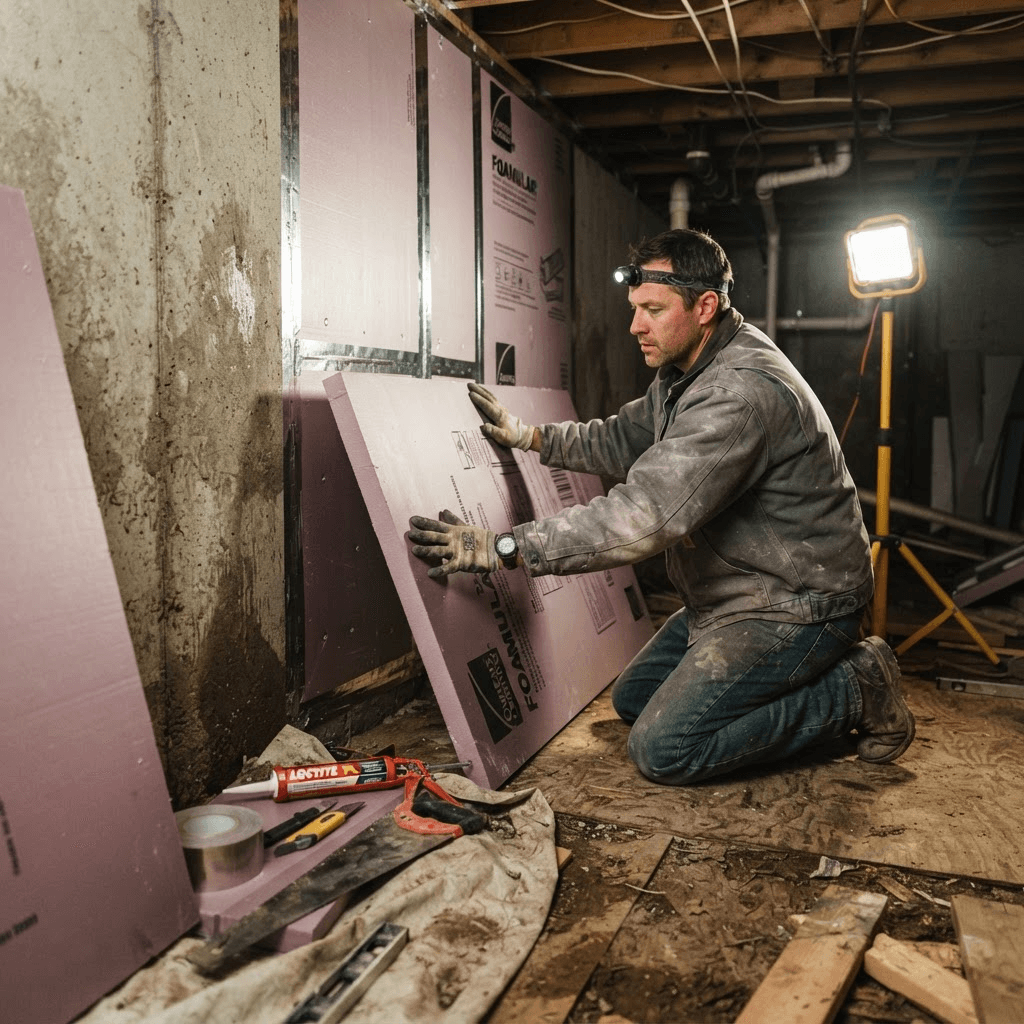
For insulating crawl space walls, rigid foam board is often the material of choice, which is where foam board earns its reputation as a versatile insulator. Rigid foam board, available as EPS, XPS, and polyiso, delivers high R-value per inch, resists moisture, a big advantage in damp crawl spaces and basements where fiber insulation can absorb water and grow mold, and adds structural rigidity.
Foam board is also excellent for basement walls, rim joists, under slabs, behind siding, and garage door panels. Its moisture resistance and high performance in a thin profile make it uniquely useful.
How to Install Foam Board Insulation
Installing foam board is a manageable DIY project in many cases:
- Measure and cut the panels to fit with a straightedge and utility knife.
- Adhere them to clean crawl space or basement walls with a compatible construction adhesive.
- Seal all the seams and edges with foam-board tape or spray foam so no air can bypass the boards.
- Fit pieces snugly against each other and around obstructions, paying special attention to sealing the top and bottom edges.
- In a crawl space, pair the wall foam board with a ground vapor barrier for the full encapsulation benefit.
Note that foam board often must be covered with a fire-rated barrier in living spaces, so check local code.
Rounding Out Your Home Insulation Strategy
Beyond crawl spaces and foam board, round out your insulation strategy by:
- Topping up attic insulation to recommended levels.
- Insulating rim joists and any accessible exterior walls.
- Sealing ductwork that runs through unconditioned spaces.
Prioritize the biggest, leakiest areas first for the fastest payback, and combine air sealing with added R-value everywhere.
Our energy upgrade prioritizer will show you where insulation sits among the other improvements competing for your budget.
The Bottom Line
Do this and you'll notice steadier temperatures, fewer drafts, quieter rooms, and lower heating and cooling bills, making insulation improvements one of the smartest investments in your home's comfort and efficiency.
Insulation pairs closely with air sealing and HVAC sizing, all covered in our insulation improvement guides.
Frequently Asked Questions
Which type of insulation is best for a crawl space? Rigid foam board on the crawl space walls, combined with a sealed vapor barrier on the ground, is often the most effective approach in an enclosed crawl space, because it controls both heat loss and moisture. Fiberglass batts between floor joists are an option in vented crawl spaces but can sag and absorb moisture over time, so many experts favor sealing and insulating the walls instead.
What is foam board insulation and where is it used? Foam board is a rigid panel of polystyrene or polyisocyanurate that offers high insulating value in a thin profile. It is used on foundation and crawl space walls, under slabs, on basement walls, and as continuous exterior sheathing. Its moisture resistance and high R-value per inch make it especially useful in below-grade and space-limited areas.
How much can insulation lower my energy bills? Proper insulation and air sealing can cut heating and cooling costs noticeably, often by a meaningful percentage in a poorly insulated home. The biggest savings come from addressing the largest gaps first, like attics, crawl spaces, and air leaks, before fine-tuning. Results vary with climate, home age, and how leaky the house was to begin with.
Should I seal or vent my crawl space? The modern trend favors sealing (encapsulating) crawl spaces, insulating the walls, adding a ground vapor barrier, and controlling humidity, because vented crawl spaces often let in humid air that causes moisture and mold problems. The right choice depends on your climate and home, so a professional assessment helps determine the best strategy.