Insulation First: The Upgrade That Makes Every Other One Pay Off
Why air sealing and insulation should come before any other energy upgrade, letting you install a smaller HVAC system and solar array while cutting bills.
Insulation First: The Upgrade That Makes Every Other One Pay Off
It is tempting to jump straight to visible upgrades like a new HVAC system or rooftop solar, but the building envelope, your insulation and air sealing, quietly determines how hard every other system in your home has to work. Think of insulation as the foundation of an energy-efficient home: until the envelope is tight, every dollar you spend heating or cooling the house is partly wasted, leaking out through gaps, thin attic insulation, and uninsulated walls. That is why energy professionals almost universally recommend an insulation-first approach before any other efficiency improvement.
Why Insulation Should Come Before Other Upgrades
Air sealing and insulation reduce your home's heating and cooling load, which is the amount of energy needed to keep it comfortable. When that load drops, you can install a smaller, cheaper HVAC system and a smaller, less expensive solar array to run it, because both are sized to the load rather than to a leaky house. This is where the savings compound: you pay less for the equipment up front, less to operate it every month, and less to power it with solar. Upgrade the HVAC or add panels first, and you end up oversizing, and overpaying for, hardware to compensate for a problem you could have fixed for a fraction of the cost.
Insulation also improves everyday comfort in ways homeowners feel immediately. A well-sealed, well-insulated home has fewer cold drafts in winter, fewer hot spots in summer, more consistent temperatures from room to room, and noticeably quieter interiors. It also reduces moisture problems and the risk of ice dams, protecting the structure itself over the long term.
How the Process Works: Blower-Door Test, Sealing, and Insulation
A proper insulation upgrade starts with diagnosis, not guesswork. We begin with a blower-door test, which uses a calibrated fan mounted in an exterior doorway to depressurize the house and reveal exactly where air is leaking. Paired with an infrared camera, the test pinpoints the hidden gaps, around recessed lights, plumbing penetrations, rim joists, attic hatches, and top plates, that account for most of a home's air loss.
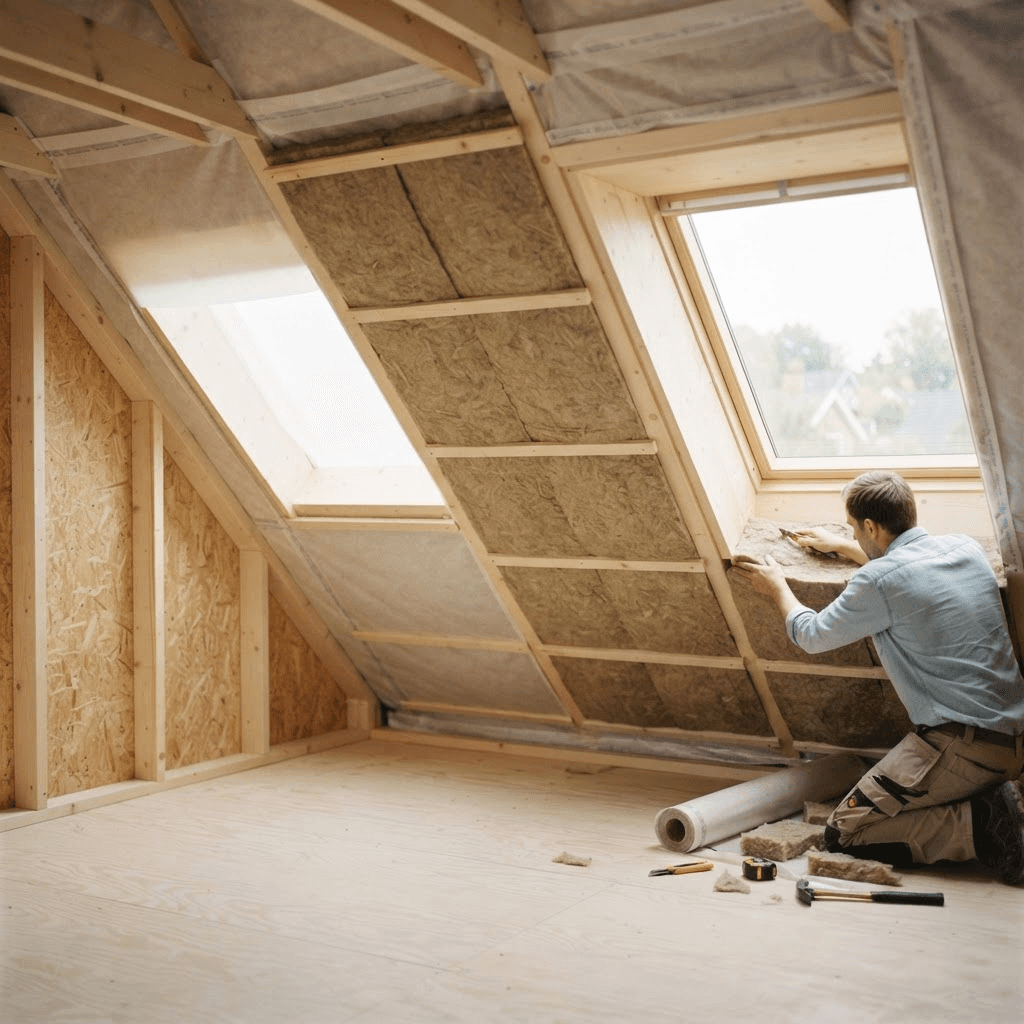
With the leaks mapped, the next step is air sealing: caulking, foaming, and gasketing those gaps to stop uncontrolled airflow. Only after the house is sealed do we add or upgrade insulation, because insulation slows heat transfer but does little to stop air movement on its own. The two work together, sealing stops the drafts, and insulation slows the heat, and doing them in the right order is what delivers results.
Where Insulation Matters Most
Not every part of the house is equally important. The attic is almost always the top priority, because heat rises and escapes through the roof, and attic insulation is usually the cheapest, highest-impact place to add R-value. Next come the walls, rim joists, and floors over unconditioned spaces like garages and crawl spaces. Basements and crawl spaces are also common weak points, since uninsulated foundation walls and dirt floors let cold and moisture migrate up into the living space.
Understanding R-Value and Insulation Types
Insulation is rated by R-value, a measure of resistance to heat flow, higher R-values insulate better. The right amount depends on your climate and which part of the house you are insulating. Common insulation types include:
- Fiberglass batts, affordable and widely used in walls and attics.
- Blown-in cellulose or fiberglass, ideal for filling attics and existing wall cavities.
- Spray foam, which both air-seals and insulates in one step, offering high R-value per inch at a higher cost.
- Rigid foam boards, used on foundation walls, rim joists, and under roofs.
A good contractor matches the material to each area and to the recommended R-value for your region.
The Payback: Lower Bills and Smaller Systems
The financial case for insulation is strong. Because it reduces the load, insulation lowers monthly energy bills immediately and continues to pay back for the life of the home. Just as importantly, it lets you right-size the equipment that comes next, a smaller furnace, a smaller heat pump, a smaller solar array, each of which saves money up front. Many utilities and governments also offer rebates and tax credits for insulation and air sealing, further shortening the payback period.
Our home improvement order-of-operations tool applies this logic to your own house and returns a ranked action plan.
Insulation and Indoor Air Quality
A tighter home is more efficient, but it also needs controlled ventilation to stay healthy, because sealing eliminates the accidental airflow that used to bring in fresh air. That is why a good insulation-first plan pairs air sealing with proper mechanical ventilation, such as an energy recovery ventilator (ERV), which brings in fresh air while recovering the energy from the air being exhausted. Done right, you get a home that is efficient, comfortable, and healthy.
Final Thoughts
Insulation is not the flashiest upgrade, but it is the one that makes every other improvement work better and cost less. By sealing and insulating the envelope first, guided by a blower-door test and targeted at the attic, walls, and foundation, you shrink your heating and cooling load, lower your bills, and right-size the HVAC and solar systems that follow. For any homeowner planning a series of efficiency upgrades, the smartest first move is almost always insulation.
Once the envelope is tight, our energy efficiency upgrade guides cover the improvements that build on it.