Left Hand Inswing Doors vs Prehung Interior Doors (Modern Doors Guide)
Door handing and door type confuse a lot of shoppers. A modern guide to understanding left-hand inswing, slab vs. pre-hung, and choosing the right door.
Left Hand Inswing Doors vs. Prehung Interior Doors (Modern Doors Guide)
Buying a door sounds simple until you are staring at terms like "left hand inswing," "prehung," and "slab," and realize a wrong choice can mean a door that swings the wrong way or does not fit at all. These terms actually describe two different things, one is about the direction a door swings, the other is about how the door is packaged and installed, so understanding both is the key to ordering the right door with confidence.
Door Handing: What "Left Hand Inswing" Means
Door handing describes which way a door is hinged and which direction it swings, and getting it right is essential for ordering exterior and prehung doors. The most common convention: stand facing the door from the side it swings away from you (for an exterior door, stand outside facing in). If the hinges are on the left and the door swings away from you, it is a left hand door; if the hinges are on the right, it is a right hand door.
"Inswing" versus "outswing" adds the second piece: an inswing door opens inward, into the room or home, while an outswing door opens outward. So a left hand inswing door has hinges on the left and opens inward, a very common configuration for entry doors.
Why Handing Matters
Handing matters because it determines how the door fits your space and traffic flow. The swing direction affects where furniture can go, how people move through the opening, where the door lands when open, and which way the lock and hardware face. Order the wrong handing and the door may swing into a wall, block a light switch, or clash with the natural flow of the room. Before ordering, stand in the opening and picture exactly how you want the door to swing, then translate that into the handing terminology so your order matches your intent.
Prehung vs. Slab Doors
Separately from handing, doors are sold in two main formats, and this is what "prehung" refers to:
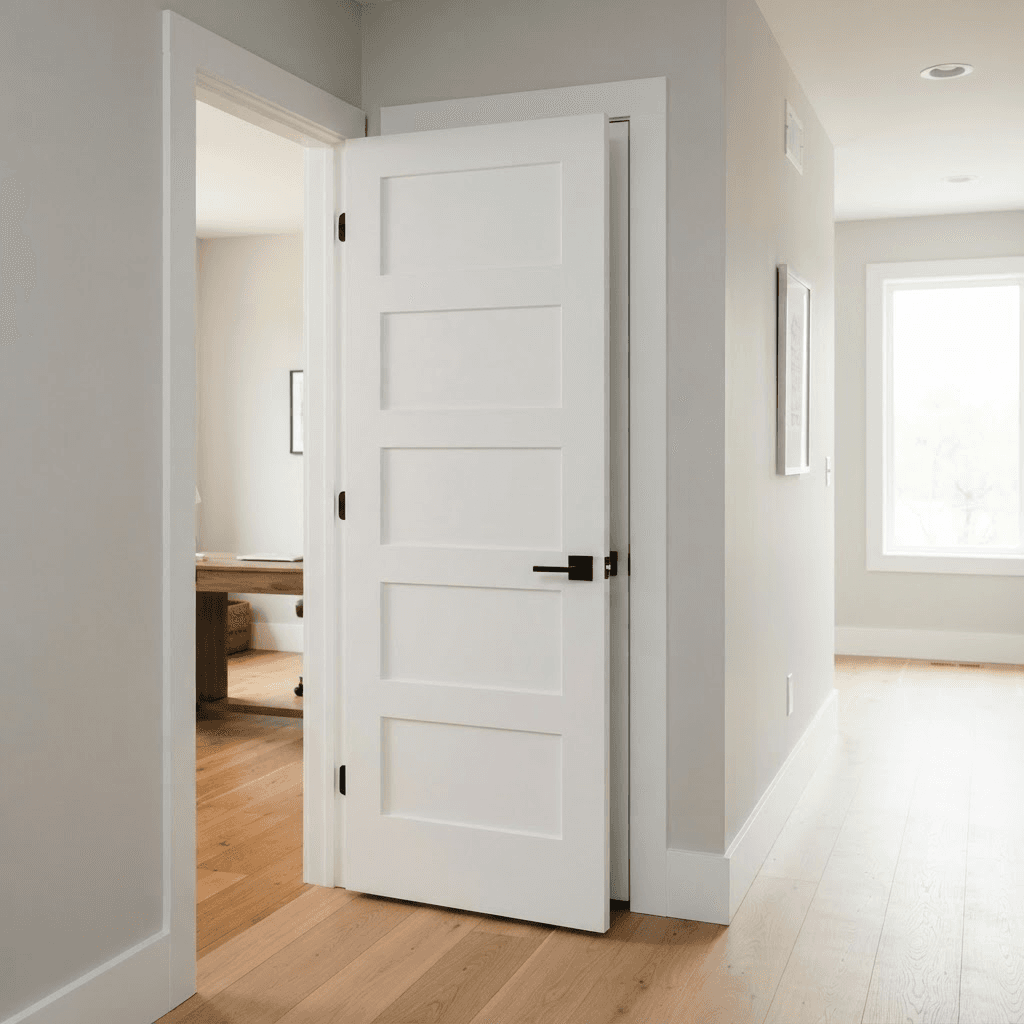
- A prehung door comes already mounted on its hinges inside a complete frame (the jamb), as a ready-to-install unit. You set the whole assembly into the rough opening, shim it level and plumb, and secure it, everything is pre-aligned at the factory.
- A slab door is just the door panel itself, with no frame and often no hinge mortises or bored holes. You install a slab into an existing frame, reusing the jamb and hinges already in place.
So "left hand inswing" and "prehung" are not competing choices, a prehung door has a handing, and a slab door is chosen when you are only replacing the panel.
When to Choose a Prehung Door
Prehung doors are the easier, more foolproof choice in many situations:
- New construction or new openings, where there is no existing frame.
- Damaged, rotted, or out-of-square frames that need replacing along with the door.
- DIYers who want simpler alignment, since the door and frame arrive pre-fitted and squared.
The trade-off is that prehung units are bulkier, more expensive, and require more work to install because you are setting an entire frame, and you must order the correct handing.
When to Choose a Slab Door
A slab door is the smart pick when the existing frame is in good shape and you simply want a new door panel:
- Replacing a worn or dated interior door in a solid, square existing frame.
- Matching a specific look where you want a particular door style without disturbing the trim and jamb.
- Saving money and material, since a slab costs less than a full prehung unit.
The catch is that slab installation requires more precision, you must mortise the hinges, bore the holes for the handle and latch, and trim the slab to fit the existing opening exactly, so it demands more skill and the right tools.
Modern Door Styles and Materials
Today's doors go far beyond the basic six-panel design. Modern interior doors include clean flush panels, sleek shaker styles, glass-paneled doors for light, and bold flat-panel designs, in materials from solid wood and MDF to hollow-core and solid-core options. Solid-core doors feel substantial and block sound well, making them popular for bedrooms and offices, while hollow-core doors are lighter and more affordable for closets and low-traffic rooms. Matching the style, material, and finish to your home's overall design pulls the whole space together.
How to Measure and Order Correctly
Whether prehung or slab, accurate measurement is everything. For a slab, measure the width, height, and thickness of your existing door precisely. For a prehung unit, measure the rough opening and confirm the required jamb width to match your wall thickness. Always determine and specify the handing before ordering, and double-check whether you need inswing or outswing. Taking a few careful measurements up front prevents the frustration and expense of a door that does not fit or swings the wrong way.
Final Thoughts
The keys to buying the right door are understanding that handing (like left hand inswing) describes the swing direction, while prehung versus slab describes how the door is packaged and installed. Choose prehung for new or damaged openings and easier alignment, and a slab when you are simply replacing a panel in a good existing frame. Determine your handing carefully, measure precisely, and pick a modern style and material that fits your home, and you will end up with a door that fits perfectly and swings exactly the way you want.
If you are outfitting several openings at once, our interior door buying guides cover sizing, styles, and hardware in more detail.