Roof Diagram and Anatomy Explained
A breakdown of roof anatomy, ridge, hips, valleys, decking, underlayment, flashing, eaves, and ventilation, so you can understand estimates and spot problems.
Roof Diagram and Anatomy Explained
A roof looks like a simple slope of shingles from the street, but it is actually a system of many parts working together to shed water and protect your home. Knowing the anatomy, and the names contractors use, makes it far easier to understand estimates, describe a problem you are seeing, and judge whether repair advice makes sense. Here is a plain-English tour of the roof from top to bottom, structure to surface.
Roof Shapes and Lines: Ridge, Hip, Valley, and Gable
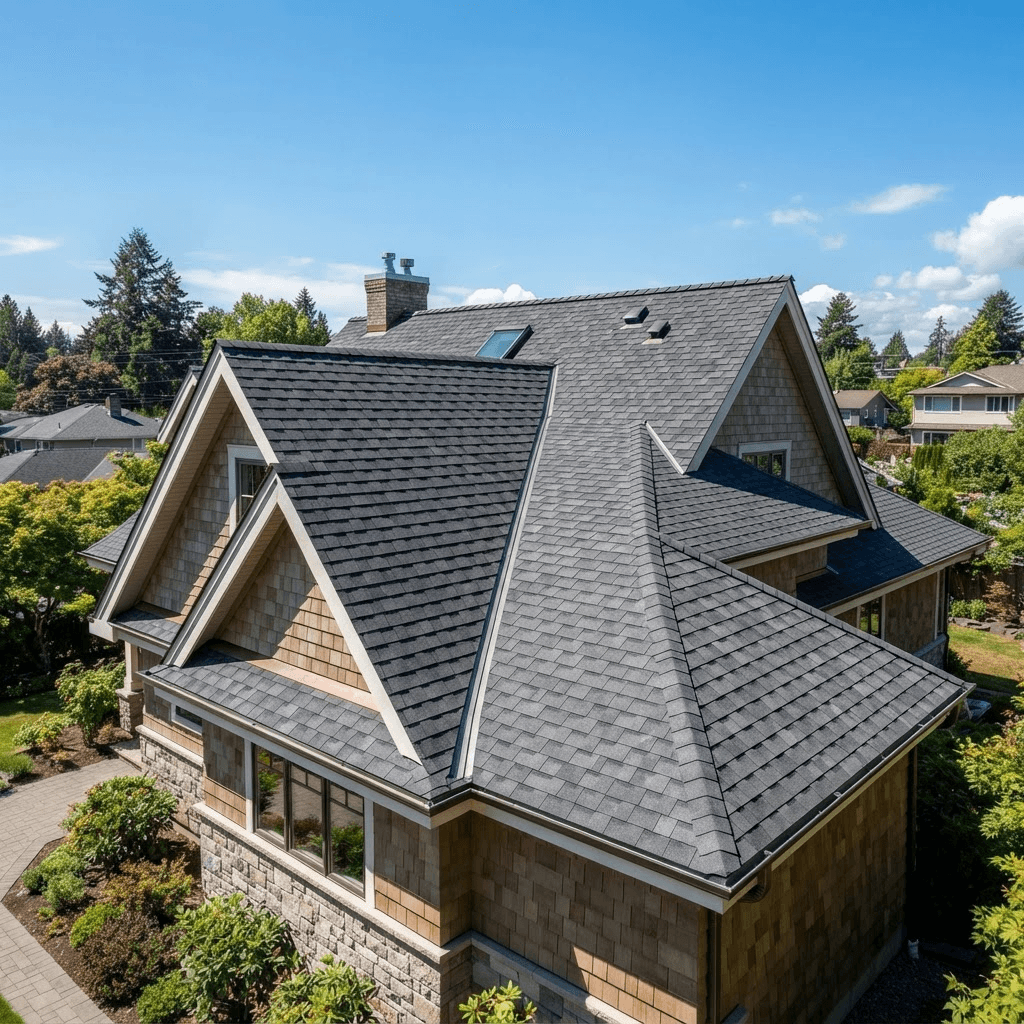
Start with the shapes and lines that define a roof's form, since these terms come up constantly:
- Ridge: the horizontal line at the very top where two roof slopes meet, the highest point of the roof.
- Hip: the sloped external angle where two roof sections meet going down and outward.
- Valley: the internal angle where two slopes meet and channel water down, one of the most leak-prone areas.
- Gables: the triangular wall sections under the roof at the ends of a ridge.
- Pitch (or slope): describes how steep the roof is, which affects everything from drainage to what materials can be used.
Understanding these terms helps you follow a contractor's description of where a problem is and what needs attention.
The Roof's Structure: Rafters and Decking
Beneath the visible surface is the structure that holds everything up. Rafters or engineered trusses are the angled framing members that form the roof's skeleton and carry its load. Across those rafters lies the decking or sheathing, usually plywood or OSB panels, which is the solid surface everything else attaches to.
If the decking is soft, sagging, or rotted, no surface material will perform properly, so this layer is the foundation of a healthy roof even though you never see it once the roof is finished. Replacing damaged decking is a common and important part of a reroofing job.
Underlayment and Roof Covering: The Waterproofing System
On top of the decking go the protective layers that actually keep water out:
- Underlayment: a water-resistant barrier, felt or synthetic, rolled over the decking as a secondary line of defense beneath the shingles.
- Ice and water shield: a self-adhering membrane applied in valleys, along eaves, and around penetrations where leaks are most likely.
- Roof covering: the visible surface, most often asphalt shingles, but also metal, tile, wood, or slate, that sheds water and takes the brunt of the weather.
Together these layers form a redundant waterproofing system, so if wind lifts a shingle, the underlayment still protects the deck.
Flashing: The Unsung Hero
Flashing is thin metal installed at the joints and transitions where the roof meets something else, chimneys, walls, vents, skylights, and in valleys. Because these transitions are where water is most likely to sneak in, flashing is one of the most important, and most commonly failed, roof components. Many roof leaks trace back not to the shingles themselves but to old, cracked, or poorly installed flashing, so it deserves close attention during any inspection.
Eaves, Fascia, Soffit, and Drainage
The roof's edges and drainage system round out the anatomy:
- Eaves: the lower edges of the roof that overhang the walls.
- Fascia: the vertical board along the eaves that the gutters attach to.
- Soffit: the underside of the overhang, usually vented to allow airflow into the attic.
- Gutters and downspouts: channel water off the roof and away from the foundation.
These parts protect the walls and foundation by controlling where water goes, and the vented soffit is key to healthy attic ventilation.
Roof Ventilation: Why It Matters
A roof is not just about shedding water, it also has to breathe. Intake vents in the soffit and exhaust vents at the ridge create airflow through the attic, carrying away heat and moisture. Good ventilation prevents the buildup that bakes shingles from below, warps decking, and encourages mold and ice dams. When homeowners wonder why a roof failed early, poor ventilation is often the hidden cause.
Final Thoughts
A roof is a layered system, structure, underlayment, covering, flashing, and drainage, each part doing a specific job to keep your home dry and protected. Knowing the anatomy and terminology lets you read estimates with confidence, pinpoint problems like a leaky valley or failed flashing, and evaluate whether a contractor's advice makes sense. The next time you look at your roof, you will see not just shingles but the complete system working to protect everything beneath it.
With the vocabulary in hand, our roofing basics library walks through pricing, materials, and when replacement makes sense.
Frequently Asked Questions
What are the main parts of a roof? A roof is a layered system: the decking (sheathing) forms the structural base, underlayment adds a water-resistant layer, and the outer covering (like shingles) sheds water. Key features include the ridge at the peak, the eaves at the lower edge, valleys where slopes meet, flashing that seals joints and penetrations, and the fascia and soffit that finish the edges and aid ventilation.
What is roof flashing and why does it matter? Flashing is thin metal installed at vulnerable joints, around chimneys, vents, skylights, and in valleys, to direct water away and prevent leaks. Because these transitions are where roofs most commonly fail, quality flashing and proper installation are critical. Many roof leaks trace back to failed or poorly installed flashing rather than the shingles themselves.
What is the difference between a ridge, eave, and valley? The ridge is the horizontal line at the very top where two roof slopes meet, the eave is the lower edge that overhangs the walls, and a valley is the internal angle where two roof planes meet and channel water down. Each plays a role in drainage and ventilation, and each needs proper detailing to keep the roof watertight.
Why is roof ventilation important? Good ventilation, with intake at the soffits and exhaust at the ridge, keeps the attic cooler and drier. This prevents heat and moisture buildup that can bake shingles from below, cause condensation and mold, and shorten the roof's life. A balanced ventilation system is a key but often overlooked part of a healthy roof.