Solar Electricity Explained: kW, kWh, Voltage, Current & Power
Confused by kW, kWh, volts, and amps on your solar quote? This plain-English guide breaks down power vs. energy and how solar electricity works.
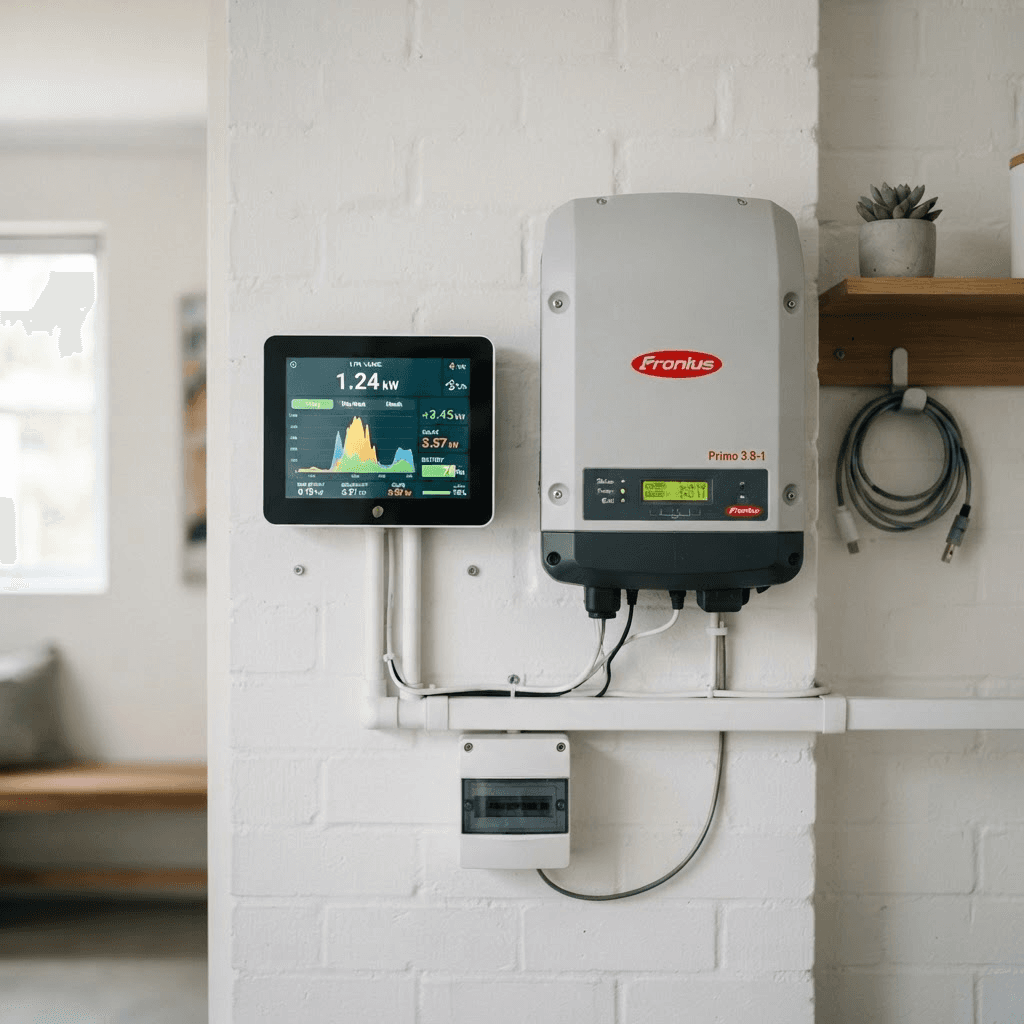
Solar Electricity Explained: kW, kWh, Voltage, Current & Power
If you've started shopping for solar, you've been hit with a wall of electrical terms: kilowatts, kilowatt-hours, volts, amps, and power. They sound interchangeable but they're not, and mixing them up is the single most common source of confusion when reading a solar quote.
The good news is that a handful of plain-English definitions and one or two simple relationships clear up nearly all of it.
Power vs. Energy: The Distinction Everything Else Hangs On
Let's start with the most important distinction, the one everything else hangs on: power versus energy.
- Power is the rate at which electricity is being used or produced at a given instant.
- Energy is the total amount used or produced over a span of time.
It's the difference between how fast water is flowing right now and how much water filled the bucket by the end of the hour.
What Is a Kilowatt (kW)?
Power is measured in watts, and a kilowatt (kW) is simply 1,000 watts. When you see a solar system described as "7 kW," that's its power rating — the maximum rate at which it can produce electricity under ideal sunshine.
Your appliances have power ratings too:
- A bright LED bulb might draw 10 watts
- A hair dryer might pull 1,500 watts — meaning it uses power fifteen times faster
What Is a Kilowatt-Hour (kWh)?
Energy is measured in watt-hours, and a kilowatt-hour (kWh) is 1,000 watt-hours. One kilowatt-hour is what you get from running one kilowatt of power for one hour.
This is the unit your utility bills you in, and it's the number that really matters for savings, because it captures how much electricity you actually consumed or generated over time, not just how fast.
The Formula: Energy = Power × Time
Here's the relationship that ties them together:
> Energy = Power × Time
- A 7 kW solar array running at full output for 5 hours of good sun produces about 35 kWh of energy for the day.
- A 1,000-watt appliance running for two hours uses 2 kWh.
Once this power-times-time idea clicks, most solar math becomes straightforward arithmetic.
Voltage and Current: Electricity at a Finer Level
Now for the two terms that describe electricity at a finer level: voltage and current.
- Voltage (measured in volts) is the electrical "pressure" that pushes electricity through a wire.
- Current (measured in amps) is the rate of flow of the electricity itself.
A common analogy is a water pipe: voltage is the water pressure, and current is how much water is actually moving through.
The Formula: Power = Voltage × Current
Voltage and current combine to make power, through another simple relationship:
> Power = Voltage × Current (Watts = Volts × Amps)
This is why the same amount of power can be delivered as high voltage with low current, or low voltage with high current — a fact that turns out to matter a lot in how solar systems are wired and why higher voltages are used to move power efficiently over distance.
How These Terms Shape Your Solar System's Design
These terms explain design choices you'll see in your system:
- Panels are often [wired in series](/blog/solar-power-wiring-series-vs-parallel) to raise the voltage, because higher voltage travels through wires with less energy lost as heat, which is more efficient.
- Current determines wire thickness, since more amps require heavier cable to carry safely.
- The inverter manages voltage and converts the panels' DC into the AC your home uses.
Once these units are clear, our system size calculator puts them to work by turning your kilowatt-hour usage into a panel count and array size.
Putting It All Together on Your Bill
Let's put it all together with your actual bill:
- Your utility charges you per kilowatt-hour of energy.
- Your solar system has a power rating in kilowatts.
- How many kilowatt-hours it produces depends on that rating times the hours of good sun it gets.
Match your annual kWh production to your annual kWh consumption and you've offset your usage — that's the whole game, expressed in units you can now read fluently.
The Bottom Line
So the next time a quote mentions a 7 kW system expected to produce 10,000 kWh a year at a certain voltage, you'll know exactly what each number means: the rate it can generate, the total energy it'll deliver, and the electrical pressure it operates at.
Master power versus energy first, keep the two simple formulas handy, and the language of solar electricity stops being a barrier and becomes a tool.
Voltage, Current, and Power in Plain Terms
The easiest way to understand solar electricity is a water analogy. Voltage is like water pressure, the force pushing electricity through a wire, measured in volts. Current is like the flow rate, the volume of electricity moving, measured in amps. Power is the two multiplied together, measured in watts: volts times amps equals watts. This simple relationship underpins every number on a solar spec sheet, from panel ratings to inverter limits.
kW vs. kWh: The Most Common Confusion
The single most misunderstood pair in solar is kilowatts versus kilowatt-hours. A kilowatt (kW) is a rate of power, how fast energy is being produced or used at an instant. A kilowatt-hour (kWh) is a quantity of energy, how much was produced or used over time. A 5 kW system running for one hour produces 5 kWh. Your utility bills you in kWh, and your system is sized in kW, so knowing the difference is essential to reading both.
Putting the Units Together
These units chain together logically. Your panels have a power rating in watts. Multiply by peak sun hours to get energy in watt-hours per day. Divide by 1,000 to convert to kWh. Compare that to your monthly kWh usage from your utility bill, and you can estimate how much of your consumption solar will cover. Every sizing and savings calculation is just these units combined in sequence.
AC vs. DC and the Inverter's Role
Solar panels produce direct current (DC), where electrons flow one direction, but your home and the grid use alternating current (AC), where the flow reverses many times per second. The inverter's job is to convert DC into grid-compatible AC. Some energy is lost in this conversion, typically a few percent, which is one reason real-world output is slightly below the panels' rated DC wattage.
Once these units make sense, the rest of our solar explainers and calculators build on them to cover sizing, savings, and equipment choices.
Frequently Asked Questions
What is the difference between kW and kWh? A kilowatt (kW) measures power, the rate of energy use at a moment. A kilowatt-hour (kWh) measures energy, the total amount used over time. Your system is rated in kW; your bill is in kWh.
How are volts, amps, and watts related? Volts times amps equals watts. Voltage is electrical pressure, current (amps) is flow, and power (watts) is the product of the two.
Why does my system produce DC but my home use AC? Panels naturally generate DC, while homes and the grid run on AC. The inverter converts DC to AC so the power can run your appliances and feed the grid.
How do I convert my panel wattage into daily energy? Multiply the system's wattage by your location's peak sun hours, then divide by 1,000 to get kilowatt-hours per day.