What Is a Heat Pump and Thermostat (How They Go Together)
A heat pump heats and cools by moving heat, and the thermostat is its brain. Here's how each works and why they have to be matched correctly.
What Is a Heat Pump, and How Does It Work With a Thermostat?
A heat pump is one of the most efficient ways to heat and cool a home, and the thermostat is the brain that tells it what to do. The two work as a team, and understanding how each functions, and why they must be properly matched, helps homeowners get the comfort and energy savings a heat pump promises. As heat pumps become more popular for their efficiency and their ability to run on clean electricity, knowing how this pairing works is increasingly useful for anyone planning a renovation, replacing an aging furnace, or simply trying to lower their energy bills.
This guide explains what a heat pump is, how it moves heat instead of making it, why it has become such a popular home comfort solution, and how the right thermostat unlocks its full potential.
What Is a Heat Pump?
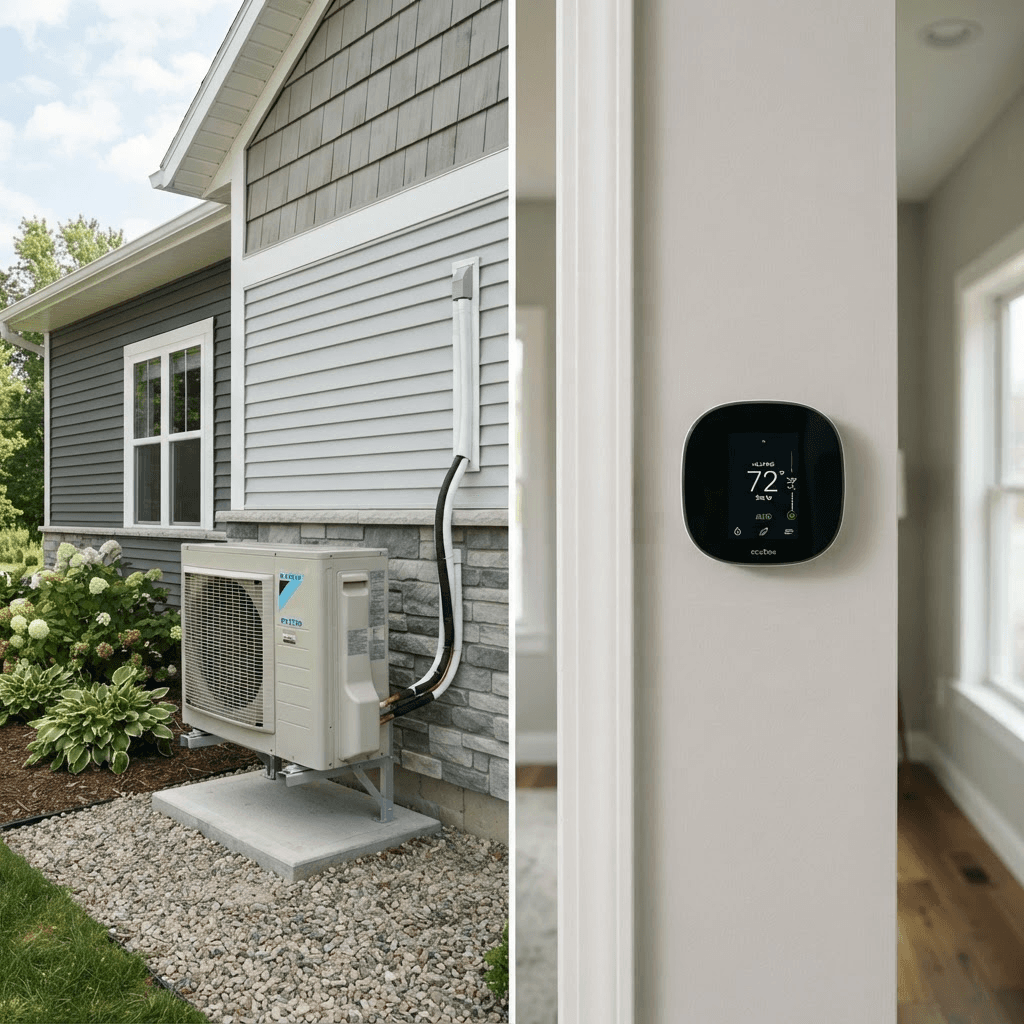
A heat pump is an all-in-one heating and cooling system that uses electricity to move heat from one place to another. Unlike a furnace, which burns fuel to create heat, or an air conditioner, which only cools, a heat pump does both jobs with a single piece of equipment. It consists of an outdoor unit and an indoor unit connected by refrigerant lines, and it works year-round to keep your home comfortable.
Because it handles both heating and cooling, a heat pump can replace two separate systems, a furnace and an air conditioner, with one efficient unit. This is a big part of why heat pumps are central to modern, energy-efficient home design.
How a Heat Pump Works
The key to a heat pump is that it does not create heat, it moves it. Rather than burning fuel like a furnace, a heat pump transfers heat from one place to another using refrigerant and a reversing valve.
- In winter, it extracts heat from the outside air, yes, even cold air contains heat energy, and moves it indoors to warm your home.
- In summer, it reverses, pulling heat out of your home and releasing it outside, acting exactly like an air conditioner.
Refrigerant is the working fluid that makes this possible. As it circulates, it evaporates to absorb heat and condenses to release it, and the reversing valve simply changes the direction of that flow to switch between heating and cooling. Because moving heat takes far less energy than generating it, heat pumps are remarkably efficient, often delivering several times more heat energy than the electricity they consume. This is measured by ratings like SEER for cooling and HSPF for heating, higher numbers mean greater efficiency and lower running costs.
Types of Heat Pumps
There are a few common types of heat pumps, and knowing the difference helps you choose the right one:
- Air-source heat pumps are the most common, exchanging heat with the outside air. They are affordable and work well in most climates.
- Ductless mini-split heat pumps condition individual rooms or zones without ductwork, making them ideal for additions, older homes, or targeted comfort.
- Ground-source (geothermal) heat pumps exchange heat with the stable temperature of the earth, offering the highest efficiency at a higher installation cost.
For most homeowners replacing a conventional system, an air-source or ductless heat pump offers the best balance of cost and performance.
Why Heat Pumps Have Become So Popular
That efficiency is why heat pumps have become so popular, especially in mild and moderate climates where they handle both heating and cooling year-round with a single system. They run on electricity, pair beautifully with rooftop solar and other renewable energy, and often qualify for utility rebates and tax credits that significantly reduce the upfront cost.
Heat pumps also improve comfort and air quality. Because they deliver a steady, moderate stream of conditioned air rather than the on-off blasts of a furnace, temperatures stay more even throughout the home. They produce no combustion gases indoors, which is safer and healthier, and their filtration helps remove dust and allergens.
In very cold regions, older heat pumps struggled to keep up, so many systems include backup or auxiliary heat, typically electric resistance strips, for the coldest days. However, modern cold-climate heat pumps now perform well even in below-freezing temperatures, making them a viable option in far more places than they were a decade ago.
What the Thermostat Does
The thermostat is the control center that makes the whole system work. It senses the indoor temperature, compares it to your set point, and signals the heat pump to heat, cool, or idle. Without a thermostat giving clear instructions, even the best heat pump cannot deliver comfort efficiently.
Beyond that basic job, modern thermostats do much more. They let you program schedules so the system eases off when you are away and returns to comfort before you get home, they track energy use, and smart models learn your habits and adjust automatically. Some can be controlled from your phone, giving you remote control over your home's comfort and helping you avoid wasting energy.
Why the Thermostat and Heat Pump Must Be Matched
Here is a detail many homeowners miss: not every thermostat works properly with a heat pump. Heat pumps have unique requirements, particularly the reversing valve and the auxiliary or emergency heat stages, that a standard furnace-and-AC thermostat may not support. Using the wrong thermostat can cause the system to run inefficiently, engage expensive backup heat unnecessarily, or fail to switch between heating and cooling correctly.
A heat-pump-compatible thermostat understands these controls. It knows how to stage the backup heat only when truly needed, how to manage the changeover between heating and cooling, and how to keep the system running in its most efficient mode. This is why matching the thermostat to the heat pump is essential, the right pairing protects both your comfort and your energy savings.
Getting the Most From Your Heat Pump and Thermostat
To maximize efficiency, set your thermostat to a steady, comfortable temperature and avoid large manual swings, since heat pumps work best maintaining a consistent temperature rather than making big rapid changes. Use the programmable or smart features to align comfort with your schedule, and keep the system maintained with regular filter changes and professional tune-ups. When paired correctly and used wisely, a heat pump and its thermostat deliver year-round comfort at a fraction of the energy cost of older systems.
Final Thoughts
A heat pump is an efficient, versatile system that heats and cools your home by moving heat rather than generating it, and the thermostat is the brain that directs it. Understanding how they work together, and making sure they are properly matched, is the key to unlocking the comfort, efficiency, and savings that make heat pumps such a smart choice. For homeowners looking to modernize their heating and cooling, especially alongside solar, a well-matched heat pump and thermostat are one of the highest-impact upgrades available.
If you are comparing a heat pump against a furnace or mini split, our heat pump explainers put the options side by side.