Driveway Pavers and Garden Stones Explained
A complete guide to driveway pavers and garden stones — material types, how to choose between them, and the base-and-edging installation steps that make a hardscape last for decades.
Driveway Pavers and Garden Stones Explained
Pavers and garden stones are the backbone of hardscaping — the durable, non-living surfaces that give a landscape its structure. Whether you're paving a driveway that has to bear the weight of vehicles or laying stepping stones through a flower bed, choosing the right material and installing it properly makes the difference between a surface that lasts decades and one that cracks, shifts, and weeds over. Understanding your options is the first step to getting it right.
Driveway Pavers: Built for Strength
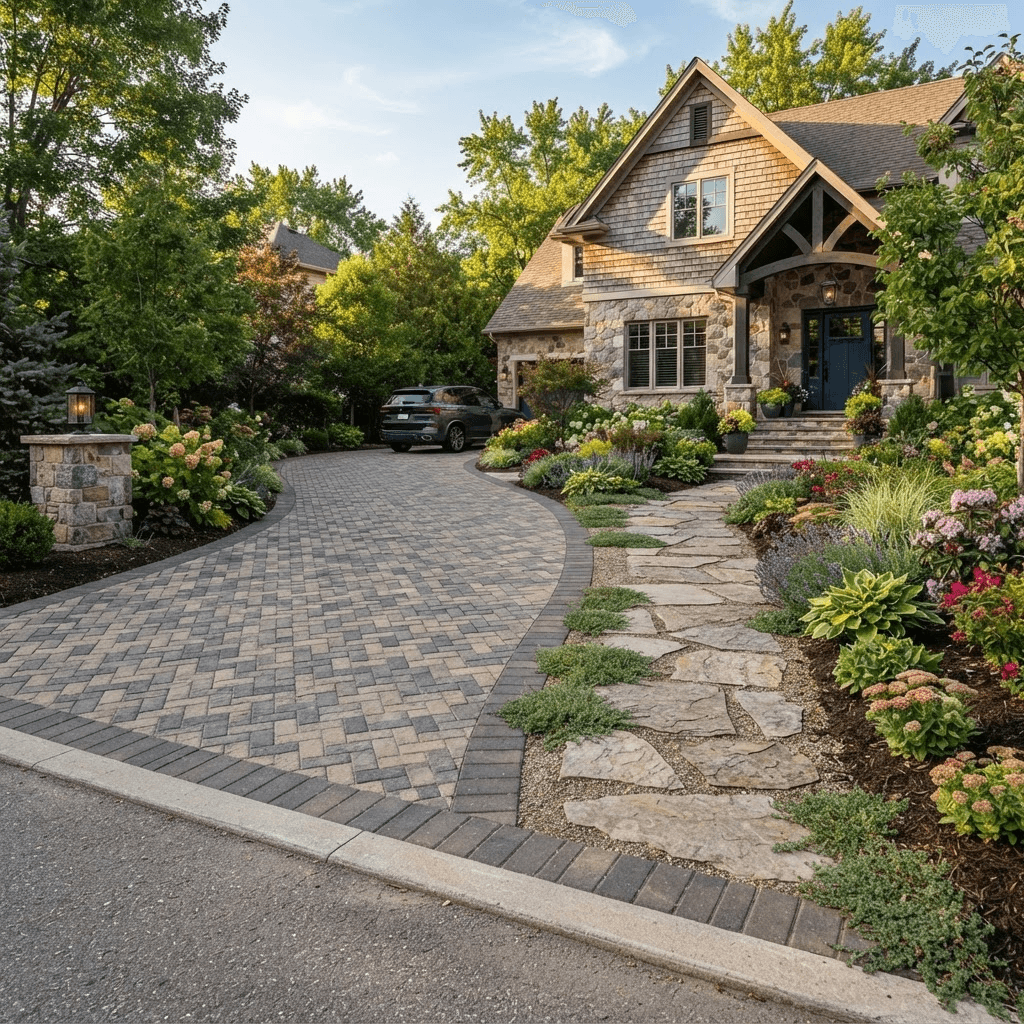
Driveway pavers are engineered for strength, since they carry heavy loads day after day. The most common type is the interlocking concrete paver — individual units that lock together to distribute weight and resist cracking. Because they're modular, a damaged one can be lifted and replaced without redoing the whole surface.
Brick pavers offer timeless, classic looks and excellent durability, while natural stone pavers like granite and cobblestone bring a premium, high-end appearance at a higher price. Whatever the material, driveway pavers must be rated to handle vehicle weight — a different requirement than a walkway or patio.
Garden Stones: Built for Character
Garden stones cover a broader, more decorative range and generally don't need to bear heavy loads. Stepping stones — flat pieces of flagstone, slate, or cast concrete — create paths through beds and lawns while letting greenery peek between them. Flagstone is prized for patios and informal paths thanks to its natural, irregular shapes.
Smaller decorative stones and gravel fill the spaces around and between larger pieces, and river rock or pebbles work beautifully as borders, ground cover, and in dry creek beds. These materials are about texture, color, and guiding the eye as much as function.
Choosing the Right Material
Choosing between materials comes down to use, style, and budget:
- For a driveway, prioritize load-bearing strength and durability — interlocking concrete or brick pavers are usually the practical choice.
- For patios and paths, you have more freedom to prioritize appearance, mixing flagstone, pavers, and gravel to suit your design.
- For a cohesive look, match the color and texture of your hardscape to your home and existing materials.
- For upkeep, consider maintenance — some natural stones need periodic sealing, while concrete pavers are relatively low-fuss.
Why the Base Matters Most
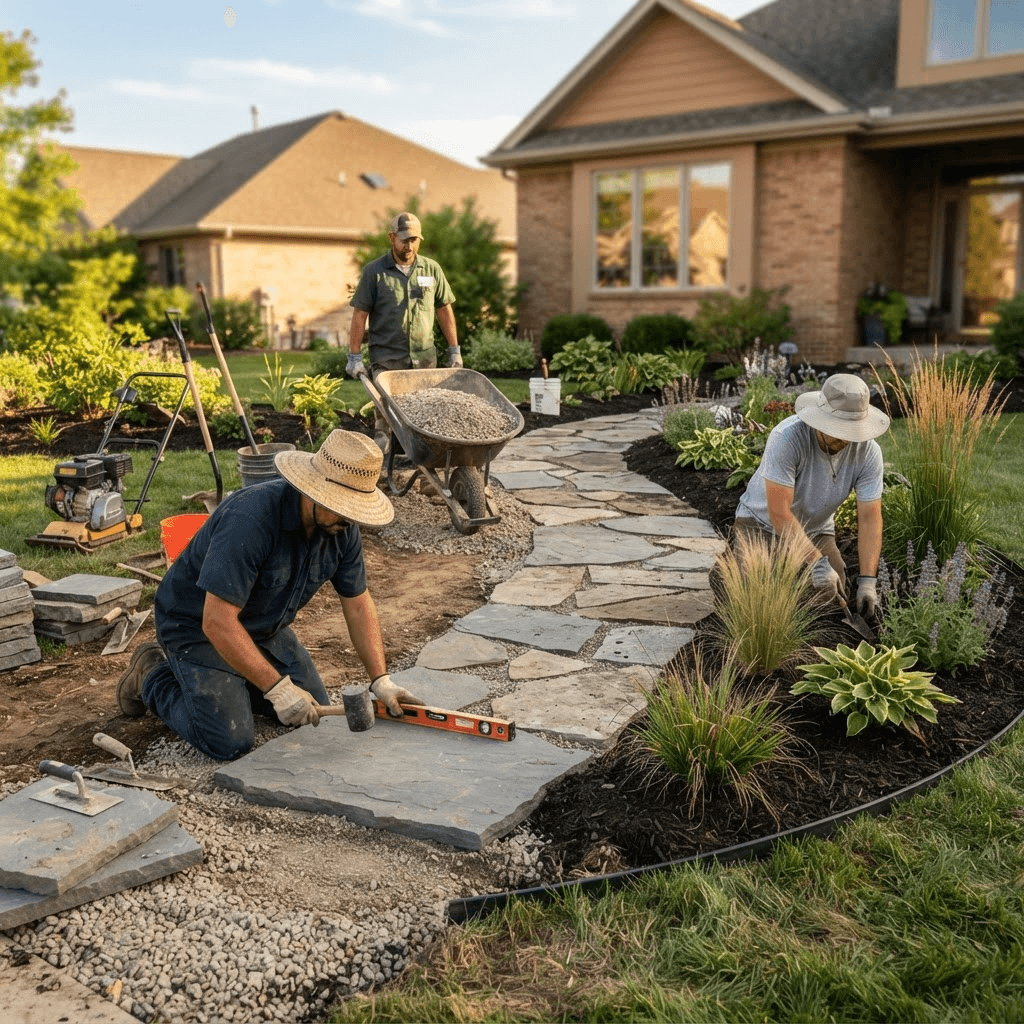
The secret to any long-lasting paver or stone surface is the base beneath it, and this is where most DIY projects succeed or fail. Whether it's a driveway or a garden path, the process is the same in principle:
- Excavate the area.
- Build a compacted base of crushed stone — thicker for driveways that bear weight, thinner for walkways.
- Top it with a layer of sand for setting and leveling the pavers.
Skipping or skimping on the base is the number-one cause of pavers that sink, heave, and shift over time, so proper prep is worth every bit of effort.
Finishing Steps That Lock It All In
Once the base is ready, the finishing steps lock everything in place:
- Lay the pavers or stones in your chosen pattern, keeping them level and evenly spaced.
- Edge the perimeter with restraints to keep the units from spreading outward under use.
- Sweep fine polymeric sand into the joints — it hardens to stabilize the pavers and helps block the weeds that otherwise sprout between them.
Done right — with a solid base, secure edging, and filled joints — driveway pavers and garden stones deliver beautiful, durable hardscape that stands up to weather, traffic, and time for many years.
Pavers vs. Poured Concrete and Asphalt
When surfacing a driveway or path, pavers compete with poured concrete and asphalt, and each has its place. Poured concrete is seamless and economical up front but prone to cracking as the ground shifts, and repairs mean patching a whole slab. Asphalt is inexpensive and quick but needs regular sealing and softens in heat. Pavers cost more initially but shine over time: their interlocking units flex with ground movement instead of cracking, and a damaged paver can be lifted and replaced individually. That repairability and their upscale look are why pavers dominate premium driveways and garden paths.
Common Paver Materials
Pavers come in several materials, each with a distinct look and performance profile. Concrete pavers are the most popular for their affordability, strength, and endless shapes and colors. Clay brick pavers offer timeless warmth and hold their color for decades. Natural stone pavers, such as granite, bluestone, and travertine, deliver unmatched beauty and durability at a higher price. Cobblestone brings old-world character and extreme longevity. Choosing a material comes down to balancing budget, the architectural style of your home, and how much traffic and weight the surface must bear.
The Critical Role of the Base
The secret to a paver surface that stays flat and level for decades is invisible: the base beneath it. A proper installation excavates several inches of soil, then builds up a compacted layer of crushed gravel topped with a bedding layer of sand. This base provides drainage and a stable foundation that distributes weight and resists settling and frost heave. For driveways bearing vehicles, the base must be deeper and more thoroughly compacted than for a garden path. Skimping here is the number one cause of sunken, uneven pavers, so the groundwork deserves the most attention.
Laying Pavers and Locking Them In
With a solid base prepared, laying pavers is methodical work. Screed the sand bed smooth and level, then set pavers in your chosen pattern, working from a straight edge and keeping joints tight and consistent. Edge restraints along the perimeter are essential, since they lock the field of pavers in place and prevent them from spreading and shifting over time. Once all pavers are set and any cuts made at the borders, the surface is compacted with a plate compactor to seat them firmly into the sand before the final step.
Before ordering, our paver and base material calculator works out how many pavers your area needs along with the sand and gravel underneath.
Joint Sand and Long-Term Care
The finishing touch, sweeping sand into the joints, is what unifies the pavers into a single interlocking surface. Polymeric sand, which hardens when wetted, is the preferred choice because it resists washout, weeds, and insects far better than plain sand. Beyond an occasional refresh of joint sand and periodic sealing to guard against stains and fading, paver surfaces need little maintenance. Their great advantage endures for the life of the driveway: if a section ever settles or a paver cracks, you simply lift and reset the affected units rather than tearing out the whole surface.
If you are comparing paver styles against other surfaces, our guides to landscaping stone and pavers cover base prep, patterns, and pricing in more detail.
Frequently Asked Questions
Are pavers better than concrete for a driveway? Pavers cost more up front but flex with ground movement instead of cracking like poured concrete, and individual units can be replaced if damaged. They also offer a more upscale look and greater long-term durability.
What goes under driveway pavers? A compacted base of crushed gravel topped with a leveling layer of sand sits beneath the pavers. This base provides drainage and stability, and for vehicle traffic it must be deeper and firmly compacted.
What kind of sand is used between pavers? Polymeric sand is preferred for joints because it hardens when wetted, resisting washout, weeds, and insects far better than plain sand. It helps lock the pavers into one stable, interlocking surface.
How long do paver driveways last? With a proper base and occasional maintenance like joint-sand refreshing and sealing, paver driveways can last several decades. Damaged pavers are easily lifted and replaced without redoing the whole surface.