How to Create a Family-Friendly Backyard
A great family backyard balances safe play, comfortable gathering, and tough, low-maintenance plantings that can handle real life.
How to Create a Family-Friendly Backyard
A family-friendly backyard is one that can absorb the chaos of real life — kids running, dogs digging, dinners outside — without falling apart or feeling off-limits. The trick is to design for how your family actually behaves rather than for a magazine photo, balancing space for play, room for gathering, and plantings tough enough to survive it all.
Divide the Yard Into Zones
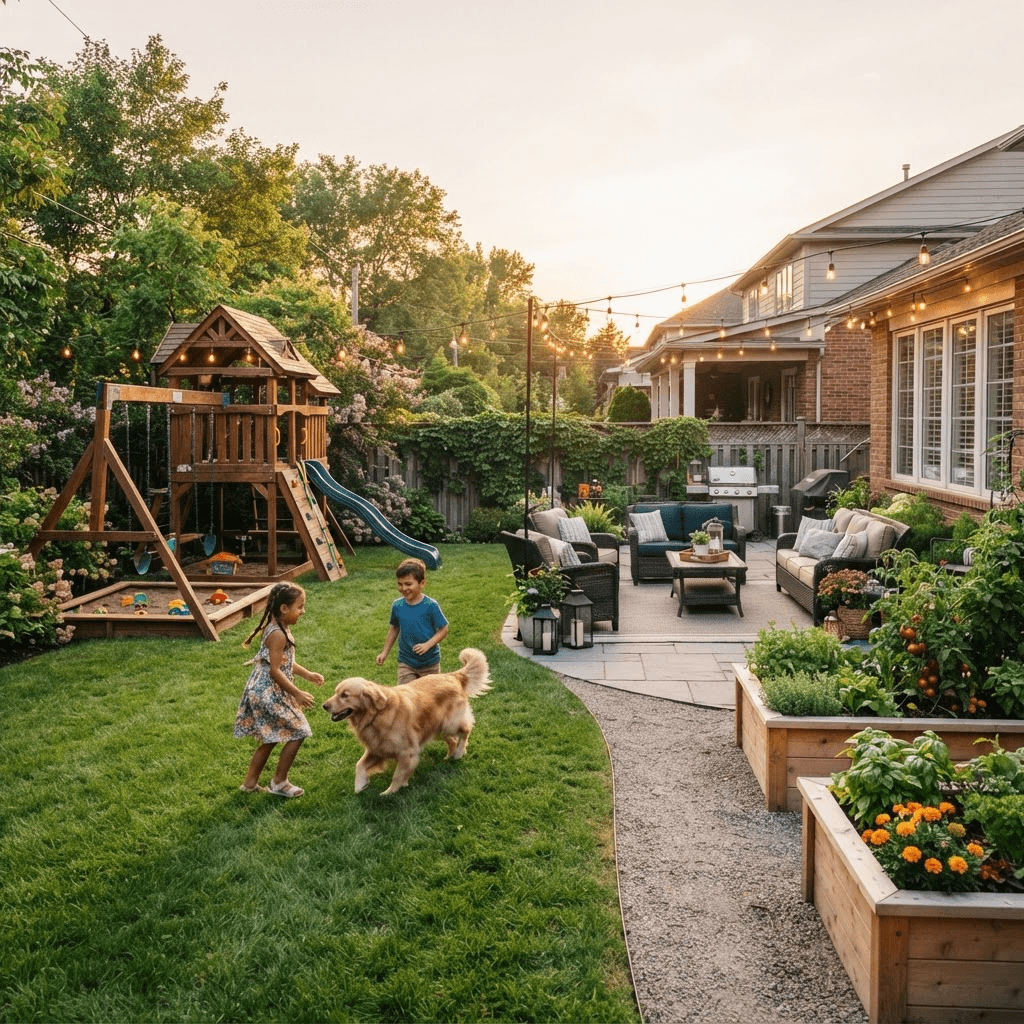
Start by dividing the yard into zones, because different activities need different spaces. A durable open lawn or soft play surface gives kids room to run and tumble. A patio or deck near the house becomes the gathering hub for meals and relaxing. Quieter edges can hold garden beds or a shaded reading nook.
Mapping these zones first keeps the active play area from spilling into the seating area and helps everyone find their space.
Design for Safety Without a Fortress Feel
Safety should shape the design without making the yard feel like a fortress. Choose soft, forgiving surfaces like lawn, mulch, or rubber matting under play equipment rather than hard concrete. Keep sight lines open from the house and patio so you can watch children while you cook or relax.
Fence and gate any pool or water feature, round off sharp hardscape edges, and if you have young kids or curious pets, avoid toxic plants like oleander and foxglove in favor of non-toxic, kid-safe species.
Choose Plants That Can Take a Beating
Durability is what separates a family yard from a fussy one. Pick tough, resilient plants and grasses that bounce back from foot traffic, and use ground covers or hardy shrubs in areas that take a beating. Raised beds protect plantings from trampling while giving kids a safe place to garden.
The goal is a landscape that looks intentional but shrugs off the wear and tear of daily use, so you're not constantly repairing damage.
Build in Features Everyone Will Use
Build in features the whole family will actually use. A play structure, sandbox, or open grassy area serves the kids; comfortable seating, a dining table, and some shade from a tree, umbrella, or pergola serve the adults.
String lights or simple landscape lighting extend the space into the evening for family movie nights or gatherings. A small vegetable or herb bed turns the yard into a place kids learn from, not just play in.
Keep Maintenance Realistic
Finally, keep maintenance realistic, because a family yard that demands hours of upkeep every weekend won't stay enjoyable. Lean on low-maintenance, climate-appropriate plants, mulch beds to cut down on weeding and watering, and choose materials that clean up easily.
A backyard designed around your family's real routines — durable, safe, and easy to care for — is one everyone will actually want to spend time in, season after season.
Designing Zones for Different Ages and Activities
A truly family-friendly backyard works because it is divided into zones that serve different needs at once. A dedicated play zone with a swing set or sandbox keeps young children occupied within sight, while an open lawn area invites games, sports, and running room. A patio or deck becomes the adult and dining hub, and a quiet corner with seating offers a spot for reading or relaxing. Zoning lets several family members use the yard simultaneously without conflict, and clear sightlines from the patio to the play area let parents supervise while still enjoying their own space.
Choosing Safe, Kid-Friendly Plants and Surfaces
Safety starts with the materials underfoot and the plants within reach. Under play equipment, cushioning surfaces like engineered wood mulch, rubber mulch, or poured rubber dramatically reduce injury from falls. Choose durable, non-toxic plants and avoid species with thorns, irritating sap, or poisonous berries, since curious children and pets often touch and taste. Tough turfgrass or a clover lawn stands up to hard play better than delicate ornamentals. Building safety into these choices from the start prevents both accidents and constant worry later.
Building In Room to Grow and Adapt
The best family yards are designed to evolve, because a toddler's sandbox becomes a teenager's basketball hoop in just a few years. Flexible, open lawn space can shift from a wading pool to a soccer pitch to a lounge area as needs change. Modular or movable play equipment, raised beds that can be repurposed, and durable hardscape that outlasts any single life stage all help the yard adapt rather than needing a full redesign. Thinking a decade ahead saves money and keeps the space relevant as the family changes.
Because a phased plan lives or dies on budget, our backyard cost estimator is a useful way to price each stage before you commit to the first one.
Encouraging Kids to Connect With Nature
A family backyard is a powerful classroom, and small features invite children outdoors and into learning. A simple vegetable or pizza garden teaches where food comes from, a butterfly or pollinator patch draws fascinating visitors, and a small water feature or bird bath brings wildlife close. Stepping stones, a mud kitchen, or a fort area spark imaginative play far more than screens do. These low-cost additions turn the yard into a place of discovery and give kids reasons to choose outside over inside.
Low-Maintenance Choices for Busy Families
Busy families need a yard that looks good without consuming every weekend. Perennials and native plants return year after year with little fuss, mulched beds cut watering and weeding, and an efficient irrigation system removes the chore of hand-watering. Durable hardscape and hardy turf shrug off heavy use, and choosing quality materials up front means fewer repairs down the line. A family-friendly yard should reduce work, not add to it, freeing time to actually enjoy the space together.
Balancing durability with good looks is the heart of good design, which our backyard design resources cover in depth.
Frequently Asked Questions
How do I make my backyard safe for kids? Use cushioning surfaces like wood or rubber mulch under play equipment, choose non-toxic plants without thorns or poisonous berries, maintain clear sightlines for supervision, and secure any water features, gates, and fences.
What is the best ground cover for a family backyard? A tough turfgrass suited to your climate, or a durable clover lawn, handles heavy play well. Under play structures, use safety mulch or poured rubber rather than grass to soften falls.
How can I create play space in a small backyard? Use flexible, movable equipment, a compact deck or patio for adults, and multi-use open space that can shift between activities. Vertical features and zoning make even small yards work for the whole family.
How do I keep a family backyard low-maintenance? Plant hardy perennials and natives, mulch beds to reduce weeds and watering, install efficient irrigation, and invest in durable surfaces and equipment that withstand heavy use without frequent repair.