How to Plant a Tree
A step-by-step guide to planting a tree correctly, covering timing, site selection, hole depth, backfilling, and the watering and mulching that help it establish
How to Plant a Tree
Planting a tree is one of the most rewarding things you can do in a landscape, but the difference between a tree that thrives and one that struggles usually comes down to a few details at planting time. The good news is that the fundamentals are simple, and getting them right sets a tree up for decades of healthy growth.
Timing Matters More Than You'd Expect
Timing matters more than most people expect. The best time to plant is during the dormant season, in fall after the heat breaks or in early spring before growth takes off, when cooler temperatures and reliable moisture let the roots establish without the stress of summer heat.
Planting into the peak of summer isn't impossible, but it demands much more careful watering to keep the young tree alive.
Choose the Right Spot
Choosing the right spot is the next decision, and it's a permanent one. Look up for power lines and consider how large the tree will grow, both its canopy and its roots, so it won't crowd your house, foundation, or walkways in twenty years.
Match the species to the site's sun and soil, and give the tree room to reach its full mature size. A tree planted in the wrong place creates problems no amount of good care can fix later.
Dig the Hole Correctly
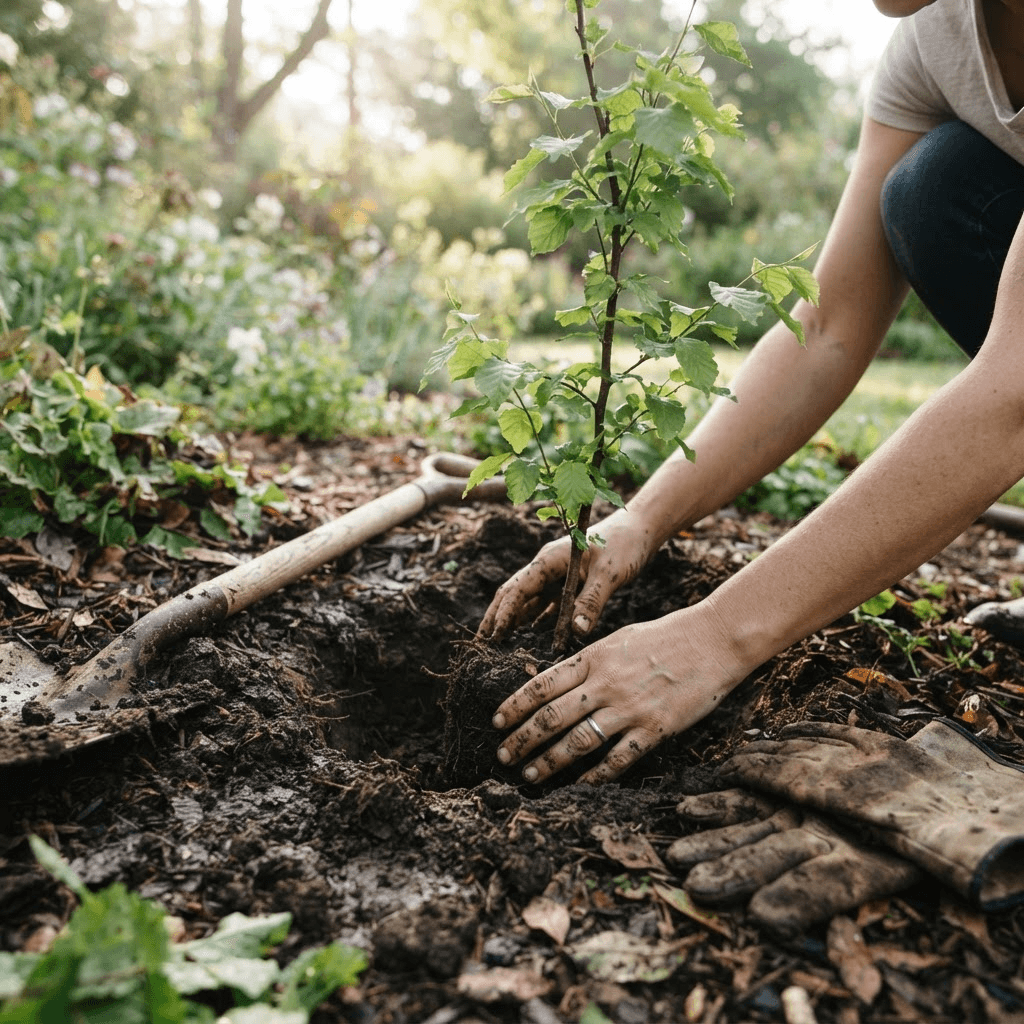
The hole is where the real technique lies. Dig it two to three times as wide as the root ball but no deeper than the root ball itself, so the tree sits at the same depth it grew in the nursery.
A wide hole loosens the surrounding soil so new roots can spread easily, while planting too deep is one of the most common ways trees are killed, since it suffocates the roots and invites rot at the trunk. The top of the root ball should sit level with or slightly above the surrounding ground.
Set the Tree and Backfill
Before setting the tree in, gently loosen any circling or matted roots so they grow outward rather than strangling the trunk over time. Position the tree so its best side faces where you'll see it most, keep it straight, then backfill with the same native soil you dug out, rather than rich amendments, so the roots learn to grow into the surrounding earth.
Firm the soil gently to remove air pockets without compacting it into concrete.
Water and Mulch to Finish
Finish with the two things a new tree needs most: water and mulch. Water deeply right after planting and keep the root zone consistently moist through the first year or two while the tree establishes.
Spread a two to three inch layer of mulch in a wide ring around the base, but keep it a few inches away from the trunk, never piled against it, so you avoid trapping moisture that causes decay. Skip heavy staking unless the site is very windy, because a little natural movement actually helps the trunk grow strong. Do these basics well and the tree will largely take care of itself from there.
Choosing the Right Tree for the Right Place
The success of a new tree is largely decided before you ever dig, in the choice of species and site. Match the tree's mature size to the space so it will not crowd the house, pavement, or overhead power lines in twenty years. Consider its light and soil preferences, its hardiness in your climate zone, and its habits, whether it drops messy fruit, has invasive roots, or resists local pests and disease. Native species are often the easiest to establish because they are already adapted to local conditions. Picking the right tree for the right place prevents the majority of problems that plague mature trees later.
The Best Time of Year to Plant
Timing strongly influences how easily a tree establishes. For most climates, early fall is ideal, because warm soil encourages root growth while cooler air reduces stress on the top of the tree, giving roots a head start before winter. Early spring, after the ground thaws but before leaves fully emerge, is the next best window. The worst time is the heat of midsummer, when transplant stress and water demand peak. Planting during a dormant or cool season lets the tree focus its energy on roots rather than struggling to support foliage in harsh conditions.
Common Tree-Planting Mistakes to Avoid
A few avoidable errors account for most young-tree failures. Planting too deep is the most common, burying the root flare and suffocating the roots, so the trunk should widen visibly right at the soil line. Leaving the burlap, wire basket, or container material on the root ball restricts growth and should be removed. Piling mulch against the trunk in a volcano shape traps moisture and invites rot and pests. Failing to loosen circling roots on a pot-bound tree leads to girdling years later. Avoiding these mistakes costs nothing and dramatically improves survival.
Watering and Care in the First Two Years
A newly planted tree is entirely dependent on you until its roots spread into the surrounding soil, which takes one to two growing seasons. Water deeply and slowly right after planting, then keep the root ball consistently moist but not soggy, typically a deep soak once or twice a week rather than frequent light sprinkling. A wide, flat ring of mulch, kept a few inches from the trunk, conserves moisture and moderates soil temperature. Skip fertilizer at planting time, since it can burn tender new roots; let the tree establish first. Consistent watering through the first two summers is the single biggest factor in survival.
Staking, Pruning, and Long-Term Health
Not every tree needs staking, and many establish stronger trunks when allowed to flex naturally in the wind. Stake only top-heavy or bare-root trees in windy sites, using wide, soft ties, and remove the stakes after one growing season so the tree does not become dependent. Hold off on heavy pruning at planting, removing only broken or damaged branches; structural pruning comes in later years. As the tree matures, prune in the dormant season to build a strong branch structure and remove crossing or weak limbs. Patience in these early years pays off with a healthy, well-formed tree for decades.
A well-placed tree anchors the rest of the yard, and our tree planting and care resources cover what to plant around it.
Frequently Asked Questions
What is the best time of year to plant a tree? Early fall is usually ideal because warm soil promotes root growth while cool air limits stress. Early spring is the next best window. Avoid planting in the heat of midsummer.
How deep should I plant a tree? Plant so the root flare, where the trunk widens at the base, sits right at or slightly above the soil line. Planting too deep is a leading cause of young-tree decline.
How often should I water a newly planted tree? Keep the root ball consistently moist for the first one to two years, typically a deep, slow soak once or twice a week, adjusting for rain and heat. Deep, infrequent watering beats frequent light sprinkling.
Do I need to stake a newly planted tree? Often no. Many trees develop stronger trunks without staking. Stake only top-heavy or bare-root trees in windy sites, use soft wide ties, and remove the stakes after one growing season.