Evergreen Trees and Bushes for Landscaping
Evergreens keep your landscape alive through winter. A guide to using evergreen trees and bushes for structure, privacy, and year-round color.
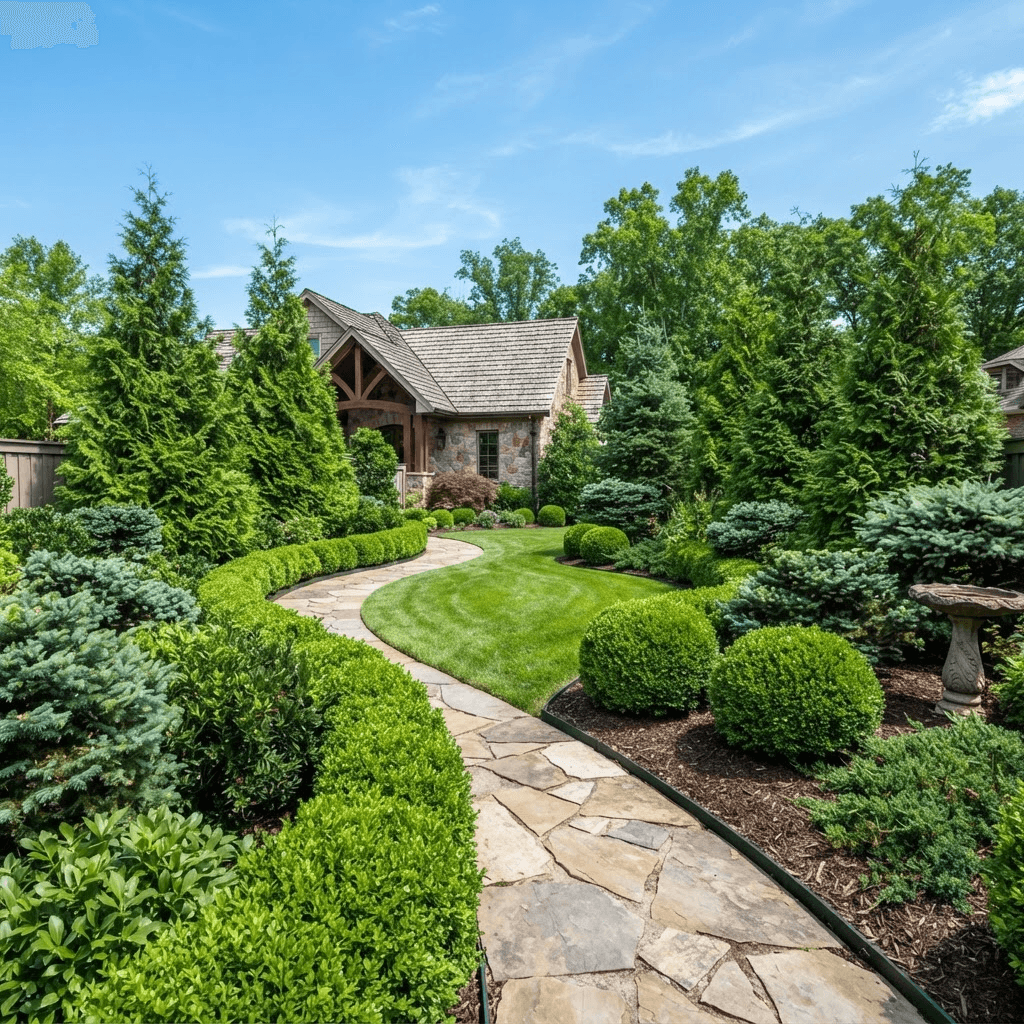
Why evergreen trees and shrubs are the backbone of a landscape, the main types for screening and hedges, and how to layer them by height for a design that holds up year-round.
Evergreen Trees and Bushes for Landscaping
Evergreen trees and bushes are the plants that keep their leaves or needles all year, holding their color through winter while everything around them goes bare. That single trait makes them the backbone of a well-designed landscape. When deciduous plants drop their leaves and perennials die back, evergreens are what keep a yard from looking empty, giving it structure, privacy, and life in every season.
Why Evergreens Matter: Year-Round Structure
The biggest reason to plant evergreens is year-round structure. They define the bones of a garden, the shapes and lines that hold everything together, so the space still reads as intentional in January.
A landscape built only on flowers and deciduous shrubs can look spectacular in June and desolate in December; a few well-placed evergreens fix that, anchoring beds and framing the house no matter the month.
Evergreen Trees for Height, Screening, and Privacy
Evergreen trees are the workhorses for height, screening, and privacy. Conifers like arborvitae, spruce, pine, and juniper grow into dense walls of green that block unwanted views, buffer wind, and muffle noise, which is why a row of arborvitae is such a popular living privacy screen.
Broadleaf evergreen trees like holly and southern magnolia offer the same year-round presence with glossy leaves and, in some cases, berries or flowers as a bonus.
Evergreen Bushes for the Mid and Lower Layers
Evergreen bushes and shrubs handle the mid- and lower layers of the garden. Boxwood is the classic choice for clipped hedges and formal shapes, holding a crisp line with a bit of pruning. Yew, juniper, and dwarf conifers make dependable foundation plantings, while broadleaf shrubs like rhododendron, azalea, camellia, and euonymus combine evergreen leaves with seasonal flowers.
Together they fill the space between tall trees and ground level, giving beds fullness through winter.
Layering Evergreens Into a Design
To use them well, treat evergreens as the permanent framework and let seasonal plants supply the changing color. Place taller evergreens at the back or corners for structure and screening, use medium shrubs as foundation plantings and hedges, and tuck low or dwarf varieties along edges and paths.
Vary the greens, blues, golds, and textures so a mostly-evergreen planting still feels rich rather than flat, and avoid lining everything up identically unless you want a formal look.
Practical Planting Tips
A few practical notes make the difference between thriving and struggling evergreens. Match the plant to your climate zone, sun exposure, and soil, since a sun-lover will thin out in shade and a shade plant will scorch in full sun.
Give trees enough room to reach their mature size so you're not fighting them with the pruners later, water well through the first year or two to establish deep roots, and mulch to protect against temperature swings. Get those basics right, and evergreens will quietly carry your landscape, beautiful and green, through every season for decades.
Why Evergreens Are the Backbone of a Landscape
Evergreen trees and shrubs are often called the bones of a garden because they hold their color and form when everything else has dropped its leaves. While deciduous plants provide seasonal drama, evergreens provide year-round structure, privacy, and a reliable green backdrop that makes flowers and foliage pop in season and keeps the yard from looking bare in winter. A landscape planted only with deciduous material can feel stark and empty for months; a framework of evergreens ensures the space always reads as intentional and full, regardless of the season.
Needled vs. Broadleaf Evergreens
Evergreens come in two broad families, and understanding the difference helps you choose well. Needled or coniferous evergreens, such as pine, spruce, juniper, and arborvitae, have narrow needles or scales and are prized for privacy screens, windbreaks, and bold vertical form. Broadleaf evergreens, including boxwood, holly, rhododendron, and laurel, have wider leaves and often offer flowers or berries alongside their year-round foliage. Mixing the two adds textural contrast, the fine needles of a conifer against the glossy leaves of a broadleaf, while ensuring the greenery persists all winter.
Using Evergreens for Privacy and Screening
One of the most practical uses of evergreens is creating living privacy that works every day of the year. Fast-growing arborvitae, Leyland cypress, and certain hollies form dense screens that block sightlines, buffer wind, and dampen noise far more attractively than a fence. For a natural look, planting a mix of species in a staggered, informal row avoids the monoculture problem, where a single pest or disease could wipe out an entire hedge. Spacing them correctly for their mature width is crucial, since overcrowded screens compete, thin out, and struggle over time.
Choosing the Right Evergreen for Your Space
Success with evergreens comes down to matching the plant to the site and, above all, to its mature size. Many homeowners plant a small nursery specimen without realizing it will become a forty-foot tree pressed against the house. Consider mature height and spread, sun and soil preferences, hardiness in your climate, and growth rate before buying. Dwarf and slow-growing cultivars are ideal for foundations and small yards, while large conifers belong where they have room to reach full size. Right plant, right place is the rule that prevents the constant shearing and eventual removal that plague poorly chosen evergreens.
Caring for Evergreens Through the Seasons
Evergreens are generally low-maintenance, but a few seasonal habits keep them healthy and handsome. Water deeply during their first couple of years and during droughts, since evergreens continue to lose moisture through their foliage even in winter. A layer of mulch protects roots and conserves water, and light pruning to shape, done at the right time for the species, keeps them dense. Watch for winter burn on broadleaf types in exposed sites, and avoid heavy late-season fertilizing that pushes tender growth into cold weather. With this modest care, evergreens reward you with decades of year-round structure.
To pair evergreens with the right companions and placement, see our planting and tree care guides.
Frequently Asked Questions
What are the best evergreen trees for privacy? Arborvitae, Leyland cypress, spruce, and dense hollies are top choices for privacy screens because they grow thick and tall, blocking sightlines and buffering wind and noise year-round. Space them for their mature width.
What is the difference between needled and broadleaf evergreens? Needled evergreens like pine and juniper have narrow needles and suit screens and windbreaks, while broadleaf evergreens like boxwood and holly have wider leaves and often add flowers or berries. Both keep foliage year-round.
Do evergreens need watering in winter? Yes, in dry or exposed conditions. Evergreens lose moisture through their foliage all year, so watering before the ground freezes and mulching the roots helps prevent winter burn and dieback.
How fast do evergreen shrubs grow? Growth rates vary widely. Some, like Leyland cypress and arborvitae, grow quickly for fast screening, while boxwood and many dwarf conifers grow slowly and stay compact. Always check the growth rate and mature size before planting.