What Is a Hydroponic Tower? How to Grow Hydroponic Strawberries
Hydroponic towers grow more food in less space, no soil required. A guide to how vertical tower systems work and how to grow strawberries in one.
What Is a Hydroponic Tower? How to Grow Hydroponic Strawberries
Hydroponic towers are one of the most exciting developments in modern, space-efficient growing, letting you raise a surprising amount of fresh produce vertically, without soil, in a footprint barely larger than a trash can. They're popular with urban gardeners, small-space growers, and anyone who wants clean, high-yield harvests, and strawberries are among the most rewarding crops to grow in one. Understanding what a hydroponic tower is and how to use it for strawberries opens up productive gardening even on a patio or in a spare room.
What Is a Hydroponic Tower?
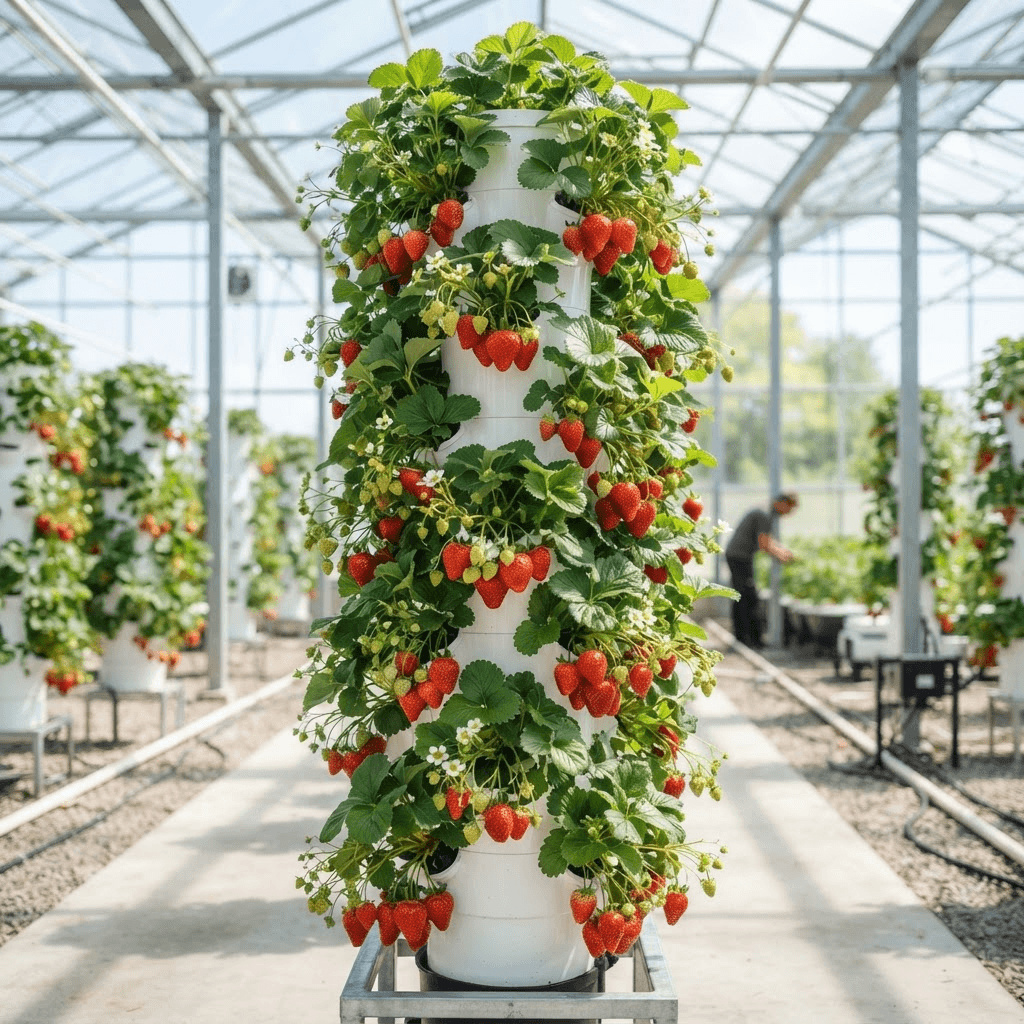
A hydroponic tower is a vertical hydroponic growing system, a tall column with planting sites spiraling or stacked up its sides, that grows plants using nutrient-rich water instead of soil. A reservoir at the base holds a water-and-nutrient solution, and a small pump sends that solution up to the top of the tower, where it trickles down through the interior, bathing the plant roots at each level before draining back into the reservoir to be recirculated.
This vertical, closed-loop design is the tower's defining feature and the source of its biggest advantages.
Why Hydroponic Towers Are So Efficient
The appeal of tower systems comes down to efficiency:
- Small footprint: growing upward instead of outward fits many plants into a tiny floor area, ideal for balconies, patios, greenhouses, or indoor setups under grow lights.
- Less water use: because it's soil-free and recirculating, the solution is reused rather than lost to the ground.
- No soil-borne pests or weeds.
- Faster, often larger harvests, since nutrients go directly to the roots.
- Cleaner and easier on your back, with plants at a convenient height and no digging or weeding.
Choosing and Planting Strawberries for a Hydroponic Tower
Strawberries are a perfect match for hydroponic towers, and it starts with choosing the right plants. Opt for everbearing or day-neutral strawberry varieties, which produce fruit throughout the season rather than in one short burst, giving you a steady harvest.
Start from healthy established plants or bare-root crowns rather than seeds, since seeds are slow and unpredictable. Gently rinse the soil from their roots before placing each plant into a net cup or planting site in the tower, and position them so the crown sits at the surface, not buried and not too high, just as you would in soil.
Getting Water and Nutrients Right
Getting the water and nutrients right is the heart of success:
- Use a hydroponic nutrient solution formulated for fruiting plants.
- Manage pH: strawberries thrive in slightly acidic conditions, generally a pH around 5.5 to 6.5, so test and adjust the solution regularly.
- Manage nutrient strength (EC/PPM): follow your nutrient product's guidance, keeping it moderate for leafy early growth and adequate for fruiting.
- Set the pump on a timer so roots are regularly moistened but not permanently drowned.
- Top off and periodically refresh the reservoir, keeping it from getting too warm to protect the roots.
Light, Pollination, and Ongoing Care
Finally, tend to light, pollination, and upkeep:
- Light: strawberries need plenty of light, at least 8 or more hours of strong sun, or a good full-spectrum grow light if you're indoors, to fruit well.
- Hand-pollination: because indoor towers lack bees, gently brush the center of each open flower with a soft brush or cotton swab to move pollen and ensure well-formed berries.
- Pest watch: keep an eye out for pests like aphids or spider mites.
- Grooming: remove any dead leaves or runners to direct energy into fruit.
- Consistency: monitor your pH and nutrients regularly.
The Bottom Line
Do this, and a hydroponic tower will reward you with clean, sweet, homegrown strawberries in a fraction of the space, and with a fraction of the water, of a traditional strawberry patch.
If you want to try other crops in the same setup, our hydroponics and soilless growing guides cover nutrients and lighting.
Frequently Asked Questions
What is a hydroponic tower? A hydroponic tower is a vertical, soil-free growing system built as a tall column with planting sites up its sides. A reservoir at the base pumps nutrient-rich water to the top, where it trickles down over the roots at each level and recirculates, letting you grow many plants in a very small footprint.
Can you grow strawberries in a hydroponic tower? Yes, strawberries are one of the best crops for a hydroponic tower. Their compact roots and cascading fruit suit the vertical planting sites, and the steady supply of water and nutrients often produces clean, high-yield harvests earlier than soil growing.
How do you grow hydroponic strawberries? Choose day-neutral or everbearing strawberry varieties, place bare-root plants or plugs into the tower's planting sites, and keep the reservoir filled with a balanced nutrient solution at the right pH. Give them plenty of light, and the recirculating system feeds the roots automatically.
Are hydroponic towers worth it? For small-space and urban growers they usually are. They use less water, avoid soil-borne pests and weeds, produce faster and often larger harvests, and put plants at a convenient height, all in a footprint barely larger than a trash can.