How to Work on a Farm (Agriculture and Crop Protection Jobs)
Modern farm work spans equipment operation, crop scouting, irrigation, and agronomy. A practical guide to the roles, the seasons, and how to get hired.
How to Work on a Farm (Agriculture and Crop Protection Jobs)
Farm work has a reputation problem. People picture stoop labor and little else, when the reality of a modern operation involves GPS-guided equipment, irrigation scheduling, pest scouting, and a fair amount of data. Agriculture has changed enormously in recent decades, and the jobs changed with it.
If you like being outdoors, working seasonally, and seeing tangible results, farm work is one of the easiest industries to enter and one of the most underrated places to build a career.
The main categories of farm work
General farm labor
The entry point. Planting, harvesting, irrigation setup, fencing, equipment cleaning, and whatever the season demands. No experience required, and it remains the fastest way to learn how an operation actually runs.
Equipment operation
Tractors, combines, sprayers, and loaders. Operators are consistently harder to find than laborers, which makes this the single best skill to pick up early. Modern cabs run guidance systems and yield monitors, so the job is closer to operating precision machinery than to old-fashioned driving. Farming automation and UAV work increasingly overlaps with this role.
Crop protection and scouting
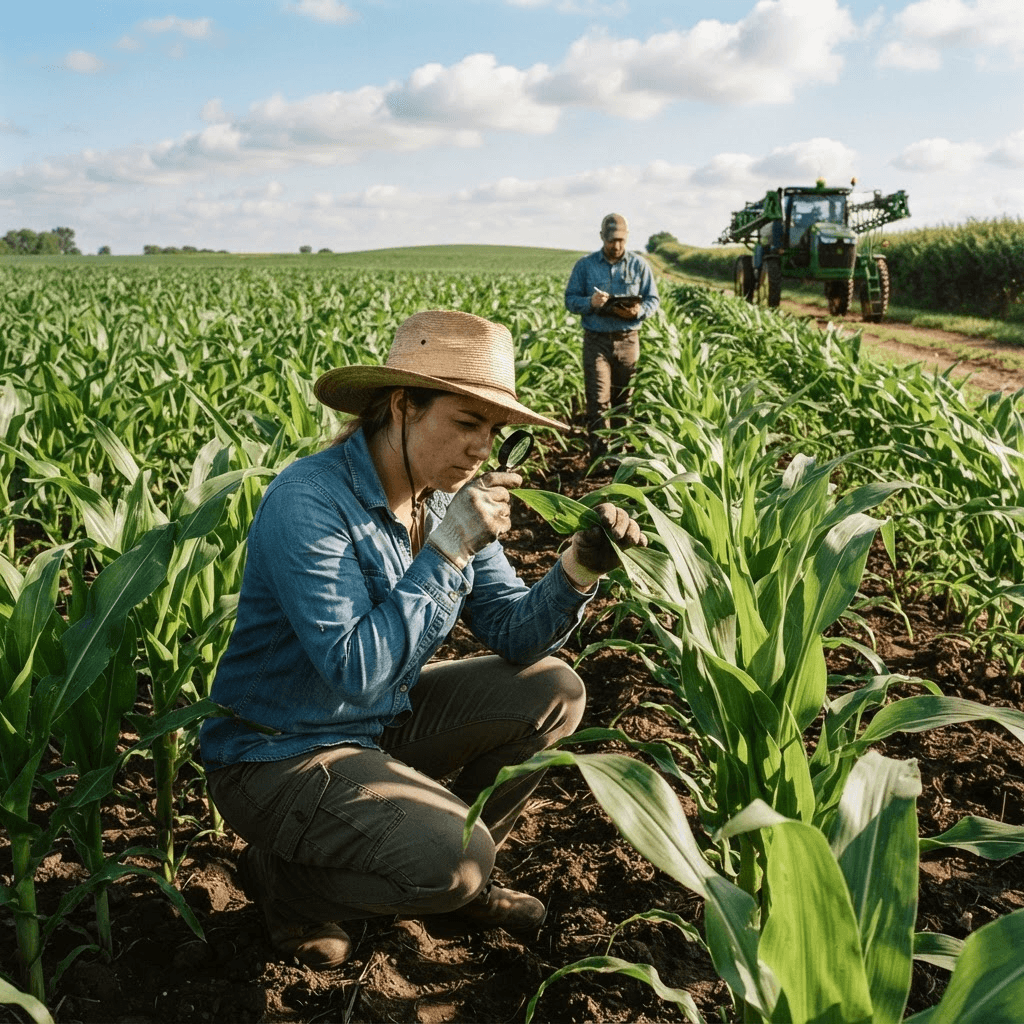
This is the specialty most people do not know exists. Crop scouts walk fields on a schedule looking for insects, disease, weed pressure, and nutrient deficiency, then recommend a response. It is detail work with real consequences — a missed infestation can cost an entire field.
Crop protection roles usually require a pesticide applicator license, which is a state-issued credential involving a written exam and periodic renewal. It is very achievable and it raises your pay immediately.
Irrigation
Someone has to design, run, and repair the water system, and on many operations that is a full-time job. Understanding how farm irrigation systems are laid out is the core competency, and it pairs naturally with the growing amount of solar-powered irrigation on smaller farms.
Livestock and ranch work
A separate world with its own rhythm — feeding, health checks, calving, moving animals. The hours are less seasonal and more relentless, because animals need care every single day. Our guide to raising beef, pigs, and chickens covers what the work involves.
Understand the seasonality before you apply
This is the part that surprises newcomers most. Row-crop work is not evenly distributed across the year:
- Spring: planting. Long days, high pressure, everything is weather-dependent.
- Summer: irrigation, spraying, scouting, cultivation. Steadier.
- Fall: harvest. The longest hours of the year by a wide margin.
- Winter: equipment repair, planning, maintenance. Thin on many operations.
Plenty of farm jobs are genuinely seasonal, and workers often pair a summer operation with winter work elsewhere. If you need year-round stability, target diversified farms, livestock operations, greenhouses, or the agribusiness side of the industry.
What the pay looks like
Wages depend heavily on region, crop, and skill level, but the pattern is dependable:
- General labor starts near the local hourly floor, frequently with overtime during planting and harvest.
- Licensed equipment operators earn a clear premium, especially during harvest.
- Crop scouts and applicators with a license earn more again.
- Agronomists and farm managers are salaried professional roles, often requiring a degree.
Housing is sometimes included on larger or more remote operations, which changes the real value of a wage considerably.
How to get hired
- Apply in person if you can. Farm hiring is informal and relationship-driven. Showing up matters more than a polished résumé.
- Time your application to the season. Ask about work in late winter for spring planting, not in June.
- Lead with any equipment experience. Even mowing, forklift, or truck driving counts, because it signals you will not damage expensive machinery.
- Get your applicator license. It is the highest-return credential in the industry relative to effort.
- Say you can work harvest hours. Willingness to work a 14-hour day in October is worth more than most qualifications.
- Look beyond farms themselves. Co-ops, grain elevators, equipment dealers, and input suppliers all hire, and they tend to offer more predictable schedules.
Where it leads
Farm work has an unusually short path from entry to responsibility. A laborer who learns equipment, gets licensed, and shows judgment can be running a section of an operation within a few seasons. From there the ladder continues into farm management, agronomy consulting, or the wider agribusiness supply chain, where the technical knowledge you built in the field is genuinely scarce and well compensated.
For anyone weighing whether the industry has a future, it is worth reading about the technology reshaping modern farming. The work is not disappearing — it is getting more skilled, which is good news for anyone willing to learn it.