Agrivoltaics: What Is Solar Farming?
Agrivoltaics lets one piece of land grow crops and generate solar power at once. A guide to how solar farming works and why it is gaining ground.
Agrivoltaics Explained: What Is Solar Farming?
What if a single acre of land could grow food and generate clean electricity at the same time? That's the promise of agrivoltaics, sometimes called solar farming or dual-use solar, an innovative approach that combines agriculture and solar energy production on the same land. As pressure grows to expand both food production and renewable energy, often competing for the same ground, agrivoltaics offers an elegant way to do both at once, and it's rapidly gaining attention worldwide.
What Is Agrivoltaics?
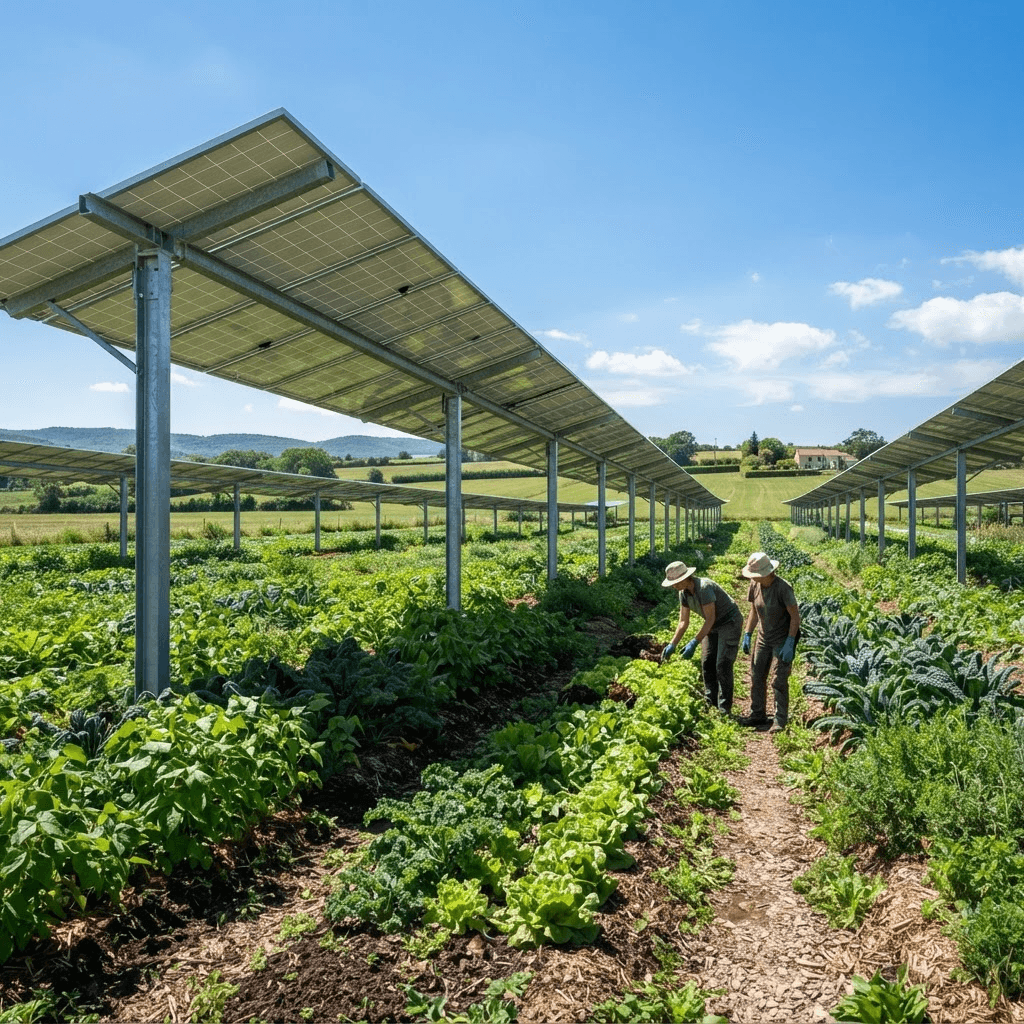
Agrivoltaics is the practice of co-locating solar panels and agricultural activity on one parcel of land so the two work together rather than competing. Instead of choosing between using land for farming or for a solar array, agrivoltaic systems raise or space the panels so crops can grow, or livestock can graze, beneath and around them.
The land does double duty: it produces crops, forage, or animal products while the panels above generate solar power. This shared-use concept turns the usual either/or land-use decision into a productive both/and.
The Main Types of Agrivoltaic Systems
The systems come in a few common forms:
- Crop-based agrivoltaics: solar panels are mounted high enough, often on tall structures, or spaced widely enough that tractors and workers can operate beneath them and crops receive adequate light.
- Vertical bifacial panel rows: some setups use vertical panels arranged in rows, leaving open strips for farming between them.
- Adjustable, tilting panels: these balance sunlight between the crops and electricity generation as conditions change.
- Grazing or pasture-based systems, sometimes called solar grazing: sheep or other livestock graze among ground-mounted panels, keeping vegetation down while the land produces both energy and animal products.
The Benefits of Agrivoltaics
The benefits of agrivoltaics can be surprisingly synergistic, not just additive:
- Partial shade helps certain crops, reducing heat stress and water loss in hot, sunny climates, and lowering irrigation needs.
- Cooler panels perform better, since the plants and soil beneath can cool the panels, and solar panels lose performance when they overheat.
- A second income stream for farmers, from selling electricity or leasing land to energy producers, which can stabilize finances against unpredictable crop markets and weather.
- Renewable energy without sacrificing farmland, a major societal advantage as both needs grow.
The Challenges of Agrivoltaics
Of course, agrivoltaics isn't a fit for every farm or crop, and it comes with challenges. Not all crops tolerate reduced or dappled sunlight, so it works best with shade-tolerant plants, certain vegetables, berries, and many pasture grasses, rather than full-sun-hungry crops.
The specialized elevated mounting structures cost more than conventional ground-mounted solar, and designing systems that keep farm equipment maneuverable adds complexity. Research is ongoing to determine the ideal panel height, spacing, and crop pairings for different climates, and the economics depend on local energy prices, incentives, and the specific farming operation.
The Future of Agrivoltaics
Looking ahead, agrivoltaics is one of the more promising ideas at the intersection of food and energy. As solar costs fall, climate pressures intensify, and land becomes more contested, the ability to harvest sunlight twice, once for crops through photosynthesis and once for electricity through panels, is increasingly attractive.
Ongoing research, pilot projects, and supportive policies are refining the best practices and expanding the range of viable crops and regions.
The Bottom Line
For farmers, agrivoltaics can mean diversified income and climate resilience; for society, it's a path to scaling renewable energy while protecting the farmland we depend on to eat, making solar farming a genuine win-win worth watching.
For other approaches to getting more from the same acreage, see our dual use farmland coverage.
Frequently Asked Questions
What is solar farming? Solar farming, in the agrivoltaics sense, is using the same land for both agriculture and solar energy production at once. Panels are raised or spaced so crops grow or livestock graze beneath and around them, so one parcel produces food and clean electricity together.
What is agrivoltaics? Agrivoltaics is the practice of co-locating solar panels and farming on a single piece of land so the two complement rather than compete. It is also called dual-use solar or solar sharing, and includes crop-based, vertical bifacial, adjustable-tilt, and grazing systems.
Is agrivoltaics good for crops? It can be. The partial shade from panels reduces heat stress, water loss, and sunscald for many crops, and can improve yields for shade-tolerant plants while conserving soil moisture. Sun-loving crops need carefully spaced or elevated panels to keep enough light.
Does solar farming reduce agricultural land? No, that is the point of agrivoltaics: instead of taking farmland out of production for a solar array, the land keeps producing crops, forage, or livestock while also generating power, easing the competition between food and energy for the same ground.