Solar-Powered Irrigation Is Reshaping Small Farms
How off-grid solar water pumps work for farm irrigation, why they suit small farms, and how to size, cost out, and maintain a solar irrigation system. -->
Solar-Powered Irrigation: How Off-Grid Solar Water Pumps Work for Farms
Off-grid solar pumps let growers irrigate without diesel or grid power. The economics now favor the sun on farms of every size.
Diesel pumps have long been the default for moving water on farms beyond the reach of the grid. They are also expensive to fuel and maintain.
Solar-powered pumps run on free daytime energy, exactly when crops need water most. Paired with a storage tank instead of a battery, they store energy as elevated water rather than in cells, keeping systems simple and durable.
On a typical small farm, a solar pump pays for itself within a few seasons through fuel savings alone, and it keeps running quietly for decades with minimal upkeep.
How Solar-Powered Irrigation Works
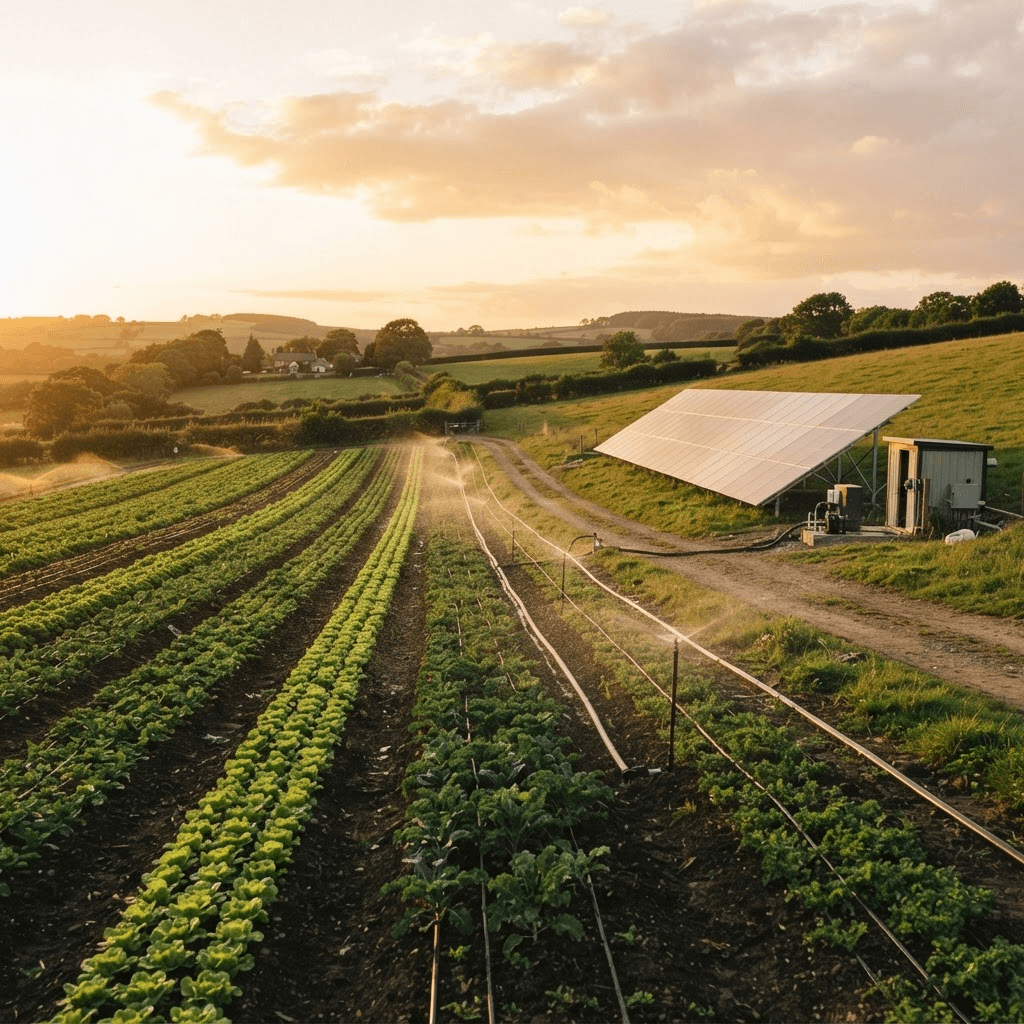
A solar irrigation system pairs photovoltaic panels with a pump that draws water from a well, borehole, river, or storage tank and delivers it to the field. During daylight the panels generate direct current that drives the pump, often through a controller that matches output to available sunlight.
Because peak sun and peak crop water demand tend to coincide, the system naturally pumps most when plants need it most. Water can be sent straight to drip lines or sprinklers, or lifted into an elevated tank that provides gravity-fed pressure after the sun goes down, removing the need for expensive batteries.
Why It Suits Small Farms
For smallholders, solar irrigation solves several problems at once. Many small farms sit beyond the reach of a reliable electric grid, and diesel pumps mean recurring fuel costs, maintenance, and fumes.
A solar array replaces those running costs with free sunlight after the upfront investment, stabilizing a farmer's budget against fuel price swings. The systems are modular, so a grower can start small and add panels as the operation expands. Freed from hauling water or babysitting a generator, farmers reclaim time and can irrigate more consistently, which often lifts both yields and crop quality.
Sizing and Designing a Solar Irrigation System
Getting the size right is the difference between a system that delivers and one that disappoints. Start from the crop's daily water requirement, the area under cultivation, and the depth or distance the water must travel, then size the pump and panel array to meet that demand during average sunlight hours.
Drip irrigation pairs especially well with solar because it needs less flow and pressure than sprinklers, letting a smaller, cheaper array do the job. A water storage tank adds resilience for cloudy days and evening watering, and a simple controller protects the pump and optimizes output.
Costs, Savings, and Payback Period
The main hurdle is the initial cost of panels, pump, and installation, which is higher than a basic diesel setup. But the economics shift quickly once fuel and maintenance enter the picture.
With no ongoing energy bills and few moving parts to service, many solar irrigation systems pay for themselves within a few years and then run at minimal cost for the decades-long life of the panels. Government subsidies, cooperative financing, and pay-as-you-go models increasingly bring the technology within reach of small farmers who could not fund it outright.
Maintenance and Longevity
One of solar irrigation's quiet advantages is how little it asks in return. Panels have no moving parts and mainly need occasional cleaning to clear dust that would otherwise shade the cells and cut output. The pump is the main wear component, and choosing a quality submersible or surface pump suited to the water source extends its life.
Keeping the intake screened against debris, checking connections, and flushing drip lines periodically keeps the whole system running smoothly for many years with only modest attention.
For the pumping and distribution choices that sit upstream of maintenance, browse our small farm irrigation resources.
Frequently Asked Questions
How does solar-powered irrigation work? Solar panels power a pump that moves water from a well, tank, or waterway to the field, often through drip or sprinkler lines. Water can also be stored in an elevated tank for gravity-fed watering after dark.
Is solar irrigation worth it for a small farm? Yes, in most cases. Despite the upfront cost, eliminating fuel and cutting maintenance often pays back the investment within a few years, after which the system runs on free sunlight for decades.
Do solar irrigation systems need batteries? Not necessarily. Many designs pump during daylight straight to the crop or into an elevated storage tank, using gravity for later watering. This avoids costly batteries while still allowing evening irrigation.
What maintenance does a solar irrigation system need? Very little: clean the panels of dust periodically, keep the pump intake screened from debris, check connections, and flush drip lines. The panels have no moving parts and typically last for decades.