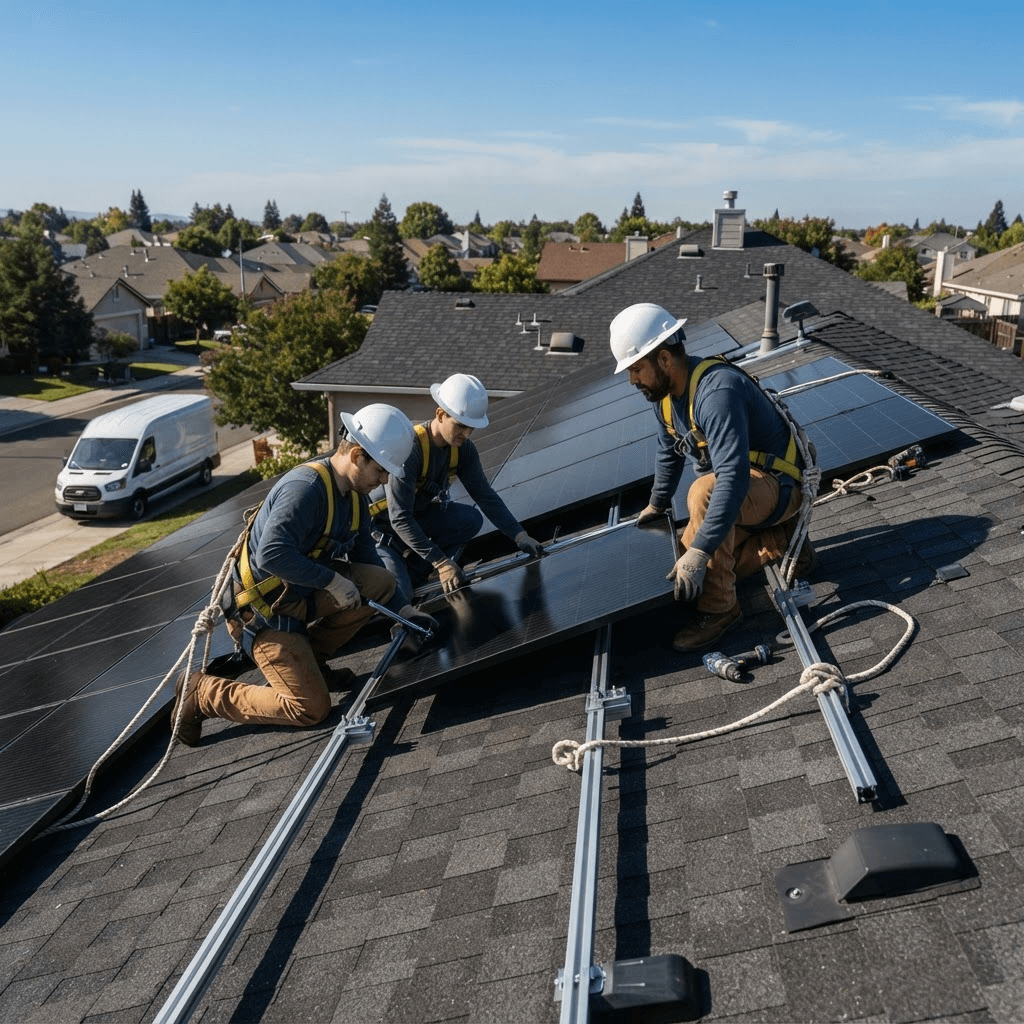
Are solar panels worth it? How much can you save?
Are solar panels worth it, and how much can you actually save? A breakdown of payback periods, tax credits, net metering, and financing to help you run your own numbers.

Are Solar Panels Worth It? How Much Can You Save?
If you've watched your electric bill climb year after year, you've probably wondered whether solar panels are finally worth it. The short answer: for most homeowners with decent sun exposure and a stable utility bill, yes. But the real answer depends on your roof, your rates, and how long you plan to stay put. Let's walk through the numbers so you can decide for yourself.
Why Solar Economics Have Changed
The economics of solar changed dramatically over the last decade. Panel prices have dropped by roughly 70% since 2010, while electricity rates in most of the country keep rising. That combination means the same system that took 15 years to pay off a decade ago often breaks even in 7 to 9 years today.
The Three Numbers That Determine Your Savings
How much you save comes down to three things: how much electricity you use, how much your utility charges, and how much sun your roof gets. A household in sunny Arizona paying high summer rates will save far more than one in a mild, overcast climate with cheap power. Before anything else, pull out twelve months of utility bills and find your average monthly usage in kilowatt-hours. That single number drives every estimate that follows.
The Federal Solar Tax Credit
The federal Residential Clean Energy Credit is the biggest lever most people can pull. It returns 30% of the total cost of your system as a credit on your federal taxes, with no cap. On a $24,000 installation, that's $7,200 back. Many states, utilities, and municipalities stack their own rebates on top, so it pays to check what's available in your area before you sign anything.
How Net Metering Affects Your Savings
Net metering is the other half of the savings equation. When your panels produce more electricity than you use, the excess flows back to the grid and your utility credits your account. On cloudy days or at night, you draw those credits back down. In states with strong net metering, this effectively turns the grid into a free battery. Where net metering has been scaled back, pairing panels with a home battery becomes more attractive.
A Real Payback Example
So what does a typical payback look like? Say your system costs $24,000 before incentives and $16,800 after the federal credit. If it offsets $2,000 of electricity a year, you break even in roughly eight and a half years. Panels are warrantied for 25 years and often keep producing well beyond that, which means you're looking at 15-plus years of essentially free electricity after payback. Over the life of the system, total savings frequently land between $25,000 and $50,000 depending on your rates.
When Solar Might Not Pay Off
There are real reasons solar might not pay off for you, and it's worth being honest about them. A heavily shaded roof, a roof that needs replacing in a few years, very low electricity rates, or plans to move within five years all weaken the case. If you're planning to sell, though, keep in mind that owned solar systems tend to raise a home's resale value, so you may recover much of the cost anyway.
How Financing Changes Your Return
Financing matters as much as the sticker price. Paying cash delivers the fastest payback and the highest lifetime return. A solar loan lets you keep cash on hand and still own the system and claim the tax credit, though interest stretches out the break-even point. Leases and power purchase agreements require no money down but hand most of the savings to the installer, so treat them as a last resort rather than a default.
How to Get Real Numbers for Your Home
The most reliable way to get real numbers is to gather quotes from a few certified local installers. Ask each for a detailed production estimate based on your actual roof and usage, the total cost before and after incentives, the equipment warranties, and a clear payback timeline. Comparing three honest quotes side by side will tell you more than any online calculator.
Rather than working through these figures by hand, our solar savings calculator estimates your cost after incentives, payback period, and 25-year savings from your own utility bill.
The Bottom Line
For most homeowners staying in their house more than a handful of years, solar has crossed the line from a green gesture to a straightforward financial decision. Run your own numbers, lean on the incentives while they're generous, and you'll know pretty quickly whether the sun is ready to start paying you back.
How Much Can You Actually Save?
The savings from solar come from three stacked sources: the electricity you no longer buy, the credits you earn for energy you export, and protection against future rate increases. For a typical home offsetting most of its usage, monthly savings often run from $80 to $250 depending on local rates and system size. Over a 25-year system life, that commonly adds up to somewhere between $20,000 and $60,000 in avoided electricity costs, and more in high-rate regions where utility prices climb steadily.
The Break-Even Point
The clearest way to judge whether solar is worth it is the break-even, or payback, point, the moment your accumulated savings equal what you paid for the system. Most well-designed residential systems break even in seven to twelve years. Everything after that is essentially free electricity for the remaining 13 to 18 years of the equipment's life, which is where the bulk of the lifetime return is earned.
When Solar Is Worth It, and When It Isn't
Solar delivers the strongest returns when you have high electricity rates, good sun exposure, a suitable roof, and you plan to stay in the home long enough to pass the break-even point. It makes less sense if your usage is very low, your roof is heavily shaded, or you expect to move within a couple of years without an owned system that adds resale value. Running the numbers on your specific bill, roof, and utility tariff is the only way to know for certain.
Factors That Change Your Savings
Your actual savings hinge on your utility's rate structure, whether you are on a time-of-use plan, how much of your production you use directly versus export, and whether you add a battery. Homes on steep time-of-use rates often benefit from storage that shifts solar power into expensive evening hours, squeezing more value out of every kilowatt-hour the panels produce.
Our solar cost and savings library can help you run those numbers before you request a single quote.
Frequently Asked Questions
Are solar panels really worth it? For most homeowners with decent sun and average-to-high electricity rates, yes. Systems typically pay for themselves in seven to twelve years and then produce low-cost power for well over a decade more.
How much will solar save me per month? Savings vary widely, but many households cut $80 to $250 off their monthly bill. High-rate regions and larger systems land at the upper end of that range.
How long until solar pays for itself? Payback usually falls between seven and twelve years, after which the electricity is effectively free for the rest of the system's 25-plus-year lifespan.
Does solar still save money if I move? An owned system generally raises resale value and helps a home sell faster, so much of the value transfers even if you move before break-even.