What is Net Metering & Irradiance? Solar Explained
Net metering and irradiance explained in plain terms, the two factors that determine how much solar energy you produce and how much you save.
What Is Net Metering and Irradiance? Solar Explained
When you start researching solar, two technical terms surface again and again: net metering and irradiance. They sound intimidating, but the ideas are straightforward.
What Is Solar Irradiance?
Irradiance is simply how much solar energy reaches a given area, usually measured in kilowatt-hours per square meter per day. It varies by location, season, roof angle, and shading, and it is the single biggest factor in how much power your panels will produce.
What Is Net Metering?
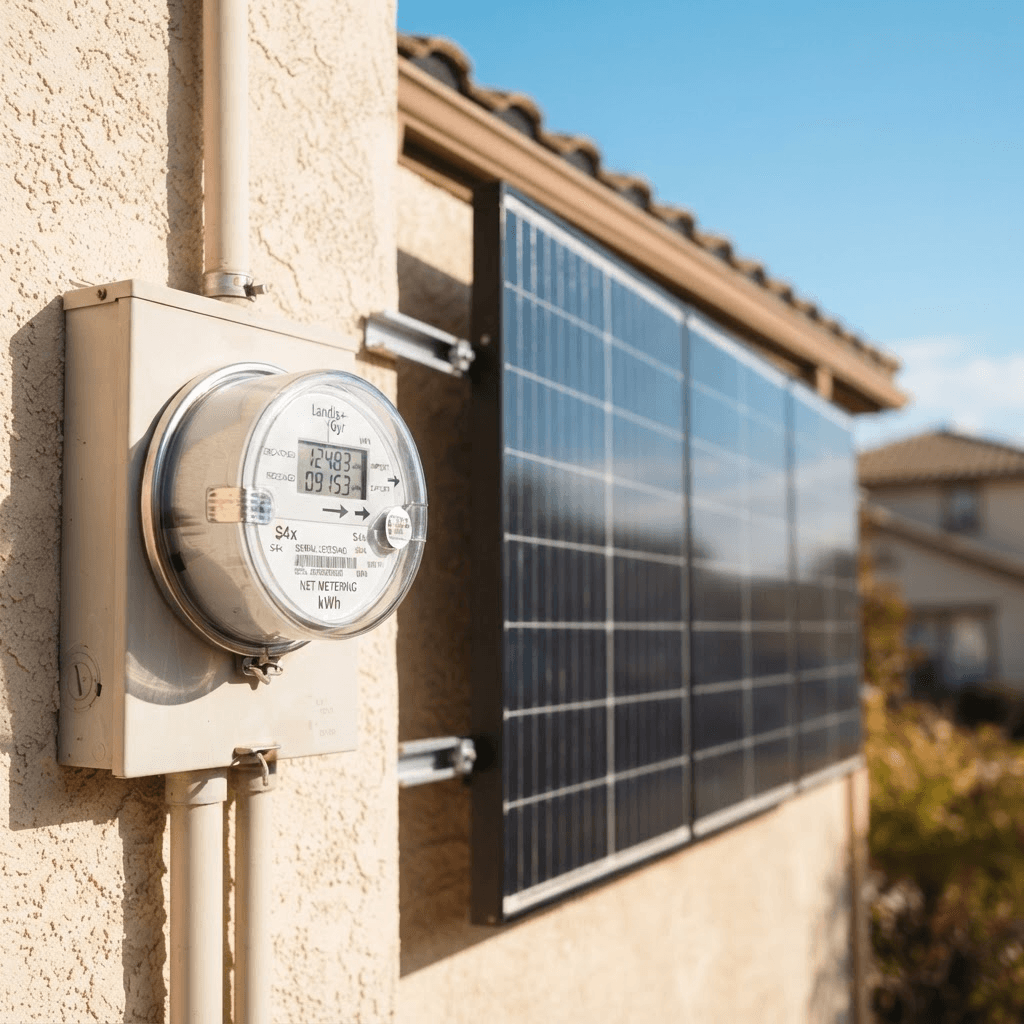
Net metering is the billing arrangement with your utility. When your panels produce more than you use, the surplus flows back to the grid and your meter effectively runs backward, crediting your account. At night or on cloudy days you draw from the grid and spend those credits.
How Irradiance and Net Metering Work Together
Together, high irradiance and favorable net metering rules determine how quickly a system pays for itself. We model both for your specific address before quoting expected savings.
How Irradiance Is Measured and Why It Matters
Solar irradiance is expressed in kilowatt-hours per square meter per day, a figure often called "peak sun hours." A location with five peak sun hours delivers roughly five times the usable solar energy of a location with one. This single number drives system sizing more than almost anything else, because a panel rated at 400 watts only produces that figure under full standard test conditions of 1,000 watts per square meter. In the real world, morning haze, atmospheric thickness, and the angle of the sun all reduce the energy actually striking your roof.
Irradiance is not the same as temperature or even how "sunny" a place feels. Some high-desert regions receive intense, direct irradiance because thin, dry air scatters less light, while humid coastal areas with the same air temperature can lose a meaningful share of potential production to haze and cloud cover. This is why two homes in the same city can have very different solar output: roof orientation, tilt, and shading from trees or neighboring buildings change how much of the available irradiance each array can actually capture.
Direct, Diffuse, and Reflected Irradiance
Total irradiance is the sum of three components. Direct irradiance is sunlight arriving in a straight line from the sun and is the largest contributor on clear days. Diffuse irradiance is light scattered by the atmosphere and clouds, which is why panels still generate power on overcast days, just at a reduced rate. Reflected irradiance bounces off surrounding surfaces such as light-colored ground, water, or snow. Good system design aims panels to maximize direct irradiance during peak production hours, typically by facing them toward the equator at a tilt roughly equal to the site's latitude.
How Net Metering Credits Are Calculated
Net metering works by measuring the difference between what your system exports to the grid and what you import from it. During sunny midday hours, most homes produce more than they consume, so the surplus flows outward and earns a credit. After sunset, you pull that stored credit back to cover evening usage. Depending on your utility's rules, credits may be valued at the full retail electricity rate, a lower wholesale or "avoided cost" rate, or a time-of-use rate that changes by hour. Newer net metering structures, sometimes called net billing, often pay less for exported energy than they charge for imported energy, which increases the value of pairing solar with a battery.
Because credit values vary so much between utilities, our solar savings estimator is the quickest way to see what net metering is actually worth on your bill.
Why the Combination Determines Your Payback
High irradiance means your panels generate more kilowatt-hours per year, and favorable net metering means each of those kilowatt-hours offsets more of your bill. When both are strong, systems can pay for themselves in well under a decade; when either is weak, the payback period stretches. That is why any credible savings estimate has to model your exact roof and your specific utility's current net metering tariff rather than relying on regional averages.
Both variables feed directly into system sizing, a topic we cover throughout our solar explainer articles.
Frequently Asked Questions
Does net metering mean I get a check from my utility? Usually not directly. Most programs credit your account and roll excess credits forward month to month. At an annual "true-up," some utilities pay out remaining credits, but often at a low wholesale rate, so systems are typically sized to offset your usage rather than to generate a large surplus.
Do solar panels work when irradiance is low, like on cloudy days? Yes. Panels still capture diffuse irradiance through clouds, though output may drop to a fraction of a clear-day peak. Annual production estimates already account for typical cloudy and rainy days in your region.
Can I improve the irradiance my panels receive? You cannot change the sun, but you can maximize capture by choosing the best roof planes, setting an optimal tilt, trimming shading trees, and keeping panels clean. Proper design around your site's irradiance profile is where the biggest gains come from.
Is net metering going away? Many regions are shifting from traditional retail-rate net metering to net billing with lower export credits. This does not eliminate solar savings, but it does make self-consumption and battery storage more valuable, which is why current tariff rules should always be modeled before you buy.
Time-of-Use Rates and Net Metering
Many utilities have shifted customers onto time-of-use rates, where electricity costs more during peak evening hours and less midday. This interacts directly with net metering, because the value of the energy you export depends on when you export it. Solar produces most heavily around midday, so under time-of-use plans that price midday exports lower, homeowners increasingly benefit from shifting that energy into expensive evening hours rather than exporting it for a modest credit.
How Batteries Reshape the Equation
As export credits shrink under newer net billing rules, batteries have become far more valuable. Instead of sending midday surplus to the grid for a low credit, a battery stores it for use during high-priced evening hours, letting you avoid buying expensive grid power. This self-consumption strategy squeezes more value out of every kilowatt-hour your panels produce and is why storage is now a common part of system design where export rates are low.
Regional Differences You Should Expect
Net metering rules vary widely from one utility and region to the next, and they change over time. Some areas still offer generous full-retail-rate credits, while others have moved to net billing with lower export rates and time-varying credit values. Because this single policy can swing your annual savings substantially, the current tariff for your specific utility should always be modeled before you commit, rather than relying on what neighbors experienced a few years ago.