Solar Financing Explained: Cash, Loans, Leases & PPAs
How cash, loans, leases, and PPAs compare on upfront cost, ownership, and long-term savings, so you can pick the right path.
Solar Financing Explained: Cash, Loans, Leases, and PPAs
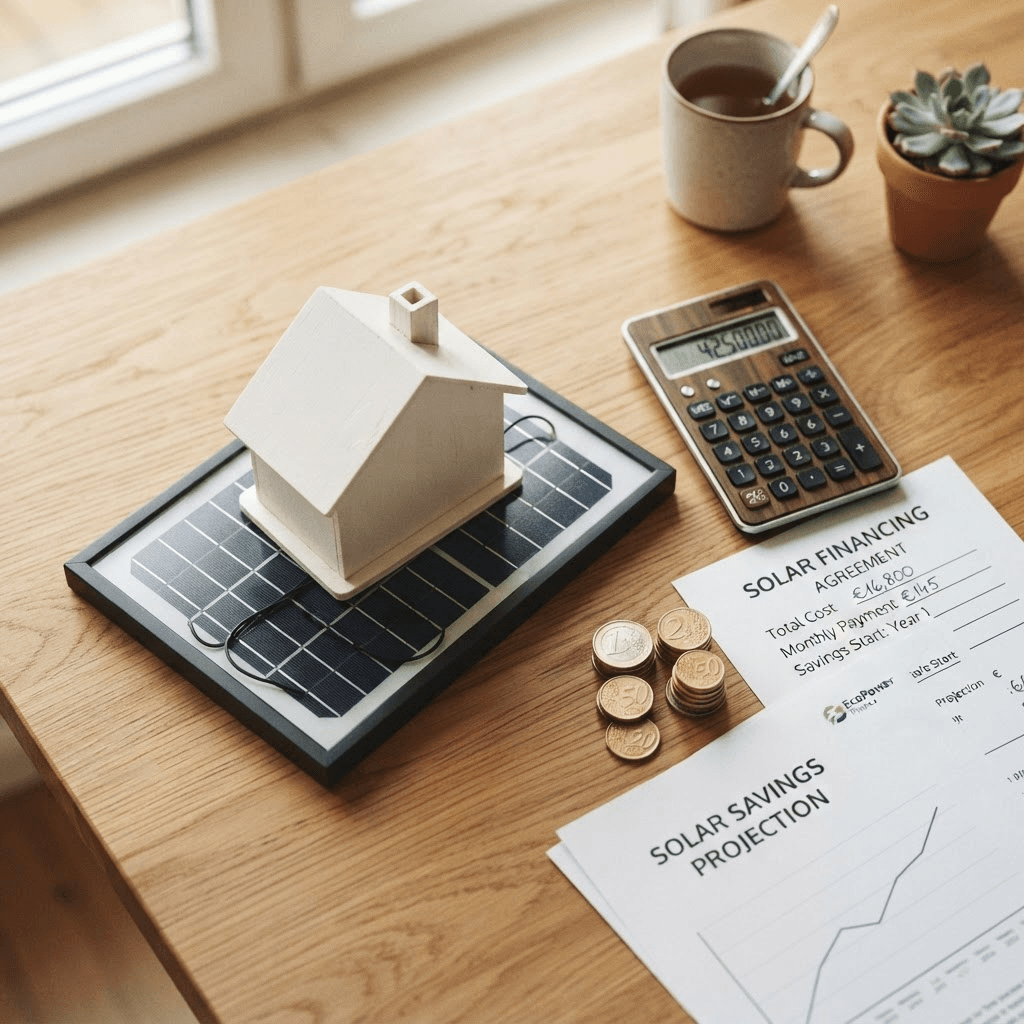
Paying for a solar system is often the most confusing part of going solar, but it comes down to four main paths: cash, a loan, a lease, or a power purchase agreement.
Paying Cash: Maximum Savings and Full Ownership
Buying with cash delivers the highest lifetime savings and full ownership, so you capture every incentive and tax credit directly.
Solar Loans: Ownership Without the Upfront Cost
A solar loan spreads that cost over time while still letting you own the system and claim those same credits.
Leases and PPAs: Third-Party Ownership Explained
Leases and power purchase agreements are different: a third party owns the panels on your roof. With a lease you pay a fixed monthly amount, and with a PPA you pay per kilowatt-hour the system produces. Both lower your upfront cost to nearly zero but transfer the tax benefits to the owner.
Which Financing Option Is Right for You?
The right choice depends on whether you value maximum savings, low upfront cost, or simplicity. We walk every homeowner through the tradeoffs before recommending a path.
Because each path changes your net cost differently, it helps to model the cash case in our solar payback calculator first and use that as the baseline you compare loan and lease offers against.
Comparing the Four Paths Side by Side
Choosing how to pay for solar is really a choice about who owns the system and who captures its financial benefits. With cash and loans, you own the equipment, claim any available incentives, and keep all the energy savings. With leases and power purchase agreements, a third party owns the hardware, absorbs the maintenance responsibility, and keeps the tax benefits, while you get lower or no upfront cost in exchange for smaller long-term savings. Neither is universally "better"; the right answer depends on your tax situation, cash on hand, and how long you plan to stay in the home.
Paying Cash in Depth
Buying outright produces the lowest cost per kilowatt-hour over the life of the system because you pay no interest and no third-party markup. Every dollar the system saves after payback is yours. The tradeoff is opportunity cost: a solar purchase ties up capital that could be invested elsewhere. For homeowners who have the funds and want the shortest payback and highest lifetime return, cash is almost always the strongest financial choice, and it also tends to add the most resale value because the home transfers with a fully owned, debt-free system.
Understanding Solar Loans
A solar loan lets you own the system while spreading payments over five to twenty-five years. Secured loans, often tied to home equity, usually carry lower interest rates than unsecured solar-specific loans, but they place a lien on your property. A key detail to watch is the "dealer fee" baked into many zero- or low-interest solar loans: the advertised rate may look attractive, but the installer raises the system price to cover the financing cost, so the real number to compare is the total amount paid. When structured well, a loan can produce monthly energy savings that exceed the loan payment, making the system cash-flow positive from day one.
Leases and PPAs Explained in Practice
With a lease, you pay a fixed monthly fee to use panels a company installs on your roof. With a power purchase agreement, you instead pay for each kilowatt-hour the system produces, usually at a rate below your utility's price. Both typically include an "escalator," a clause that raises your payment a set percentage each year, so it is important to model whether your payment could eventually approach or exceed grid prices. The upside is near-zero upfront cost and no maintenance worries; the downside is lower lifetime savings and potential complications when selling the home, since the buyer must assume the agreement or you must buy it out.
How Financing Affects Home Sales
Owned systems, whether bought with cash or a loan that gets paid off, generally make a home easier to sell and can increase its value. Leases and PPAs can complicate a sale because the buyer has to qualify to take over the contract. If you expect to move within a few years, this is a critical factor in choosing your financing path.
Whichever path fits your situation, our solar buying guides cover what to check before you sign.
Frequently Asked Questions
Which solar financing option saves the most money? Paying cash almost always delivers the highest lifetime savings because you avoid interest and third-party markups. A well-structured loan comes next, while leases and PPAs save the least but require little or no money upfront.
Do I still get incentives with a lease or PPA? Generally no. With third-party ownership, the company that owns the panels claims the tax credits and incentives, which is part of how they offer low upfront pricing. To capture incentives yourself, you need to own the system through cash or a loan.
What is a solar loan dealer fee? It is a hidden cost lenders and installers bake into low-interest solar loans. The interest rate looks low, but the system price is inflated to cover it. Always compare the total amount paid over the loan, not just the advertised rate.
Can I switch from a lease to owning later? Many leases and PPAs include a buyout option after a set number of years, letting you purchase the system at its depreciated value. If ownership matters to you long term, confirm the buyout terms before signing.
How Incentives Change the Calculation
Incentives can dramatically alter which financing path makes sense. Tax credits, rebates, and performance incentives are only valuable to the party that owns the system and has the tax liability to absorb them. If you pay cash or take a loan, those benefits flow to you. Under a lease or PPA, the third-party owner claims them, which is exactly how they fund their low upfront pricing. Anyone with the tax appetite to use incentives directly should weigh that heavily toward ownership.
Reading the Fine Print on a Solar Contract
Whatever path you choose, the contract details decide whether the deal is as good as it sounds. On loans, scrutinize the interest rate, term, and any bundled dealer fee. On leases and PPAs, focus on the annual escalator, the total payments over the full term, and the buyout and transfer provisions. On any agreement, confirm the production guarantees, warranty coverage, and what happens if the system underperforms. A trustworthy provider will walk you through every one of these numbers without pressure.
Matching the Path to Your Situation
The right financing choice ultimately maps to your circumstances. Choose cash if you have the funds and want maximum lifetime savings. Choose a loan if you want ownership and its incentives without tying up capital, and the monthly savings exceed the payment. Choose a lease or PPA only if avoiding upfront cost and maintenance responsibility outweighs the smaller long-term savings, and you understand the resale implications. There is no universally best option, only the one that fits your finances and plans.