Designing a Drought-Tolerant Yard That Still Looks Lush
How to design a drought-tolerant yard that still looks lush, using hydrozoning, heavy mulch, and drip irrigation to group plants by water need and cut water use.
Designing a Drought-Tolerant Yard That Still Looks Lush
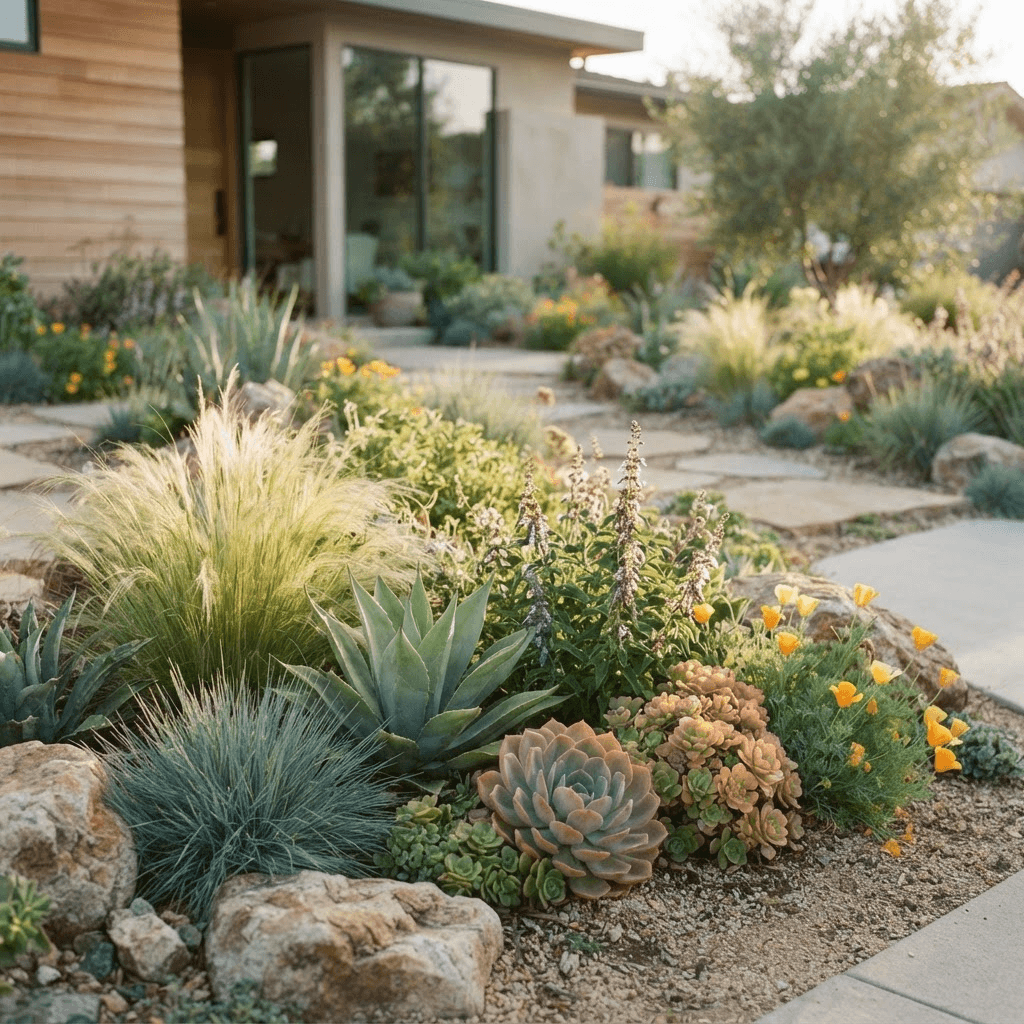
Drought-tolerant landscaping is about choosing the right plants and grouping them by water need. Done well, it doesn't mean a yard of bare gravel and cactus, it means a landscape that stays lush while using a fraction of the water a traditional yard needs.
Map the Sun and Shade Across Your Yard
Start by mapping the sun and shade across your yard through the day. Watching how light moves across the property reveals which spots dry out fastest and which naturally hold on to moisture, and that map becomes the foundation for every planting decision that follows.
Group Plants by Water Need
Group thirsty plants together in the shadiest, lowest spots where water naturally collects, and reserve sunny slopes for natives and succulents. Clustering plants this way, sometimes called hydrozoning, means you're never overwatering a drought-tolerant plant to keep a thirstier neighbor alive, or underwatering a thirsty plant because it's sharing a zone with succulents.
Mulch Heavily to Lock in Moisture
Mulch heavily to keep roots cool and reduce evaporation. A thick layer acts as insulation for the soil, slowing how quickly water disappears between waterings and giving roots a more stable environment to grow in.
Use Drip Irrigation on a Smart Timer
Drip irrigation on a smart timer delivers water directly to roots, cutting usage by up to sixty percent compared to spray heads. Because the water goes straight to the root zone instead of misting into the air or running off hard surfaces, less is lost to evaporation and wind, and the timer adjusts delivery instead of watering on a fixed schedule regardless of conditions.
The Result: A Lush Yard on a Fraction of the Water
Mapping sun and shade, grouping plants by water need, mulching heavily, and irrigating with drip lines all work together. The result is a yard that stays lush on a fraction of the water a conventional landscape would require.
What Drought-Tolerant Landscaping Really Means
Drought-tolerant landscaping, sometimes called water-wise or xeriscaping, is a design approach that keeps a yard beautiful while dramatically reducing its need for irrigation. The common misconception is that it means gravel and cactus, but a well-designed water-wise yard can be genuinely lush, full of texture, color, and seasonal interest. The difference is that every plant is chosen to thrive on the water your climate naturally provides, and the design is organized so that supplemental watering is targeted and efficient rather than constant and wasteful.
Choosing the Right Drought-Tolerant Plants
The heart of a water-wise landscape is its plant palette. Native plants are the natural starting point, since they evolved to survive on local rainfall and support local wildlife. Mediterranean plants like lavender, rosemary, and salvia thrive in dry summers, while succulents and ornamental grasses add sculptural form with almost no water. Aim for a mix of evergreen structure and seasonal bloomers so the yard looks intentional year-round. Grouping these by water need, a practice called hydrozoning, ensures each plant gets exactly what it wants without dragging its neighbors into over- or under-watering.
Improving Soil to Hold Water Longer
Great drought-tolerant design starts below the surface. Soil rich in organic matter acts like a sponge, holding moisture in the root zone far longer than bare, compacted dirt. Working compost into beds before planting improves both water retention and drainage, giving roots a stable environment. Once plants are in, a generous layer of mulch, two to three inches of bark, wood chips, or gravel, insulates the soil, slows evaporation, and suppresses the weeds that compete for scarce moisture. Healthy soil is the quiet workhorse that lets a water-wise yard get by on so little.
Smart Irrigation That Wastes Nothing
Even a drought-tolerant yard needs some water while plants establish, and how you deliver it matters enormously. Drip irrigation places water directly at the roots, cutting waste from evaporation and overspray by more than half compared to traditional spray heads. Pair it with a smart controller that adjusts to weather and seasons, and you water based on actual need rather than a fixed calendar. Watering deeply but infrequently trains roots to grow down toward moisture, producing tougher, more self-sufficient plants than frequent shallow sprinkling ever could.
To turn that principle into actual run times, our irrigation schedule planner builds a watering plan from your lawn and bed areas.
Replacing or Reducing the Lawn
A traditional turf lawn is usually the thirstiest feature in any yard, so reducing it is the single biggest water saving you can make. You do not have to eliminate grass entirely, shrinking it to a small, functional patch and surrounding it with planted beds, gravel gardens, or ground covers preserves the softness of turf where you actually use it while slashing overall consumption. Low-water ground covers and native grasses can replace turf in areas that are seen more than walked on, keeping the green without the guzzling.
Designing for Beauty, Not Just Survival
The best water-wise yards are designed with the same care as any landscape. Repeating a few key plants creates rhythm, contrasting fine and bold textures adds depth, and a focal point like a specimen agave or a boulder grouping gives the eye a place to land. Seasonal bloomers stagger their color so something is always happening, and evergreen anchors keep structure through winter. Thinking like a designer, not just a water accountant, is what elevates a drought-tolerant yard from merely efficient to genuinely striking.
The same design thinking applies to any climate, and our water-wise landscaping resources show how to adapt it to your own yard.
Frequently Asked Questions
Can a drought-tolerant yard actually look lush? Yes. By combining native and Mediterranean plants, ornamental grasses, and layered textures over healthy, mulched soil, a water-wise yard can look full and green while using a fraction of the water a conventional yard needs.
How much water can drought-tolerant landscaping save? Savings vary by climate and design, but replacing thirsty turf and switching to drip irrigation and water-wise plants commonly cuts outdoor water use by half or more, and often much higher in dry regions.
What are the best drought-tolerant plants? Strong choices include native shrubs and perennials, lavender, rosemary, salvia, ornamental grasses, and succulents like agave and sedum. Choosing plants adapted to your specific climate matters more than any single species.
Do drought-tolerant plants still need watering? They need regular watering during the first year or two to establish deep roots. Once established, most need only occasional deep watering, and many survive on natural rainfall alone.