What Is Foliage? (Ornamental Grasses Explained)
Foliage is the leaves that give a garden its structure and texture. Here's what it means, and why ornamental grasses are one of its best expressions.
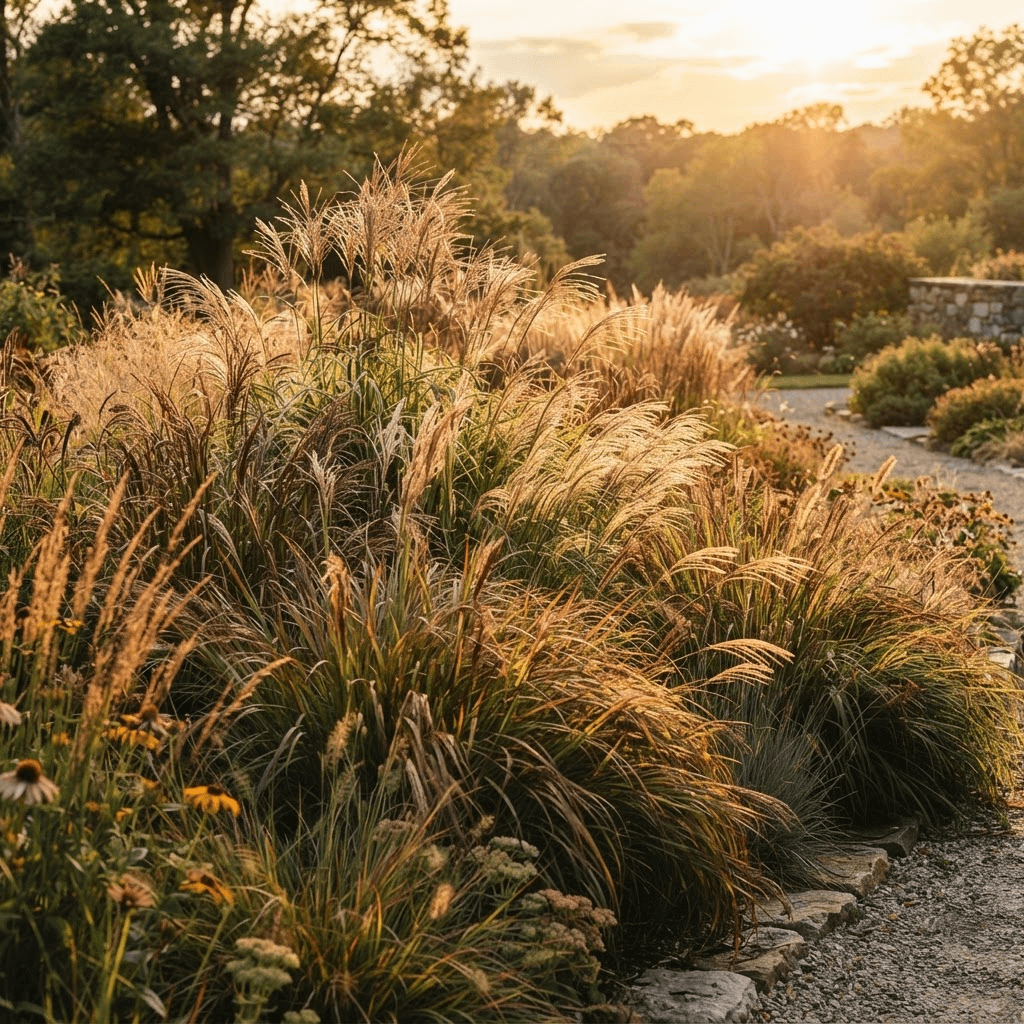
What Is Foliage? (Ornamental Grasses Explained)
When gardeners talk about foliage, they simply mean the leaves of a plant, its greenery, as opposed to its flowers, fruit, or stems. But foliage is far more than filler between blooms. It's the backbone of a garden's look, providing color, texture, and structure for the entire growing season rather than the fleeting weeks a flower is open. Learning to design with foliage, not just flowers, is one of the biggest steps toward a landscape that looks good all year.
Why Foliage Carries a Garden
Foliage carries a garden through the long stretches when little is in bloom. Leaves come in an enormous range of colors — deep greens, silvers, blues, golds, burgundies, and variegated mixes — and in textures from fine and feathery to broad and glossy.
Playing these against one another creates depth and contrast that flowers alone can't sustain. A bed designed around foliage stays interesting from the first leaves of spring to the last standing stems of winter.
Ornamental Grasses: Foliage-First Planting
Ornamental grasses are one of the finest examples of foliage-first planting, and they've become a landscaping favorite for good reason. Unlike lawn grass, which is mowed flat and uniform, ornamental grasses are grown for their shape, movement, and texture.
They form arching clumps, upright fountains, and airy plumes that add height and softness to a bed, and they bring something few other plants do: motion, swaying and rustling with the slightest breeze.
Tough, Low-Maintenance, and Seasonal
Part of their appeal is how tough and low-maintenance they are. Most ornamental grasses are hardy, drought-tolerant once established, and largely pest-free, asking little beyond a single hard cut-back once a year.
They also shine across seasons, greening up in spring, sending out feathery flower plumes in summer, turning gold, copper, or russet in fall, and holding their dried structure through winter to catch frost and low light.
Warm-Season vs. Cool-Season Grasses
Grasses fall into two broad groups worth knowing. Warm-season grasses like miscanthus, switchgrass (panicum), and fountain grass (pennisetum) do most of their growing in summer heat and put on a spectacular late-season show. Cool-season grasses like blue fescue and feather reed grass (calamagrostis) green up earlier and hold up well in milder conditions.
Mixing the two extends the display across a longer window.
Using Grasses in the Garden
In the garden, use grasses the way you'd use foliage generally: as structure and contrast rather than a single focal point. Tall varieties make excellent screens or backdrops, mid-sized clumps weave beautifully through perennial beds, and low, tufted types edge paths or fill gravel gardens.
Massing several of the same grass creates a modern, sweeping effect, while a single specimen can anchor a corner. Either way, you're proving the same point: a garden built on great foliage never has an off-season.
What Foliage Means in the Garden
In gardening, foliage simply refers to the leaves of a plant, but the term carries more weight than it first appears. While flowers grab attention, they are usually fleeting, whereas foliage provides the structure, color, and texture that carry a garden through the entire season. Designers often say that flowers are the accessories and foliage is the wardrobe, because a bed built on interesting leaves looks good even when nothing is in bloom. Understanding foliage, its color, shape, texture, and how it changes through the year, is what separates a garden that peaks for two weeks from one that looks intentional for months.
Why Ornamental Grasses Are So Popular
Ornamental grasses have surged in popularity because they deliver enormous impact for very little effort. They bring movement as they sway in the breeze, a dynamic quality few other plants offer, along with graceful form and seasonal color that shifts from summer greens to autumn golds and coppers. Most are remarkably tough, thriving in poor soil, resisting pests, and needing little water once established. Their airy plumes catch light beautifully and add height and softness to beds, making them a favorite for modern, naturalistic, and low-maintenance designs alike.
Warm-Season vs. Cool-Season Grasses
Ornamental grasses fall into two groups whose growth habits shape how you use them. Warm-season grasses, such as maiden grass, switchgrass, and fountain grass, begin growing in late spring, peak in the heat of summer, and put on their best show in late summer and fall before going dormant. Cool-season grasses, like blue fescue and feather reed grass, green up early in spring and stay attractive through cooler weather, sometimes even into winter. Combining the two types keeps a planting lively across a longer season, since one group is always near its peak.
Designing With Foliage Texture and Color
Skilled gardeners compose beds using foliage the way a painter uses a palette. Contrasting textures, the fine blades of a grass against the broad leaves of a hosta, create depth and keep the eye moving. Color echoes and contrasts matter too: silvery, burgundy, chartreuse, and variegated leaves can be arranged to complement or pop against one another. Grasses in particular provide a soft, feathery counterpoint to bolder shapes, and repeating a single grass throughout a bed ties the whole composition together with rhythm and cohesion.
Caring for Ornamental Grasses Year-Round
One of the great virtues of ornamental grasses is how little care they demand. Most need only one real task each year: cutting back the previous season's growth in late winter or early spring before new blades emerge. Many gardeners leave the dried plumes and foliage standing through winter, both for visual interest and to shelter wildlife, then shear them to a few inches above the ground once the show is over. Established grasses rarely need fertilizer and tolerate drought well, and clumping types can be divided every few years to rejuvenate them and create new plants for free.
Grasses are at their best beside contrasting textures, a subject our planting design articles explore further.
Frequently Asked Questions
What is foliage in gardening? Foliage is the leaves of a plant. In garden design it refers to using leaf color, shape, and texture, rather than flowers, to create lasting structure and interest throughout the growing season.
Are ornamental grasses hard to maintain? No. Ornamental grasses are among the lowest-maintenance plants available, typically needing only an annual cutback in late winter or early spring, with little watering or fertilizing once established.
When should I cut back ornamental grasses? Cut them back in late winter or early spring, before new growth emerges. Many gardeners leave the dried foliage standing through winter for visual interest and wildlife shelter, then shear it to a few inches.
What is the difference between warm-season and cool-season grasses? Warm-season grasses grow and bloom in summer heat and go dormant in winter, while cool-season grasses green up early in spring and stay attractive in cooler weather. Mixing both extends the display.