Flower Bed Ideas (How to Create a Flower Garden)
Learn how to create a flower garden from the ground up, plus flower bed ideas — island beds, borders, color-themed beds, pollinator gardens, raised beds, and succession planting.
Flower Bed Ideas: How to Create a Flower Garden That Blooms All Season
Creating a flower garden is one of the most rewarding landscaping projects, and it's more approachable than it looks when you take it step by step. The secret is to get the fundamentals right first, then have fun with the design, because a well-planned flower bed rewards you with color from spring through fall with surprisingly little fuss.
How to Create a Flower Garden: The Fundamentals
Choose the Right Location
Start by choosing the right location. Most flowering plants want at least six hours of direct sun, so watch how light falls across your yard before committing to a spot.
Prepare the Soil
Prepare the soil by loosening it and mixing in compost to improve drainage and feed the roots. Good soil is the single biggest predictor of success, so it's worth the effort before a single plant goes in.
Choose Plants Suited to Your Climate
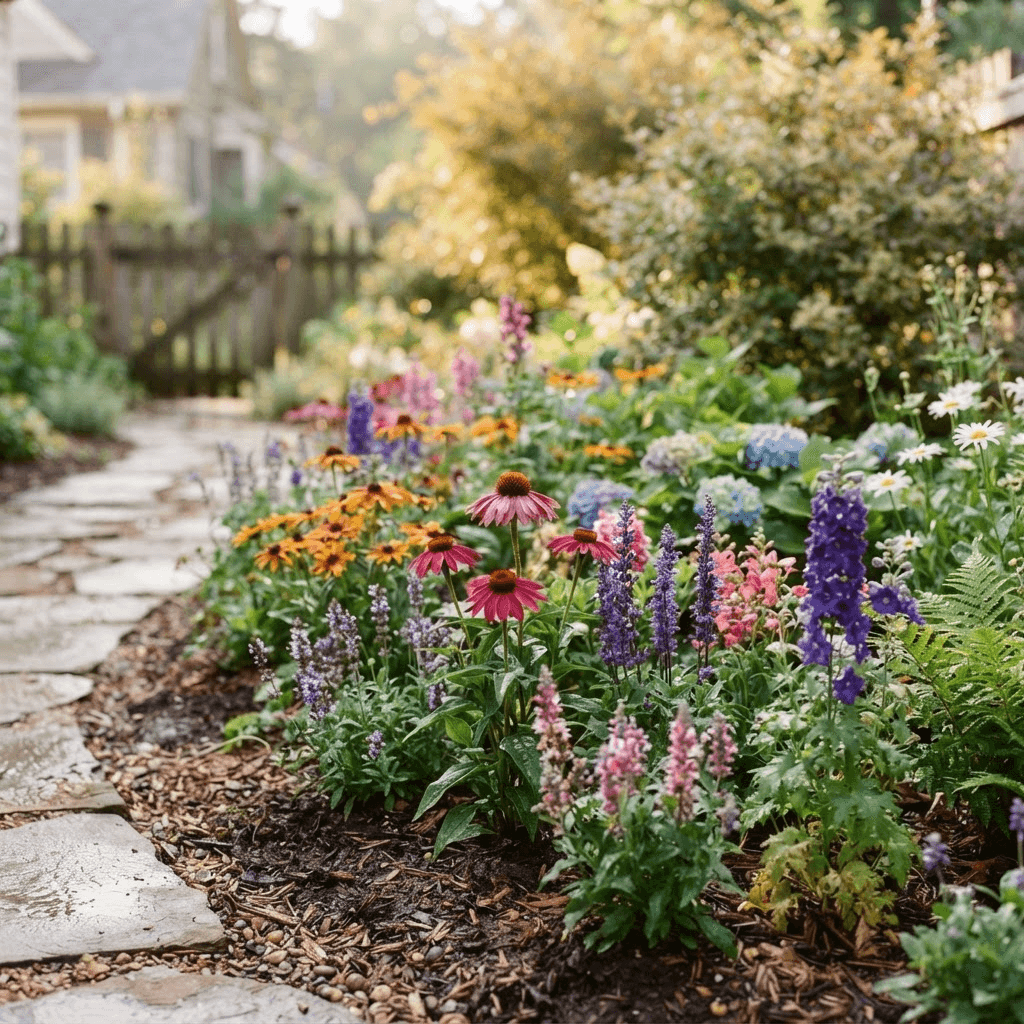
Choose plants suited to your climate and the amount of sun the bed receives. Combining perennials, which return each year, with a few annuals for seasonal color gives you a bed that looks full and evolves over time. Arrange taller plants toward the back and shorter ones in front so nothing gets hidden.
Water, Mulch, and Deadhead
Water consistently while plants establish, add a layer of mulch to retain moisture and suppress weeds, and deadhead spent blooms to encourage more flowers. With a little routine care, your garden will reward you season after season.
Our mulch and bed material estimator will tell you how many bags or cubic yards your beds need at the depth you want.
Flower Bed Ideas to Inspire Your Design
Once you understand the basics, the fun part begins: shaping beds that fit your space and style. The layout and planting scheme you choose can turn a simple patch of flowers into the centerpiece of your yard. Here are some flower bed ideas to spark your own design.
Island Beds
An island bed sits in the middle of a lawn where it can be viewed from every angle, so plant the tallest flowers in the center and step them down toward the edges. This creates a mounded, three-dimensional display that looks great from anywhere in the yard.
Border and Foundation Beds
A long border along a fence, walkway, or the base of your house frames the space and softens hard architectural lines. Layer heights from back to front and repeat a few key plants along the length to give the border a cohesive, intentional rhythm rather than a jumbled look.
Color-Themed Beds
Choosing a deliberate color palette makes even a small bed feel designed. A monochromatic scheme of soft whites and creams reads calm and elegant, while hot combinations of red, orange, and yellow feel energetic. Cool blues and purples create depth and a soothing mood. Picking two or three colors that work together is far more striking than planting one of everything.
Pollinator and Cottage Beds
For a relaxed, romantic look that also supports wildlife, mass together nectar-rich flowers like coneflower, salvia, bee balm, and zinnias. A loose, informal cottage-garden style lets plants mingle and self-seed, drawing in bees and butterflies while feeling lush and abundant.
Raised Beds and Containers
If your soil is poor or space is tight, raised beds and large containers give you full control over the growing conditions and add instant structure. They're also easier on your back and make it simple to refresh the display each season by swapping in new annuals.
Succession Planting for All-Season Color
The most satisfying beds are never bare. Combine spring bulbs, early summer perennials, and late-season bloomers so that as one plant finishes, another is just coming into flower. Layering bloom times this way keeps color moving through the bed from the first warm days until frost.
Start Small and Let Your Flower Garden Evolve
Whichever direction you choose, start small, keep the design simple, and let the bed evolve as you learn what thrives in your yard. A flower garden is never truly finished, and that's exactly what makes it so rewarding.
Planning Your Flower Bed
A beautiful flower bed begins with a plan rather than an impulse buy at the garden center. Start by observing the site: how much sun it gets, the soil type, and the drainage, since these determine which flowers will thrive. Decide on the bed's purpose and style, a formal border, a casual cottage garden, a pollinator haven, and sketch its shape and size. Consider the viewing angle too, placing taller plants at the back of a bed seen from one side, or in the center of an island bed. This upfront planning prevents the common mistake of buying plants that struggle in the conditions you actually have.
Preparing the Soil
The single biggest factor in a thriving flower bed is healthy soil, and preparing it well pays off for years. Remove existing grass and weeds, then loosen the soil to a depth of at least a foot so roots can spread. Work in generous amounts of compost or other organic matter to improve structure, drainage, and fertility, transforming heavy clay or sandy soil into a rich, workable bed. A soil test reveals pH and nutrient needs so you can amend accordingly. Well-prepared soil gives plants the foundation to establish quickly and bloom abundantly with far less struggle.
Choosing and Combining Plants
Selecting the right mix of plants is where a flower bed comes to life. Combine annuals, which bloom nonstop for one season and provide instant color, with perennials, which return year after year and form the bed's backbone. Layer by height, tall in back, medium in the middle, low in front, and aim for a succession of blooms so something is always flowering from spring through fall. Repeating colors and a few key plants throughout the bed creates harmony, while contrasting foliage adds texture. Grouping plants with similar sun and water needs keeps the whole bed healthy and easy to maintain.
Planting and Arranging for Impact
How you arrange and plant matters as much as what you choose. Set plants out in their pots first and adjust the arrangement before digging, planting in odd-numbered groups and drifts rather than single specimens for a fuller, more natural look. Give each plant room for its mature size, resisting the urge to overcrowd for instant fullness, since crowded beds invite disease and constant thinning. Plant at the correct depth, water thoroughly to settle the roots, and the bed will fill in beautifully over its first season or two.
Mulching and Ongoing Care
Finishing the bed with mulch and maintaining it lightly keeps it looking its best. A two- to three-inch layer of mulch conserves moisture, suppresses weeds, and gives the bed a tidy, finished look while enriching the soil as it breaks down. Water deeply and less often to encourage strong roots, deadhead spent blooms to prolong flowering, and feed as needed for your plants. A little seasonal attention, cutting back perennials, dividing crowded clumps, and refreshing mulch, keeps a flower bed vibrant and healthy for many years.
For companion projects like borders, paths, and mulch selection, browse our garden bed and planting guides.
Frequently Asked Questions
How do I start a flower bed from scratch? Choose a site based on sun and drainage, plan the shape and style, then remove grass and weeds and enrich the soil with compost. Arrange plants by height and bloom time, plant, water, and mulch.
What is the difference between annuals and perennials? Annuals bloom nonstop for one season then die, providing instant color, while perennials return year after year and form the garden's backbone. Combining both gives lasting structure and continuous color.
How do I keep flowers blooming all season? Choose plants with staggered bloom times for a succession of color, deadhead spent flowers to encourage more, water and feed appropriately, and mix in long-blooming annuals to fill gaps between perennial displays.
How far apart should I space flowers? Space each plant for its mature size, following the plant tag, and plant in odd-numbered groups. Avoid overcrowding for instant fullness, since crowded beds invite disease and require constant thinning.