Top 10 Landscape Maintenance Materials
10 materials that keep a landscape healthy and low-maintenance year-round, from mulch and topsoil to edging and fertilizer.
<!-- Meta description: A rundown of the ten materials that keep a landscape healthy and low-maintenance year-round, from mulch and topsoil to edging and fertilizer. -->
Top 10 Landscape Maintenance Materials
Keeping a landscape healthy isn't just about labor, it's about having the right materials on hand at the right time. A handful of inexpensive, easy-to-source materials do most of the heavy lifting: they feed the soil, block weeds, hold structure, and keep water and nutrients where your plants can use them. Here are the ten materials that show up in nearly every well-maintained yard.
1. Mulch
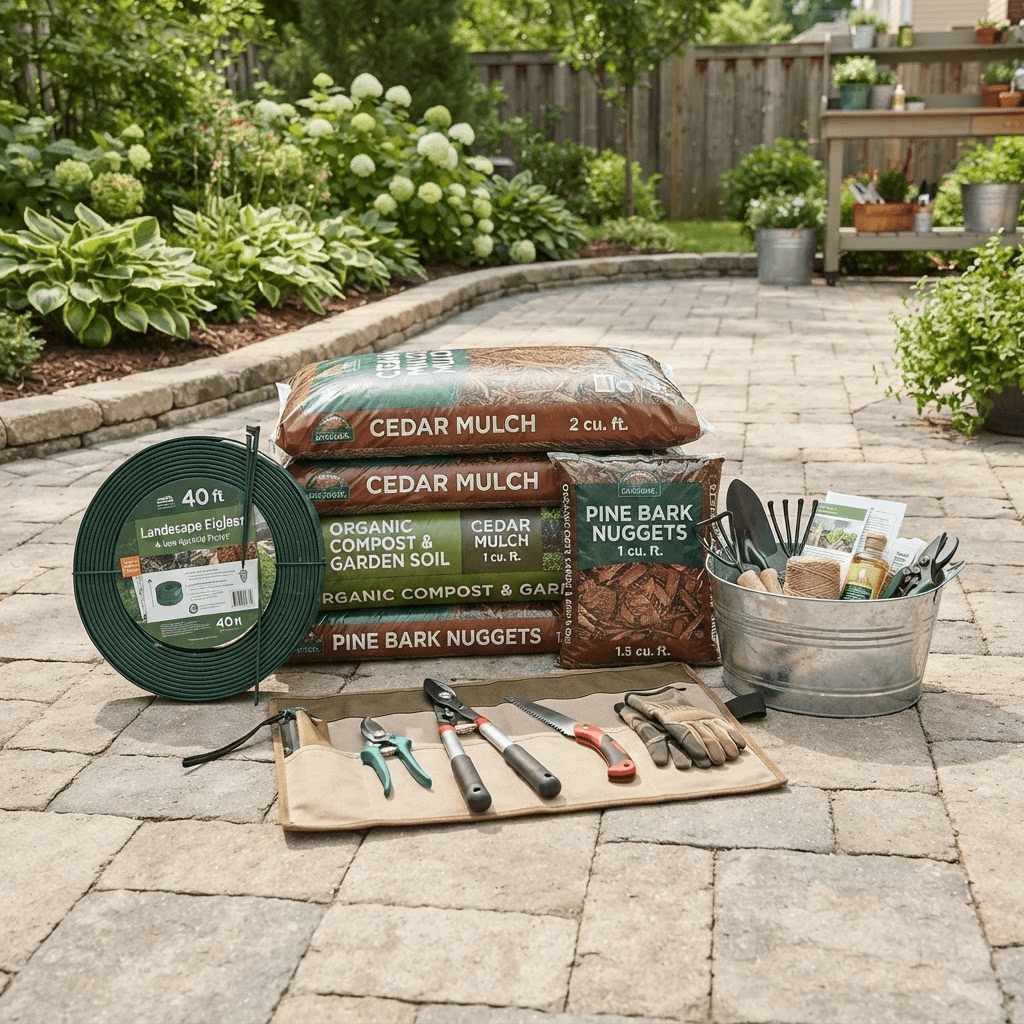
Mulch is the workhorse of landscape maintenance. A two-to-three-inch layer over beds and around trees blocks sunlight from weed seeds, holds soil moisture so you water less often, and moderates soil temperature through summer heat and winter cold. As it breaks down, organic mulch like shredded bark or wood chips also feeds the soil beneath it. Most beds need a refresh once or twice a year.
2. Topsoil
Topsoil is the nutrient-rich layer that plant roots actually live in, and it's what you bring in when you're establishing a new bed, filling in low spots, or repairing bare patches in the lawn. Quality varies a lot between suppliers, so look for topsoil that's screened free of debris and has a good mix of organic matter rather than mostly sand or clay fill.
3. Compost
Compost is topsoil's nutrient-dense partner. Mixed into planting beds or top-dressed onto the lawn, it improves soil structure, boosts microbial activity, and slowly releases nutrients without the burn risk of synthetic fertilizer. It's especially valuable for improving heavy clay or fast-draining sandy soil, since it helps both types hold the right amount of water and air.
4. Crushed Stone and Gravel
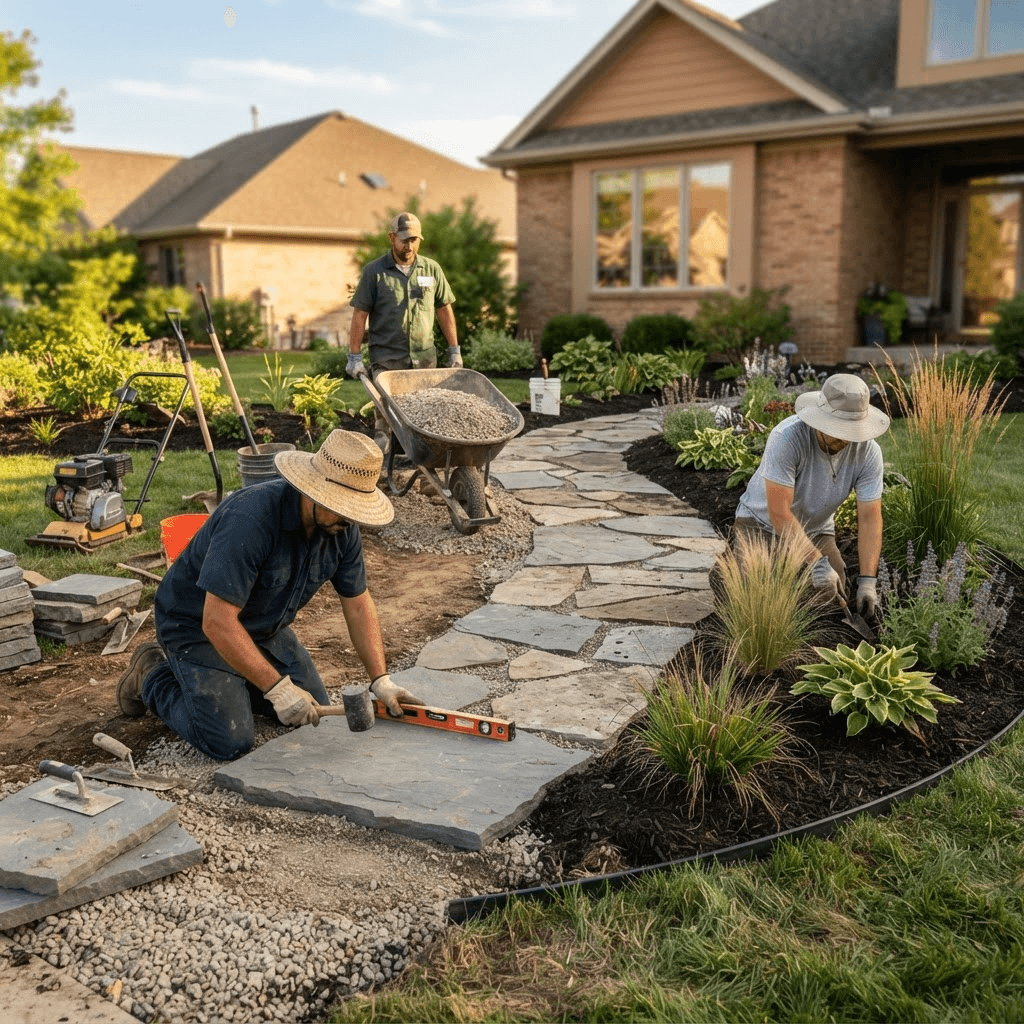
Crushed stone and gravel handle drainage and structure. They form the compacted base beneath patios, walkways, and driveways, and as a decorative top layer they create low-maintenance ground cover in dry beds, borders, and drainage areas. Because gravel doesn't decompose, it's one of the few landscape materials that essentially never needs replacing, just the occasional weed pass or top-up.
5. Paver Base Sand
Coarse paver base sand is a small material with an outsized job: it's the leveling layer that pavers and flagstone are set into on top of the compacted stone base. It lets you fine-tune the height and slope of each unit before it locks in place, and it's different from the fine polymeric sand swept into the joints afterward. Skipping it or substituting regular play sand is a common cause of pavers that settle unevenly.
6. Landscape Fabric
Landscape fabric, or weed barrier, is a woven or spun material laid beneath gravel, mulch, or stone to block weeds from pushing up through decorative ground cover. It's most useful under hardscape materials like gravel paths and stone beds, where you want long-term weed suppression without disturbing the top layer. In actively planted beds, a thick mulch layer alone is often more practical, since fabric can interfere with root spread and soil health over time.
7. Edging
Edging materials, whether metal, plastic, stone, or brick, create a clean, defined line between lawn and beds and keep mulch, gravel, and soil from migrating into the grass. Beyond looks, a solid edge cuts down on trimming time and helps contain spreading grasses that would otherwise creep into your beds. Metal edging holds the crispest line; stone or brick edging doubles as a decorative border.
8. Fertilizer
Fertilizer supplies the nitrogen, phosphorus, and potassium that plants and turf need beyond what soil naturally provides. Lawns typically get the biggest feeding in fall, with lighter applications through the growing season, while beds and shrubs benefit from a slow-release or organic feeding in spring. Matching the formula to what you're feeding, and following label rates, prevents the burned or overgrown, weak growth that comes from over-fertilizing.
9. Grass Seed and Sod
Grass seed and sod are how you establish or repair a lawn. Seed is the cheaper, more flexible option, well suited to overseeding thin areas or starting from scratch when you have time to wait for germination. Sod delivers an instant, mature lawn at a higher cost, which makes sense for erosion-prone slopes or when you need a finished lawn right away. Choosing a seed or sod blend suited to your climate and sun exposure matters as much as the material itself.
10. Pre-Emergent Herbicide and Soil Amendments
Rounding out the list are the targeted materials that fine-tune a landscape's health: pre-emergent herbicide, applied before weed seeds germinate in spring and fall, and soil amendments like lime or sulfur, which raise or lower soil pH so nutrients already in the soil become available to plants. A simple soil test tells you whether an amendment is even needed, so you're not guessing at what your lawn or beds actually require.
Working out how much of any of these to actually buy is the hard part, and our material quantity planner converts an area into bags, yards, or pallets.
Keeping the List on Hand
None of these materials work in isolation, mulch needs edging to stay put, fertilizer works best on soil that's been amended to the right pH, and pavers need both base stone and setting sand to last. Keeping a basic supply of each on hand, and restocking with the seasons, turns landscape maintenance from a series of emergency trips to the garden center into a routine you can stay ahead of.
Each material on this list gets a fuller treatment somewhere in our landscaping materials guides.