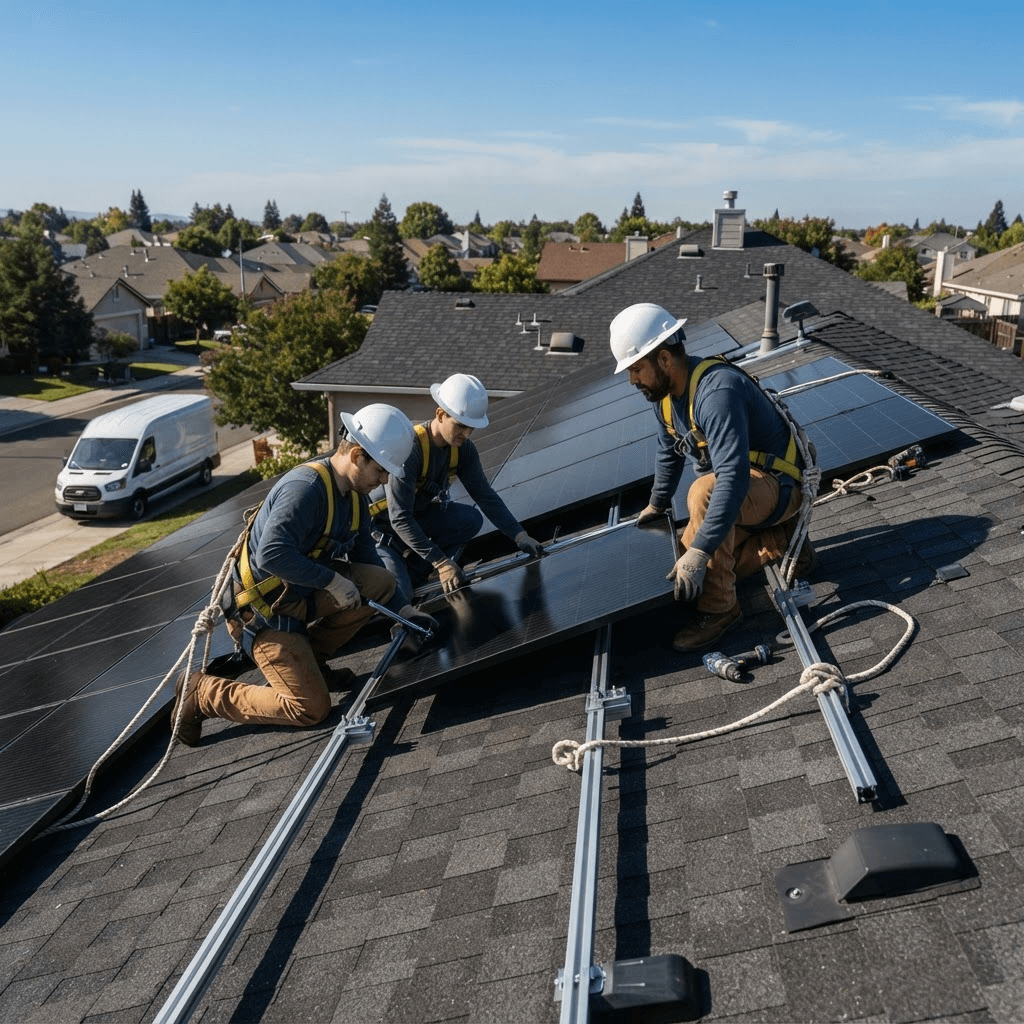
How Much Do Solar Panels Cost? California Pricing Guide
How much do solar panels cost in California in 2026? A pricing guide covering system size, equipment, per-watt costs, and current incentives after the federal tax credit change.
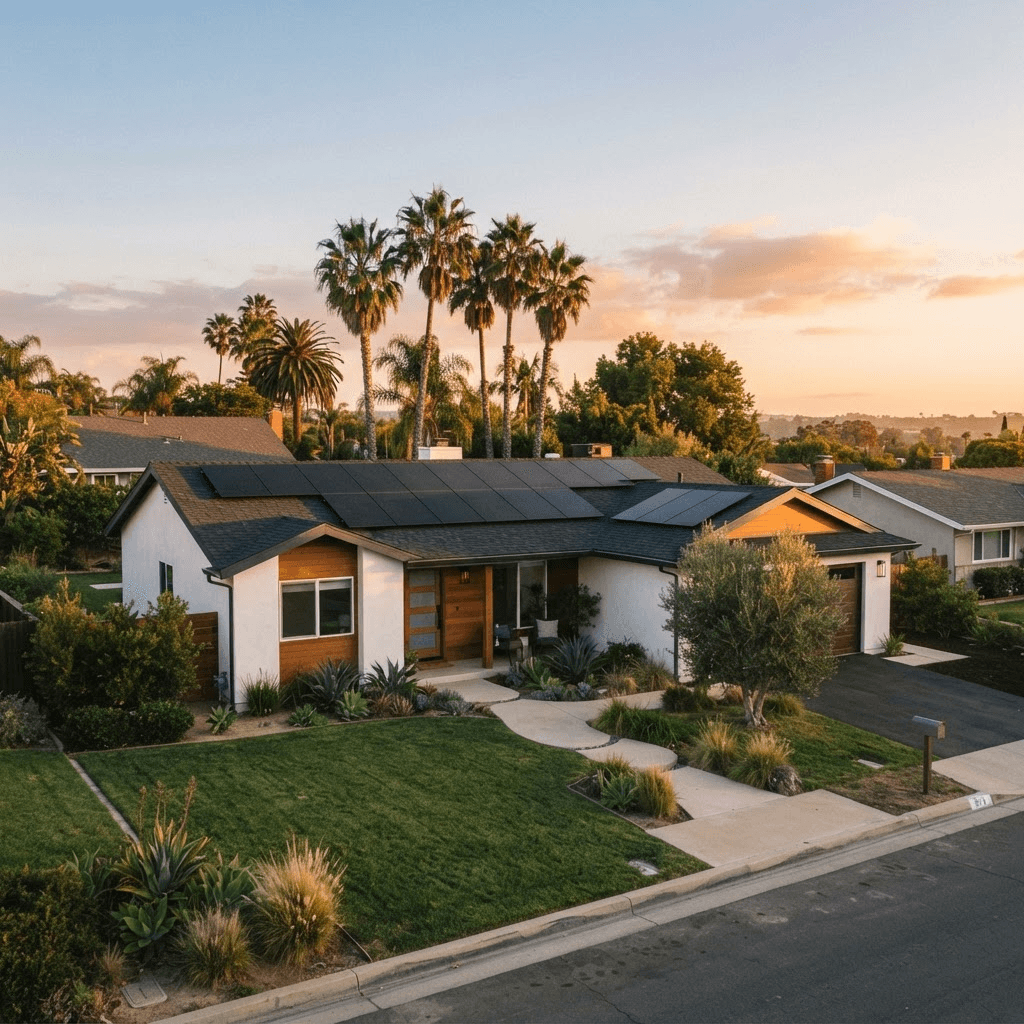
How Much Do Solar Panels Cost? California Pricing Guide
Solar pricing in California is easier to understand when you break it into the pieces that drive cost: system size, equipment quality, installation complexity, and available incentives.
System Size: The Biggest Driver of Total Cost
Most residential systems fall between five and ten kilowatts. Larger systems cost more in absolute terms but often less per watt, since fixed costs like permitting and labor are spread across more panels.
What Solar Panels Cost Per Watt in California
As of 2026, installed solar in California generally runs somewhere <cite index="27-1,42-1,38-1">between $2.40 and $3.50 per watt</cite>, putting a typical 5 to 10 kW system in the rough range of <cite index="42-1,43-1">$13,000 to $32,000 before incentives</cite>. <cite index="27-1,26-1">California tends to price at or below the national average</cite> thanks to a mature, competitive installer market.
How Equipment Quality Affects Price
Equipment matters too. Premium panels and microinverters cost more upfront but can produce more energy and last longer, while <cite index="34-1">adding battery storage typically increases the total by $7,000 to $18,000</cite>.
What Happened to the Federal Solar Tax Credit
It's worth being direct about a recent change: <cite index="29-1,42-1">the federal Residential Clean Energy Credit, which returned 30 percent of a purchased system's cost, expired for any system installed after December 31, 2025</cite>. If you're buying with cash or a standard loan in 2026, that credit is no longer part of the math. Some installers now offer prepaid-lease structures that capture a comparable discount, so it's worth asking how any quoted price accounts for this.
What California Incentives Are Still Available
State-level programs continue to help offset cost. <cite index="26-1">California's Self-Generation Incentive Program (SGIP) provides a rebate per kilowatt-hour of home battery storage</cite>, and <cite index="26-1">the state excludes the added value of a solar system from your property tax assessment</cite>.
Typical Payback Period in California
After accounting for current pricing and incentives, <cite index="29-1">payback in California in 2026 generally runs around 5 to 7 years for a purchased system</cite>, faster in areas with more favorable net metering terms. From there, most homeowners get decades of low-cost power, since <cite index="29-1">quality panels last 25 to 30-plus years</cite>.
Get a Line-Item Quote
After incentives, most homeowners reach payback within several years and enjoy decades of low-cost power afterward. We provide a line-item quote so you see exactly where every dollar goes.
Before you start collecting bids, our cost-after-incentives calculator gives you a rough target to measure each quote against.
How System Size Translates to Real Numbers
Because system size is the biggest cost driver, it helps to connect kilowatts to everyday usage. A typical California home uses somewhere around 500 to 900 kilowatt-hours per month, and a well-placed 6 kW system in a sunny part of the state can produce roughly 9,000 to 10,000 kilowatt-hours per year. Sizing is about matching production to consumption: oversizing wastes money on energy you export at low rates, while undersizing leaves you buying expensive grid power. A good installer starts with twelve months of your actual utility bills and designs to offset the share of usage that makes financial sense under your specific rate plan.
Understanding Cost Per Watt
Cost per watt is the great equalizer for comparing quotes, because it normalizes price across different system sizes. When you divide the total installed price by the system's wattage, you can fairly compare a 5 kW quote against an 8 kW quote. Watch for quotes that look cheap per watt but use lower-tier equipment or exclude items like electrical panel upgrades, which are common in older California homes and can add meaningfully to the final bill. A transparent quote breaks out equipment, labor, permitting, and any add-ons separately.
The Shift to NEM 3.0 and Why It Changes the Math
California moved to a net billing structure often called NEM 3.0, which pays significantly less for energy exported to the grid than earlier net metering did. The practical effect is that self-consumption, using your own solar power as it is produced, and battery storage have become far more valuable. Systems designed under the current rules increasingly include a battery so that midday surplus can be stored and used in the expensive evening hours rather than exported for a low credit. This changes the ideal system design and the payback calculation compared to just a few years ago.
Payback Period and Long-Term Value
Even without the expired federal credit, California's high electricity rates mean solar often still pays back within roughly seven to twelve years, after which the system produces largely free power for the remainder of its 25-plus-year life. The exact payback depends on your utility rate, your usage pattern, whether you add storage, and how much of your production you consume directly. Because California electricity prices have historically risen year after year, locking in your own generation also hedges against future rate increases, which is a benefit that pure dollar-per-watt comparisons often miss.
How to Lower Your Total Cost
You can reduce cost by getting multiple itemized quotes, choosing appropriately sized equipment rather than the most premium tier by default, timing installation to avoid rush periods, and confirming whether your existing electrical panel can support the system without an upgrade. Bundling a battery when it genuinely improves your economics under NEM 3.0, rather than adding one reflexively, also keeps the price aligned with real value.
Pricing shifts by state and utility, so compare this against the broader benchmarks in our solar pricing resources.
Frequently Asked Questions
How much does a typical solar system cost in California in 2026? Installed residential solar generally runs about $2.40 to $3.50 per watt, putting a common 5 to 10 kW system in the range of roughly $13,000 to $32,000 before any incentives. Adding a battery typically adds another $7,000 to $18,000.
Is solar still worth it in California without the federal tax credit? For most homeowners, yes. California's high and rising electricity rates mean solar can still pay back within roughly seven to twelve years, and the system continues producing low-cost power for decades afterward.
Do I need a battery with solar in California now? Under NEM 3.0, exported energy earns much less than before, so a battery that lets you use your own power in the evening often improves savings. Whether it makes financial sense depends on your usage and rate plan, so it should be modeled, not assumed.
Why do two California solar quotes differ so much? Differences usually come from equipment tier, system size, and whether items like panel upgrades, batteries, and permitting are included. Comparing cost per watt on itemized quotes is the fairest way to judge them.