How to understand Solar: Top 10 Concepts and Principles
Solar has its own vocabulary, and a handful of core ideas unlock most of it. Master these ten concepts and you'll be able to read a quote, size a system, and talk to installers with confidence.
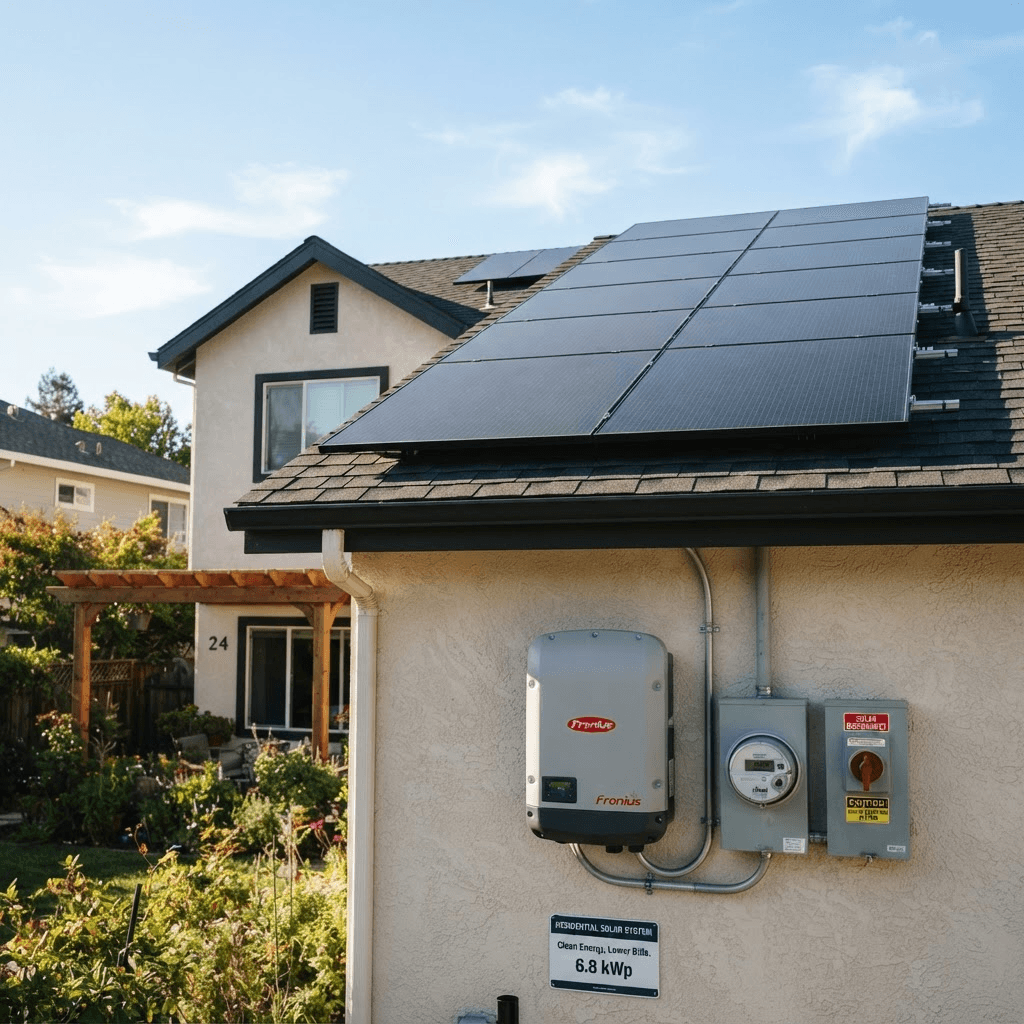
How to Understand Solar: Top 10 Concepts and Principles
Going solar can feel like learning a new language, kilowatts, inverters, net metering, degradation. But behind the jargon sits a fairly small set of core ideas, and once they click, the whole subject becomes far easier to navigate. Here are the ten concepts that do most of the heavy lifting, explained in plain terms so you can read a quote and size a system with confidence.
1. The Photovoltaic Effect
This is the foundation of everything: when sunlight strikes silicon cells, it knocks electrons loose and creates an electric current. A solar panel is really just a carefully arranged surface for turning photons into flowing electrons. Every other concept builds on this one.
2. Watts, Kilowatts, and Kilowatt-Hours
A watt measures power, the rate of energy flow at a given moment; a kilowatt is a thousand watts. A kilowatt-hour is energy, one kilowatt sustained for one hour, and it's the unit your utility bills you in. The distinction matters: panels are rated in watts of capacity, but your usage and savings are measured in kilowatt-hours.
3. System Size
Add up the wattage of all your panels and you get your system size in kilowatts, a typical home falls somewhere around 5 to 10 kW. This number is shorthand for how much your array can produce under ideal conditions, and it's the figure most quotes lead with.
Our panel and array size calculator is a quick way to see this concept applied to your own electricity usage.
4. Peak Sun Hours
Not all daylight is equal; peak sun hours count how many hours per day your location gets full-strength sunlight. It's the bridge between your system size and your actual production, since the same array generates far more in a sunny climate than a cloudy one. Multiply system size by peak sun hours to estimate daily output.
5. The Inverter
Panels produce direct current (DC), but your home and the grid run on alternating current (AC). The inverter converts one to the other, and it comes in flavors, string inverters for the whole array, or microinverters and optimizers that work at the individual panel level to handle shade better.
6. Net Metering
When your panels produce more than you're using, the surplus flows to the grid and your utility credits your account; at night you draw those credits back. In effect, the grid acts as a giant battery. The generosity of net metering rules in your area has a big effect on your payback.
7. Energy Offset
This is the share of your electricity use that your solar covers, expressed as a percentage. A 100 percent offset means your annual production matches your annual consumption. You don't have to aim for 100 percent, some people size for a partial offset, but it's the number that defines your goal.
8. Panel Efficiency and Degradation
Efficiency is how much of the sunlight hitting a panel becomes electricity, typically 15 to 22 percent for residential panels. Degradation is the slow decline in output over time, usually a fraction of a percent per year, which is why panels still produce around 85 to 90 percent of their original capacity after 25 years.
9. Energy Storage
Batteries store surplus solar for use after sunset or during outages. Storage transforms solar from a daytime-only resource into around-the-clock power, and it's increasingly central as net metering rules tighten and homeowners seek backup power. Sizing a battery is its own exercise, based on which loads you want to keep running.
10. Payback Period and Levelized Cost
The payback period is how long it takes for energy savings to equal the system's net cost after incentives. The levelized cost of energy spreads the total lifetime cost over all the electricity the system produces, giving you a per-kilowatt-hour price to compare against your utility rate. Together they answer the real question: is this a good investment?
How These Concepts Fit Together
Put these ten ideas together and the picture resolves. Sunlight becomes DC electricity through the photovoltaic effect, the inverter turns it into usable AC, peak sun hours and system size determine how much you make, net metering and storage decide how you use the surplus, and payback tells you whether it all pencils out. You don't need an engineering degree to go solar, just a firm grip on these fundamentals and a good installer to handle the rest.
6. Net Metering and Billing
Net metering is the arrangement that lets your meter run backward when your panels produce more than you use. Surplus energy flows to the grid and earns a credit that offsets the power you draw at night. The value of that credit varies widely by utility, from full retail rate under older programs to a lower export rate under newer net billing structures. Because this single policy can swing your annual savings by hundreds of dollars, it is worth confirming your utility's current tariff before you size a system.
7. Panel Efficiency
Efficiency is the percentage of sunlight a panel converts into usable electricity. Most modern residential panels land between 19 and 23 percent. Higher efficiency means more power from the same roof area, which matters most when space is tight. When roof space is plentiful, a larger number of lower-efficiency panels can deliver the same output for less money, so efficiency is a tool for fitting production to your available space rather than a goal in itself.
8. Degradation
Panels slowly lose output as they age, typically about 0.4 to 0.7 percent per year. This is why manufacturers guarantee something like 85 to 90 percent of original output after 25 years. Degradation is gradual and predictable, so it is built into any honest long-term savings estimate rather than treated as a surprise failure.
9. Battery Storage
A battery stores daytime surplus for use after sunset or during outages. Storage turns solar from a daytime-only resource into a round-the-clock one and has become far more valuable under net billing programs that pay little for exported energy. Batteries are sized in kilowatt-hours, and matching that capacity to your evening usage is the key design decision.
10. Payback Period
Payback is the time it takes for accumulated savings to equal the system's cost. Most well-designed residential systems pay back within roughly seven to twelve years, after which the electricity is essentially free for the remaining life of the equipment. Payback ties every other concept together, since production, rates, and financing all feed into it.
Putting the Concepts Together
Once these ten ideas click, reading a solar quote becomes straightforward. System size and peak sun hours tell you production; efficiency and degradation tell you how that production holds up over space and time; the inverter and battery tell you how the energy is delivered; and net metering and payback tell you what it is all worth. A good installer should be able to walk you through each of these numbers for your specific home.
Each of these ten concepts gets a deeper treatment somewhere in our full solar knowledge base.
Frequently Asked Questions
Do I need to understand all this to go solar? No, but understanding these concepts lets you evaluate quotes critically, spot unrealistic production claims, and choose equipment that fits your home rather than the installer's inventory.
Which concept matters most for savings? Net metering and your utility rate usually have the biggest effect, because they determine how much each kilowatt-hour your system produces is actually worth.
Is a higher-efficiency panel always better? Only when roof space is limited. If you have ample space, more standard panels can reach the same output at a lower total cost.
How accurate are payback estimates? They are reliable when built from your actual usage, local peak sun hours, and your current utility tariff. Estimates based on national averages are far less trustworthy.