Secret Farming Methods of the Aztecs Explained
The Aztecs fed a massive empire with ingenious farming. A look at chinampas and other techniques that made their agriculture astonishingly productive.
Aztec Farming Methods Explained: Chinampas, Terraces, and the Three Sisters
The Aztec Empire fed one of the largest and most densely populated cities of the ancient world, Tenochtitlan, home to hundreds of thousands of people, on challenging terrain with no plows, no draft animals, and no metal tools. How they pulled this off wasn't magic but ingenuity: a set of remarkably sophisticated farming methods, refined over generations, that turned swampy lakes and steep hillsides into some of the most productive agricultural land on Earth. These techniques still impress agricultural scientists today, and they hold lessons for sustainable farming now.
What Are Chinampas, the Aztec "Floating Gardens"?
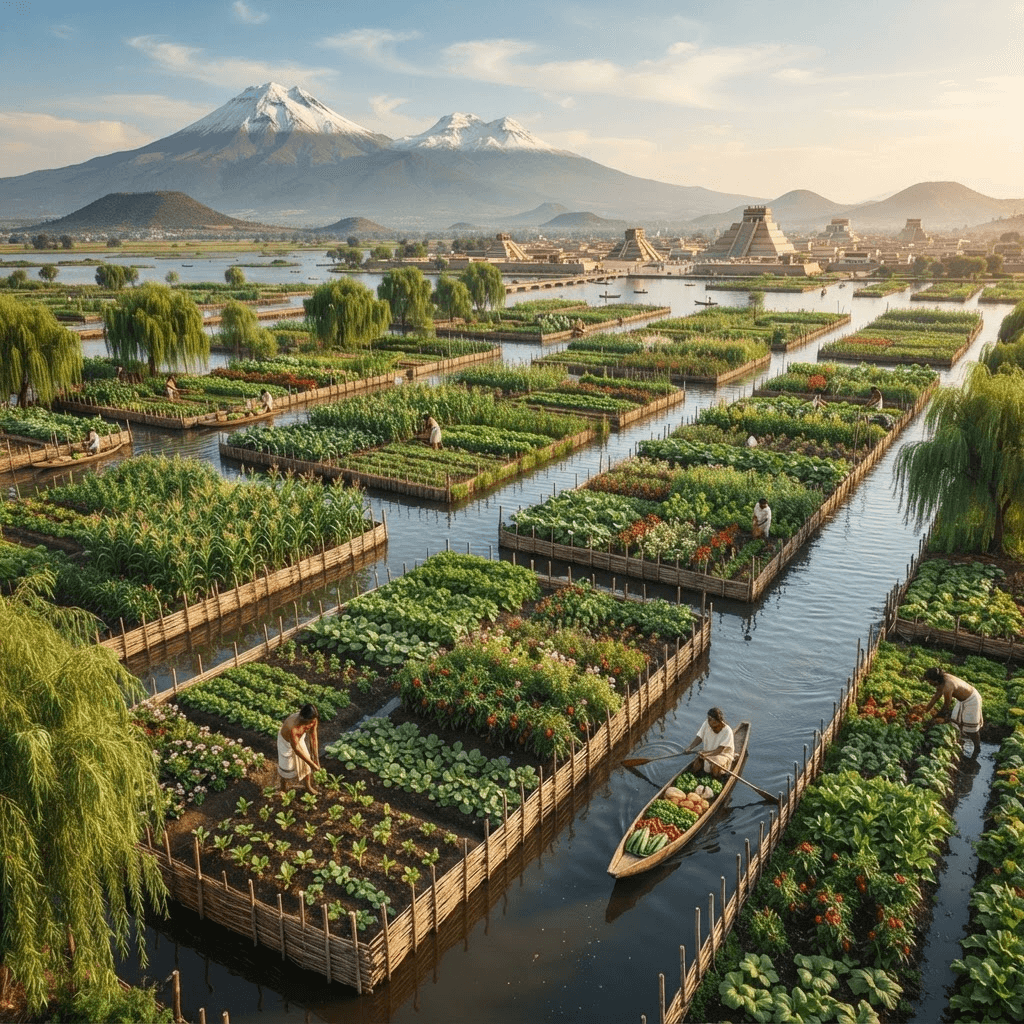
The crown jewel of Aztec agriculture was the chinampa, often romantically called the "floating garden," though it didn't actually float. Chinampas were narrow, rectangular plots built up in the shallow lakes and wetlands around Tenochtitlan. Farmers staked out the plot in the water, wove fences of reeds around it, and then piled up layers of mud, lake sediment, and decaying vegetation to build a rich, raised growing bed just above the water line.
Anchored by trees planted at the corners, whose roots held the soil in place, each chinampa became an intensely fertile island garden surrounded by canals.
Why Chinampas Were So Productive
What made chinampas so extraordinary was their productivity and sustainability. Because they were surrounded by water, the crops had constant access to moisture through the soil, essentially self-irrigating, so drought was rarely a threat.
Farmers periodically dredged the nutrient-rich muck from the canal bottoms and spread it onto the beds, continually renewing the soil's fertility without letting it wear out. This allowed multiple harvests per year on the same plot, an incredible feat, and made chinampa agriculture far more productive per acre than conventional field farming, sustaining the empire's enormous population.
A Closed-Loop Ecosystem
The system was cleverly integrated, functioning almost like a closed ecological loop. The canals between chinampas served multiple purposes at once:
- Irrigating the crops.
- Providing transportation routes for canoes to move people and produce.
- Supporting fish and waterfowl, which added protein to the diet and nutrients to the water.
Aquatic plants and algae, along with human and organic waste, enriched the canal sediments that were then recycled back onto the beds. Little was wasted; the water, soil, plants, and animals all worked together in a balanced, renewable system.
Terracing and the Three Sisters: Beyond the Chinampas
Aztec farmers also mastered techniques beyond the chinampas.
On the hills and mountainsides surrounding the valley, they built terraces, stepped, flat platforms held back by stone walls, to create farmable land on steep slopes while preventing erosion and capturing water.
They practiced intercropping, most famously the "Three Sisters" combination of maize (corn), beans, and squash grown together:
- The corn stalks gave the beans something to climb.
- The beans fixed nitrogen to enrich the soil.
- The broad squash leaves shaded the ground to retain moisture and suppress weeds.
They also built irrigation canals and dikes, including works to separate fresh water from the lake's saltier sections.
What Modern Agriculture Can Learn From the Aztecs
The genius of Aztec agriculture lay in how thoroughly it worked with nature rather than against it, recycling nutrients, conserving water, combining complementary crops, and squeezing remarkable yields from limited, difficult land, all without modern technology or chemical inputs.
Astonishingly, chinampa farming survives today in places like Xochimilco near Mexico City, and modern researchers study these methods for insights into sustainable, high-yield, low-input agriculture. Far from being primitive, the Aztecs' farming was a masterclass in ecological engineering, proof that some of the most advanced ideas in agriculture were discovered centuries ago by people determined to feed an empire.
Many of these principles reappear in modern practice, as our sustainable farming methods library shows.
Frequently Asked Questions
What farming methods did the Aztecs use? The Aztecs relied on chinampas (raised, canal-fed garden plots in shallow lakes), hillside terracing to farm steep slopes, and companion planting of the "Three Sisters" (maize, beans, and squash). Together these let them feed a huge population without plows or draft animals.
What are chinampas? Chinampas were narrow, rectangular growing beds built up from mud and vegetation in the shallow lakes around Tenochtitlan, anchored by trees at the corners. Surrounded by canals, they were self-irrigating and endlessly renewed with nutrient-rich muck, making them extraordinarily productive.
Why were Aztec farming methods so successful? They combined constant water access, continual soil renewal from canal dredgings, and intensive multi-cropping to get several harvests a year on the same land. This produced far more food per acre than conventional field farming of the era.
Are Aztec farming techniques still used today? Yes. Chinampa-style plots still operate near Xochimilco in Mexico City, and their principles of raised beds, water management, and soil renewal continue to influence sustainable and regenerative farming.