What are the economic and environmental benefits of solar?
The economic and environmental benefits of solar, from lower electric bills and local jobs to reduced carbon emissions and cleaner air.
What Are the Economic and Environmental Benefits of Solar?
Solar energy is often pitched as either a smart financial move or a planet-saving one, but the truth is that it's both at the same time. The same panels that trim your utility bill are also displacing fossil fuels that would otherwise burn for decades. Understanding both sides of the equation makes it easier to see why solar has moved from a niche choice to a mainstream one.
Lower, More Predictable Electric Bills
Start with the economics closest to home. For a household, the most immediate benefit is a lower, more predictable electric bill. Utility rates tend to rise over time, but sunlight is free once the system is paid for. That means solar acts as a hedge against future rate increases, locking in much of your energy cost for 25 years or more.
To see what that looks like on your own bill, our bill reduction and payback tool estimates the savings a system would produce at your usage level.
Solar Jobs and Local Economic Growth
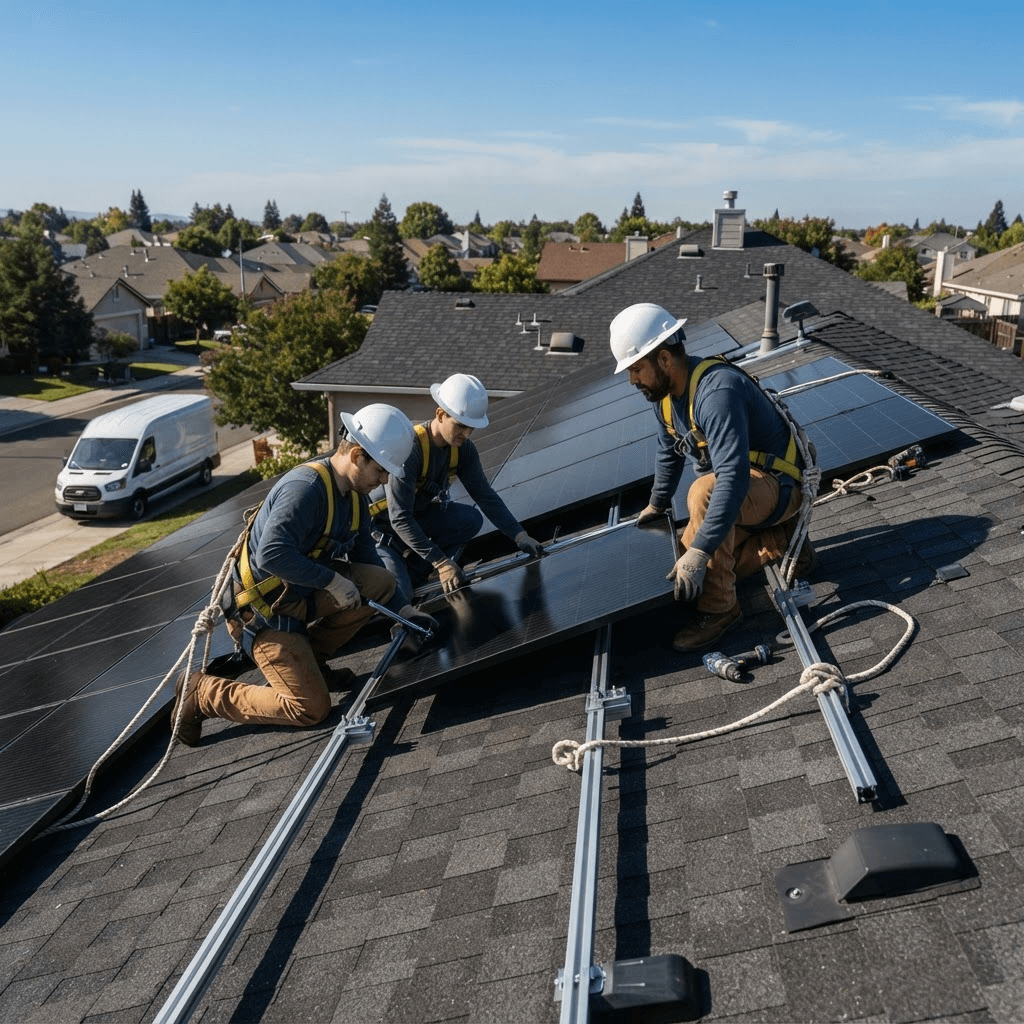
Those household savings scale up into something bigger. Solar is now one of the fastest-growing sources of employment in the energy sector, supporting hundreds of thousands of jobs in manufacturing, installation, sales, and maintenance. These are largely local jobs that can't be outsourced, since someone has to physically design and mount the panels on roofs in every community.
How Solar Strengthens the Broader Economy
Solar also strengthens the broader economy in quieter ways. Money spent on locally generated electricity stays closer to home rather than flowing out to import fuel. Homes with owned solar systems tend to sell faster and at a premium, treating the panels as a durable upgrade much like a renovated kitchen. And because solar reduces demand on the grid during peak hours, it can lower wholesale electricity prices for everyone, not just the households with panels.
Solar and Energy Security
There's an energy-security dimension too. A grid that draws on many distributed rooftops is harder to disrupt than one dependent on a handful of large plants and long fuel supply chains. Pairing solar with battery storage lets homes and businesses keep critical systems running through outages, turning individual installations into small pockets of resilience.
Cutting Carbon Emissions
The environmental benefits are just as substantial. Every kilowatt-hour generated by the sun is one that doesn't have to come from coal or natural gas. Over its lifetime, a typical residential system prevents many tons of carbon dioxide from entering the atmosphere, which is the single biggest lever we have against climate change.
Cleaner Air and Public Health
Cleaner air is a benefit people feel directly. Fossil fuel combustion releases not just carbon but also sulfur dioxide, nitrogen oxides, and fine particulates that contribute to asthma, heart disease, and premature deaths. Displacing that generation with solar improves public health, and those avoided medical costs are a real economic gain even though they rarely show up on an electric bill.
Solar's Light Footprint on Natural Resources
Solar is also remarkably light on natural resources once it's running. Unlike thermal power plants, photovoltaic panels use no water to generate electricity, which matters enormously in drought-prone regions where conventional plants compete with farms and cities for water. And because panels have no moving parts, they run silently with minimal maintenance for decades.
Being Honest About the Trade-Offs
It's worth being honest about the trade-offs. Manufacturing panels takes energy and raw materials, and end-of-life recycling is still maturing as an industry. But the energy payback period, the time it takes a panel to generate the energy used to make it, is now typically one to three years, a small fraction of its 25-plus-year lifespan. Recycling programs are expanding quickly as the first large wave of panels approaches retirement.
The Bottom Line
Put the two ledgers side by side and the case becomes clear. Solar saves households money, creates durable local jobs, and hardens the grid, while cutting carbon, cleaning the air, and conserving water. The economic and environmental benefits aren't competing arguments for solar; they're the same story told in two languages. Whether you care most about your budget or the planet, the sun tends to reward you on both counts.
Cutting Carbon Emissions
The headline environmental benefit is displaced carbon. Every kilowatt-hour your panels generate is one that does not have to be produced by burning coal or natural gas. Over a 25-year life, a typical residential system offsets many tons of carbon dioxide, the rough equivalent of planting thousands of trees or taking a car off the road for years. Because this benefit compounds every sunny day for decades, the lifetime climate impact of even a modest home system is substantial.
Cleaner Air and Water
Beyond carbon, fossil fuel plants emit sulfur dioxide, nitrogen oxides, and particulate matter that harm human health and cause smog. Solar generation produces none of these while running. It also uses virtually no water, whereas conventional thermal power plants consume enormous quantities for cooling. In regions facing drought and water stress, this reduced water footprint is an underappreciated but meaningful advantage.
The Energy Payback of Making Panels
A fair question is whether the energy used to manufacture panels outweighs the clean energy they produce. The answer is a clear no. Modern panels repay the energy invested in making them within roughly one to three years, then generate clean power for another two decades or more. Over their lifetime, they produce many times the energy required to build them, giving them a strongly positive energy return.
Recycling and End of Life
As the first large wave of panels approaches retirement, recycling infrastructure is expanding. Panels are largely glass, aluminum, and silicon, all recoverable materials. A growing number of programs reclaim these components, reducing waste and the demand for virgin materials. Planning for responsible end-of-life handling is becoming a standard part of the industry rather than an afterthought.
For the practical side of capturing these benefits on your own roof, see our solar homeowner guides.
Frequently Asked Questions
Is solar really better for the environment overall? Yes. Even accounting for manufacturing, transport, and disposal, solar produces a small fraction of the lifetime emissions of fossil generation and repays its manufacturing energy within a few years.
Does solar increase my home's value? Owned solar systems generally raise resale value and help homes sell faster, since buyers inherit lower energy bills. Leased systems are more complicated because the contract must be transferred.
How quickly do the economic benefits start? Bill savings begin the first month the system operates. The larger payback, where cumulative savings exceed the system cost, typically arrives within seven to twelve years.
Do the environmental benefits depend on where I live? Partly. Solar displaces more emissions in regions where the grid relies heavily on coal or gas, but it reduces emissions and improves air quality almost everywhere.