Sunflower Agriculture: How Sunflowers Are Grown, Harvested, and Used
How sunflowers are grown, harvested, and used in agriculture, from planting and heliotropism to oilseed pressing, snacking varieties, and soil health.
Sunflower Agriculture: How Sunflowers Are Grown, Harvested, and Used
How Sunflowers Are Grown
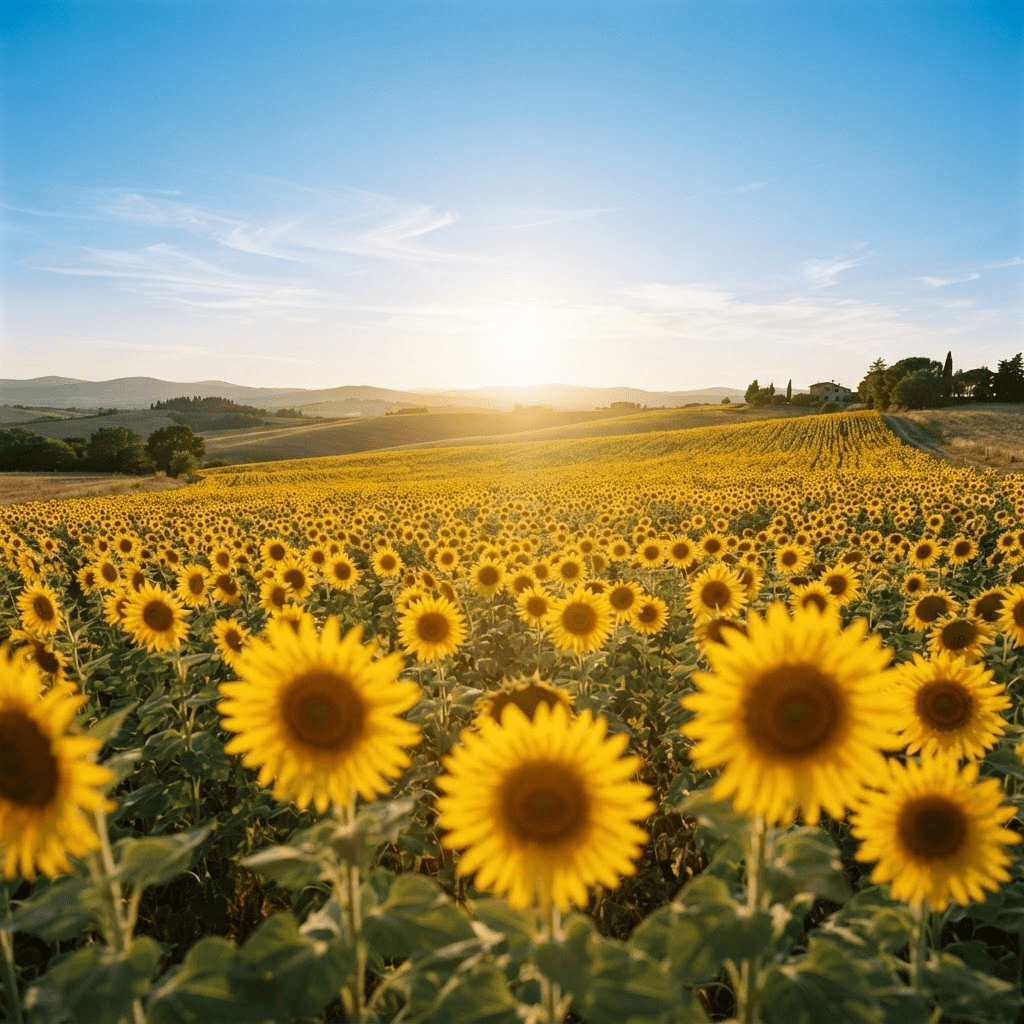
Growing begins in spring, once the soil has warmed. Sunflowers are hardy and drought-tolerant, thriving in full sun with well-drained soil. As they grow, the young flower heads famously track the sun across the sky, a behavior called heliotropism, before settling to face east as they mature.
How and When Sunflowers Are Harvested
Harvest comes in late summer or fall, when the backs of the heads turn brown and the seeds are dry. Growers either combine-harvest the heads directly or cut and dry them further before threshing out the seeds.
How Sunflowers Are Used
The uses are wide-ranging:
- Oilseed varieties are pressed into cooking oil.
- Confection varieties are roasted for snacking.
- Remaining plant material can be used as livestock feed.
- Soil restoration: sunflowers are often planted to help restore tired soil between other crops.
The Sunflower Growing Cycle
Sunflowers are a warm-season crop planted after the last frost once soil temperatures climb, germinating quickly and racing skyward through early summer. The plant's famous heads track the sun during the vegetative stage, a behavior called heliotropism, before settling to face east as they mature. Flowering gives way to seed fill, and as the back of the head turns from green to yellow and finally brown, the crop signals it is nearing harvest. From planting to maturity typically spans three to four months, making sunflowers a practical rotation crop that fits well after or between other plantings.
Growing Conditions and Care
Sunflowers earn their reputation as a hardy, low-input crop. They thrive in full sun and well-drained soil, and their deep taproots let them reach moisture and nutrients other crops cannot, giving them notable drought tolerance once established. This same root system helps break up compacted soil and can pull up deep nutrients, benefiting the field. Growers still watch for pests like birds and certain insects, and for diseases in wet conditions, but overall sunflowers demand less irrigation and fertilizer than many row crops, which is part of their appeal to farmers.
To see how sunflowers stack up against other options on your ground, our crop trade-off tool compares them on water use, season length, and equipment needs.
Harvesting the Crop
Timing the harvest is critical to yield and quality. The crop is ready when the backs of the heads have browned and seed moisture drops to a safe level for storage, usually with the help of the field drying naturally or a desiccant. Combines fitted with special sunflower headers gather the heads and thresh out the seeds, minimizing shattering and loss. Harvested seed is then cleaned and dried further if needed, since storing seed too moist risks spoilage and mold. Careful timing balances letting seeds fill fully against losses from birds, weather, and shattering.
Oilseed vs. Confection Types
Not all sunflowers serve the same purpose, and the two main types are grown differently. Oilseed sunflowers have small black seeds high in oil and make up the bulk of production, destined for pressing into cooking oil and for meal. Confection sunflowers produce the larger black-and-white striped seeds sold for snacking and baking, and are managed for seed size and appearance rather than oil content. Understanding which market a crop targets guides variety selection, planting density, and harvest handling from the very start of the season.
How Sunflowers Are Used
The versatility of the harvested crop drives its global demand. Pressed oilseeds yield sunflower oil, a light, popular cooking oil valued for its high smoke point and neutral flavor, while the leftover meal becomes a protein-rich livestock feed. Confection seeds feed the human snack market, both in-shell and as kernels, and appear in breads, salads, and trail mixes. Beyond food, sunflowers serve as ornamental flowers, as a pollinator-friendly crop that supports bees, and even in phytoremediation, where their roots help draw contaminants from soil.
For how other field crops are grown and brought to market, browse our crop production guides.
Frequently Asked Questions
How long do sunflowers take to grow? From planting to maturity, sunflowers typically take three to four months. They germinate quickly in warm soil, grow rapidly through early summer, then flower and fill seed before drying down for harvest.
When are sunflowers harvested? Sunflowers are harvested once the backs of the heads turn brown and seed moisture drops to a safe storage level, usually in late summer or fall. Combines with special headers gather and thresh the heads.
What is the difference between oilseed and confection sunflowers? Oilseed sunflowers have small, high-oil black seeds pressed into oil and meal, while confection sunflowers produce larger striped seeds grown for snacking and baking. Each is managed for a different end market.
What are sunflowers used for? Mainly for sunflower oil and protein-rich meal from oilseed types, and for edible seeds from confection types. They are also grown as ornamental and pollinator-friendly plants and used in soil remediation.