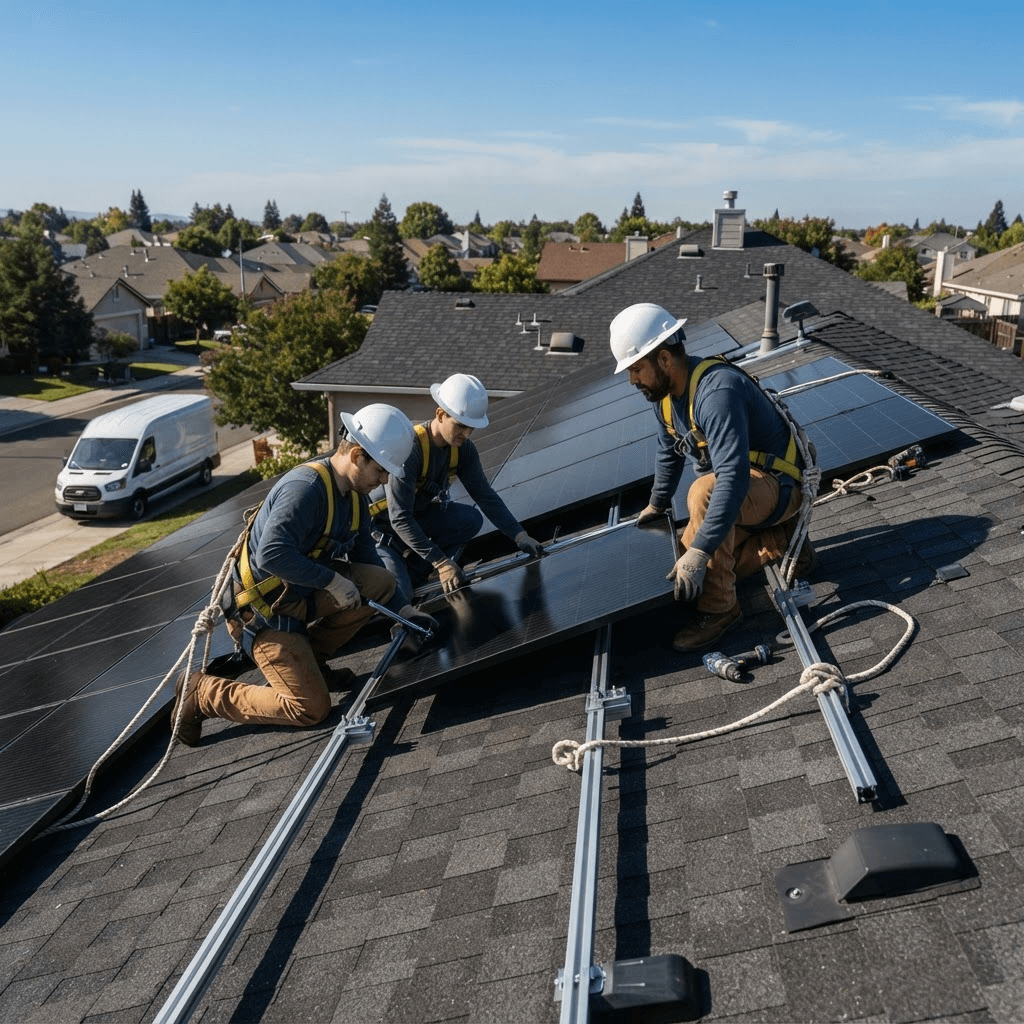
What is a Solar Mini Split? (Photovoltaic Diagrams Explained)
What is a solar mini split, and how does it work? Learn the basics plus how to read the photovoltaic wiring diagrams installers use to design one.
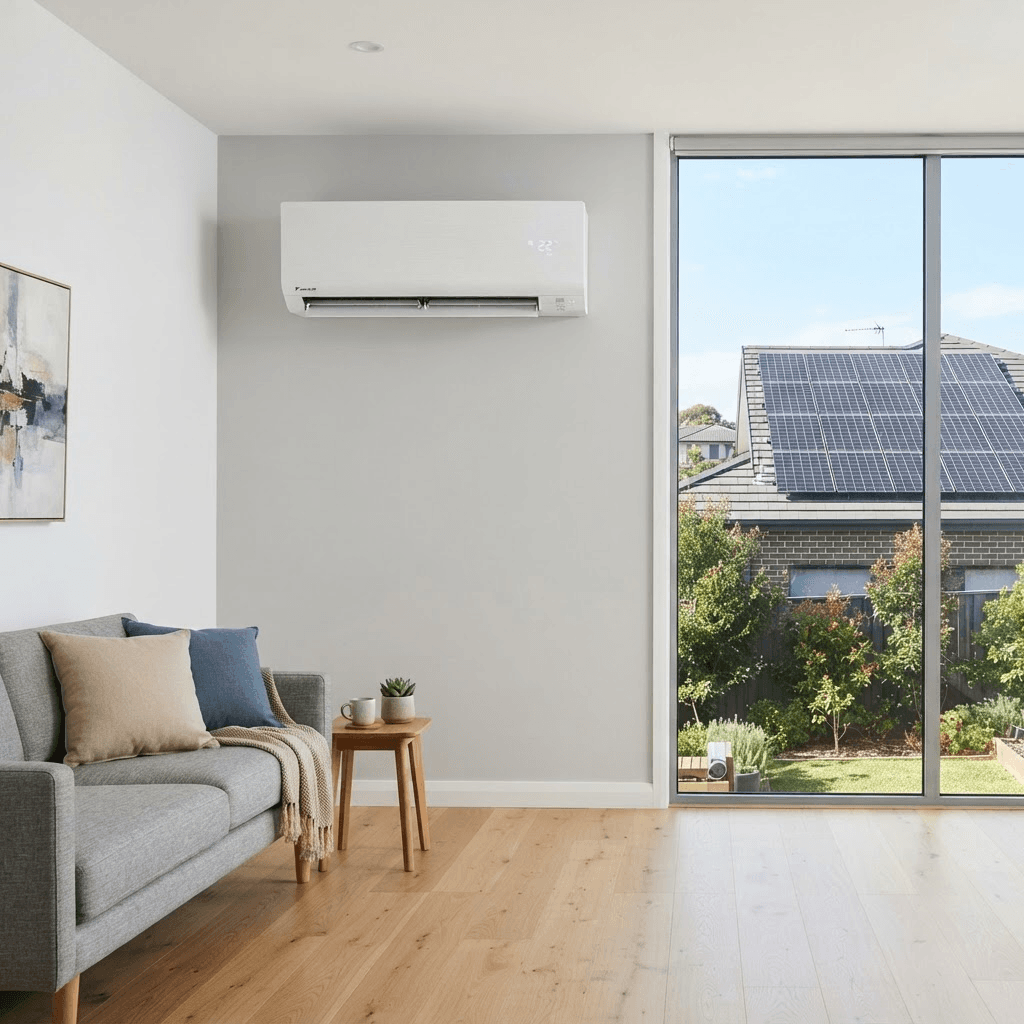
What Is a Solar Mini Split? (Photovoltaic Diagrams Explained)
A solar mini split is a ductless heat pump system powered by solar energy instead of relying solely on grid electricity. Ductless mini splits are already one of the most efficient ways to heat and cool a space, and powering one with solar takes that efficiency a step further, running your comfort system on sunlight.
But the moment you start planning a solar mini split setup, you run into wiring diagrams full of symbols and arrows. This guide explains what a solar mini split is, how the pieces fit together, and how to actually read those photovoltaic diagrams.
What Is a Solar Mini Split?
A solar mini split pairs two technologies:
- A ductless mini split heat pump, which moves heat rather than generating it, making it far more efficient than traditional HVAC systems
- A solar power system (panels, and often an inverter or battery), which supplies some or all of the electricity the mini split needs to run
Because a mini split runs entirely on electricity, it's a natural match for solar power. The result is a heating and cooling system that draws on sunlight instead of — or in addition to — the grid.
What Is a Ductless Mini Split?
A ductless mini split is a heat pump with two main parts:
- An outdoor condenser unit
- One or more indoor air-handling heads, connected by refrigerant lines rather than ductwork
Two Ways to Pair Solar With a Mini Split
There are two broad ways to power a mini split with solar, and knowing the difference is key to reading any diagram:
- Grid-tied approach: Your solar array feeds your home's electrical panel, and the mini split simply draws from that panel like any other appliance.
- Dedicated DC or off-grid approach: Solar powers the mini split more directly, sometimes with special DC-driven units designed for it.
How to Read a Solar Mini Split Photovoltaic Diagram
A photovoltaic diagram always flows in the same logical direction: from generation to storage to use.
Step 1: Solar Panels (Generation)
On the left you'll typically see the solar panels, drawn as a grid of small rectangles, labeled with their wattage and voltage. Arrows lead from there toward the rest of the system, showing the direction electricity flows.
Step 2: Charge Controller or Inverter (Conversion)
The next symbol along the path is usually the charge controller or the inverter, depending on the system:
- Battery-based diagram: The panels connect to a charge controller, then to the battery bank, drawn as a series of cell symbols.
- Grid-tied diagram: The panels lead to an inverter, shown as a box often marked DC to AC, which converts the panels' direct current into the alternating current your mini split and home use.
Step 3: The Mini Split (Load)
From there the diagram reaches the load — in this case, the mini split. You'll see it connected to the AC output of the inverter or to the main electrical panel, with its own labeled circuit breaker. The breaker rating and wire gauge are usually noted right on the line, because the mini split's power draw determines how heavy that wiring needs to be, an important safety detail the diagram is communicating.
Common Symbols in a Photovoltaic Diagram
A few symbols show up on nearly every photovoltaic diagram, and learning them makes the whole picture legible:
- Panels: Gridded rectangles
- Batteries: Stacked short-and-long lines
- Inverter: A box with a DC and AC label, or a distinctive waveform symbol
- Breakers and disconnects: Switch symbols
- Ground connections: A series of shrinking horizontal lines
Once these click, a diagram reads less like hieroglyphics and more like a map.
Sizing a Solar Mini Split System
Sizing is where the diagram meets reality. To power a mini split on solar, you match your array and, if present, your battery to the unit's electrical demand.
A mini split's power draw varies with how hard it's working, so designers size the system to the realistic peak load plus a margin, and the diagram's labeled voltages, wattages, and breaker ratings are how that sizing gets documented and communicated to the installer.
Does a Solar Mini Split Need a Battery?
The battery question deserves its own note:
- Want the mini split to run during outages or overnight? The diagram will include a battery bank between the charge controller and the load.
- Simply offsetting daytime cooling with grid-tied solar? There may be no battery at all — the diagram will show power flowing from panels through an inverter to the panel and out to the mini split, with the grid as backup.
Readers planning a system around a specific appliance often find the wiring and sizing walkthroughs in our solar guides collection useful next.
Frequently Asked Questions
What is a solar mini split, in simple terms? It's a ductless heat pump — the same efficient system used for zone heating and cooling — powered wholly or partly by a solar panel system instead of relying only on grid electricity.
Can a mini split run entirely on solar power? Yes, but whether it runs during the day only or around the clock depends on the system design. A grid-tied setup without a battery typically offsets daytime use, while a system with a battery bank can keep the mini split running overnight or during an outage.
What's the difference between a charge controller and an inverter in these diagrams? A charge controller regulates power flowing into a battery bank in battery-based systems. An inverter converts the panels' direct current (DC) into the alternating current (AC) that a standard mini split and home appliances use.
Do I need special DC equipment to run a mini split on solar? Not necessarily. Most residential setups use a standard AC mini split powered through an inverter. Dedicated DC-driven units exist for off-grid systems, but they're a more specialized setup.
The Bottom Line
A solar mini split is an elegant, efficient pairing, and the diagrams that describe it are just a visual grammar for generation, conversion, storage, and use. Learn the handful of standard symbols and follow the arrows from panel to load, and you'll be able to understand, and sanity-check, any photovoltaic diagram an installer puts in front of you.
As always, the final design and connection should be confirmed by a qualified professional.
Why Pair Solar With a Mini Split?
Mini splits are among the most efficient heating and cooling systems available because they move heat rather than generate it, often delivering three to four units of heat energy for every unit of electricity consumed. Powering that already-efficient system with solar compounds the benefit, cutting or eliminating the electricity cost of year-round comfort. For homes replacing electric resistance heat or expensive propane, a solar mini split can transform both energy bills and carbon footprint.
Reading the Key Symbols in a PV Diagram
Photovoltaic diagrams use a consistent visual language. Panels appear as rectangles with diagonal lines representing cells, the inverter is often a box marked with both a DC and an AC symbol, and batteries show as stacked long-and-short lines. Arrows indicate the direction of power flow, disconnect switches appear as breaks in the line, and the ground symbol shows safety grounding. Once you recognize these symbols, a diagram becomes a readable map of how energy travels from the roof to the mini split.
Sizing Solar for Your Mini Split
To size the array, you first estimate the mini split's electricity use, which depends on its capacity in BTUs, its efficiency rating (SEER for cooling, HSPF for heating), and how many hours it runs. Convert that to daily kilowatt-hours, then divide by your location's peak sun hours to find the solar wattage needed. Because heating demand often peaks in winter when sun is scarce, many grid-tied setups lean on net metering to balance seasonal mismatches.
Grid-Tied vs. Off-Grid Mini Split Setups
A grid-tied solar mini split is simpler and usually more cost-effective: the array feeds your panel, the mini split draws from it, and the grid fills any gaps while net metering credits your surplus. An off-grid or dedicated DC setup adds batteries so the system can run during outages or in remote locations, but it costs more and requires careful sizing. Most homeowners choose grid-tied unless energy independence or a remote site demands otherwise.
Frequently Asked Questions
What is a solar mini split? It is a ductless heat pump for heating and cooling powered wholly or partly by solar panels, combining a highly efficient comfort system with self-generated electricity.
Do I need batteries for a solar mini split? Not for a grid-tied setup, where the grid and net metering fill gaps. Batteries are needed only for off-grid operation or to run the system during power outages.
How many solar panels does a mini split need? It depends on the unit's capacity, efficiency, and runtime, but a single-zone mini split often needs only a few hundred to around a thousand watts of solar, sized against your local peak sun hours.
How do I read a photovoltaic wiring diagram? Learn the standard symbols for panels, inverter, battery, disconnects, and ground, then follow the arrows showing power flow from the array through the inverter to the load and grid.