What Is Irrigation? How to Find Local Irrigation Companies
Irrigation delivers water where nature falls short, and the right company makes it work. A guide to what irrigation is and how to find a good local installer.
What Is Irrigation? How to Find Local Irrigation Companies
Water is the lifeblood of any farm, garden, or landscape, and irrigation is how we make sure plants get it reliably, even when the weather doesn't cooperate. But designing and installing an irrigation system well takes expertise, which is why most people turn to professional irrigation companies. Understanding what irrigation actually is, the main system types available, and how to find and choose a good local irrigation company ensures you end up with a system that saves water, protects your plants, and works for years to come.
What Is Irrigation?
At its most basic, irrigation is the artificial application of water to soil to help plants grow, supplementing or replacing natural rainfall. Rather than leaving your crops, lawn, or garden at the mercy of unpredictable weather, irrigation gives you control, delivering the right amount of water, to the right place, at the right time.
Good irrigation isn't just about keeping plants alive; it's about efficiency: getting healthy growth while minimizing water waste, an increasingly important goal as water becomes scarcer and more expensive in many regions. A well-designed system can mean the difference between a lawn or crop that merely survives and one that genuinely thrives, all while using less water than a poorly designed or manually managed alternative.
The Main Types of Irrigation Systems
Drip Irrigation
Drip irrigation delivers water slowly and directly to plant roots through tubes and emitters, making it the most water-efficient option available. Because water goes straight to the root zone instead of spraying into the air, very little is lost to evaporation or runoff. This makes drip irrigation ideal for gardens, orchards, vineyards, and row crops, anywhere precise, targeted watering matters.
Sprinkler Systems
Sprinkler systems spray water over an area much like rainfall and are popular for lawns and larger fields, including large center-pivot systems on farms. Sprinklers cover ground efficiently and work well for turf and crops planted in dense, uniform patterns, though they generally lose more water to evaporation and wind drift than drip systems.
Surface and Flood Irrigation
Surface or flood irrigation uses gravity to move water across the ground and is common in agriculture, particularly for certain row crops and larger farming operations where the terrain and crop type make it practical. It's typically the least water-efficient method, but it remains widely used because of its low equipment cost and simplicity at scale.
Smart Irrigation Technology
Modern systems often add smart controllers, timers, and soil-moisture or weather sensors to water automatically and efficiently. These technologies adjust watering schedules based on actual conditions rather than a fixed timer, cutting water waste further by skipping irrigation cycles after rain or during cooler weather when plants need less.
What Does an Irrigation Company Actually Do?
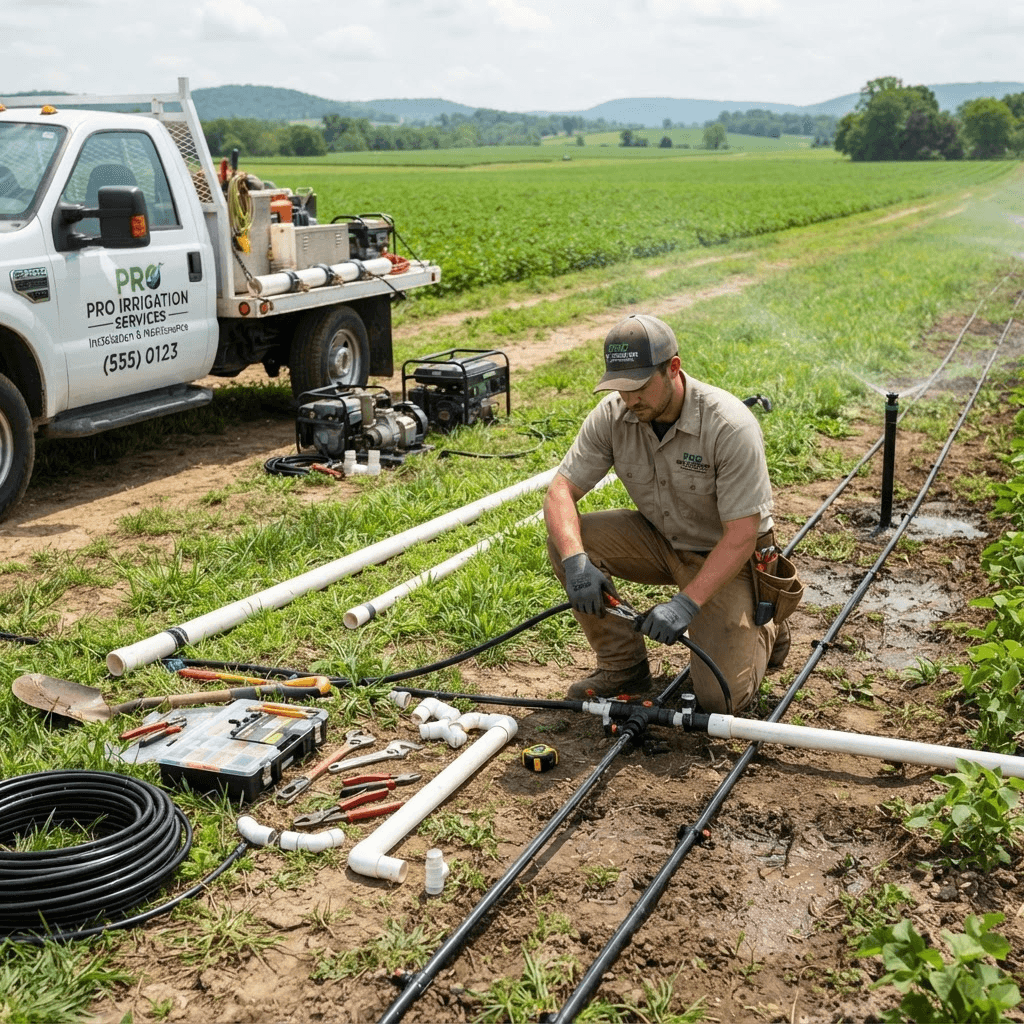
An irrigation company designs, installs, maintains, and repairs these systems, and a good one adds real value well beyond just laying pipe:
- Site assessment: they evaluate your soil, slope, water source, water pressure, plant types, and climate, and design a system tailored specifically to it.
- Proper installation, which is crucial for even coverage and long-term efficiency.
- Regulatory compliance: helping you navigate local water regulations and permits.
- Ongoing maintenance and repairs: seasonal startups and winterizing, fixing leaks and broken heads, and upgrading controllers.
For farms especially, the right system and the right expertise can dramatically affect both crop yields and water bills, making the choice of company a genuinely consequential decision rather than a commodity purchase.
How to Find a Good Local Irrigation Company
So how do you find a good local irrigation company? Start with a few reliable channels:
- Search for irrigation companies or services in your area and look at online reviews and ratings, paying close attention to comments about reliability, workmanship, and customer service.
- Ask for recommendations from neighbors, local farmers, nurseries, garden centers, and landscapers, who often know the reputable local players firsthand.
- Check licensing and insurance, confirming any company you consider is properly licensed and insured as required in your area.
- Confirm relevant experience, since farm irrigation, commercial landscaping, and residential systems each demand different expertise, and a company strong in one isn't automatically strong in another.
How to Vet and Compare Irrigation Companies
Finally, vet your top choices carefully before hiring:
- Get multiple detailed written quotes so you can compare not just price but exactly what's included, design, materials, labor, and warranty.
- Ask about the brands and quality of components they use, since cheaper parts can mean more frequent repairs down the line.
- Ask about their experience with water-efficient and smart systems, especially if reducing water use is a priority for you.
- Ask whether they offer ongoing maintenance plans, since irrigation systems need seasonal attention to keep running efficiently.
- Request references or examples of similar past work, ideally projects comparable in scale and type to yours.
- Make sure they'll provide a clear, written contract before any work begins.
Questions to Ask Before You Hire
Beyond the basic vetting checklist, a few pointed questions can reveal a lot about a company's quality. Ask how they handle unexpected issues, like discovering poor water pressure or unusual soil conditions once work has started, since a contractor's answer here tells you whether they build in flexibility or simply pad every quote to cover surprises. Ask how long the installation will take and what the site will look like during the process, particularly for larger residential or farm projects where disruption matters. And ask directly about water efficiency: a company that can explain how their system design will reduce your water use, not just apply it, is generally a stronger long-term partner than one focused purely on installation speed.
Signs of a Trustworthy Irrigation Company
A few patterns tend to separate reliable irrigation companies from the rest. Trustworthy companies measure your site and provide a genuine design rather than a generic, one-size-fits-all layout copied from another job. They're transparent about pricing, breaking down design, materials, and labor rather than offering a single vague number. They stand behind their work with a real workmanship warranty, not just a manufacturer's warranty on parts, and they're upfront about maintenance needs rather than letting you discover them later. If a company is reluctant to provide references, avoids answering direct questions about their process, or pressures you to sign quickly, treat those as warning signs regardless of how competitive their price looks.
The Bottom Line
A little diligence up front, checking reviews, licensing, experience, and quotes, goes a long way toward finding a trustworthy local irrigation company that installs an efficient, durable system and keeps your plants thriving while keeping your water use in check.
Before you request quotes, it helps to know what you are buying, and our irrigation planning guides cover the system types in detail.