What is solar power? How do solar panels work?
What is solar power and how do solar panels actually work? A plain-English breakdown of the photovoltaic effect, from sunlight hitting silicon to electricity powering your home.
What Is Solar Power? How Do Solar Panels Work?
Solar power is simply electricity generated from sunlight. It's the fastest-growing source of new energy in the world, and yet the way it actually works remains a bit of a mystery to most people who see the panels every day. The good news is that the core idea is easier to grasp than you might think, and understanding it makes the whole technology feel a lot less like magic.
The Photovoltaic Effect: The Foundation of Solar Power
At its heart, solar power relies on a phenomenon called the photovoltaic effect. When particles of light, called photons, strike certain materials, they can knock electrons loose. If you arrange that material carefully, you can capture those freed electrons as a flow of electricity. That's the entire foundation of a solar panel: light in one end, electric current out the other.
Why Silicon Is the Key Material
The workhorse material is silicon, the same element found in sand and computer chips. A solar cell is made of two thin layers of silicon that have been treated so that one layer has a slight surplus of electrons and the other a slight shortage. Where the two layers meet, they form an electric field, a kind of one-way gate that wants to push electrons in a single direction.
How a Solar Cell Turns Sunlight Into Electricity
Here's what happens when the sun comes up. Photons strike the silicon and knock electrons free from their atoms. The built-in electric field at the junction herds those loose electrons so they all flow the same way, and metal contacts on the cell collect them into an external circuit. That directed flow of electrons is an electric current, and stringing many cells together in a panel builds it up to a useful level.
From DC to AC: What the Inverter Does
The electricity a panel produces is direct current, or DC, meaning it flows in one steady direction. But your home's outlets and the utility grid run on alternating current, or AC, which reverses direction many times a second. To bridge that gap, every solar system includes an inverter, a device whose job is to convert the panel's DC output into grid-compatible AC.
How Solar Electricity Reaches Your Home and the Grid
From the inverter, the electricity flows to your home's electrical panel and powers whatever is running, lights, the refrigerator, your devices. If your panels produce more than you're using at that moment, the surplus flows out to the grid, and in many places your utility credits you for it through net metering. At night or on cloudy days, you simply draw power from the grid as usual, or from a battery if you have one.
The Supporting Components of a Solar System
A few supporting pieces make the system complete.
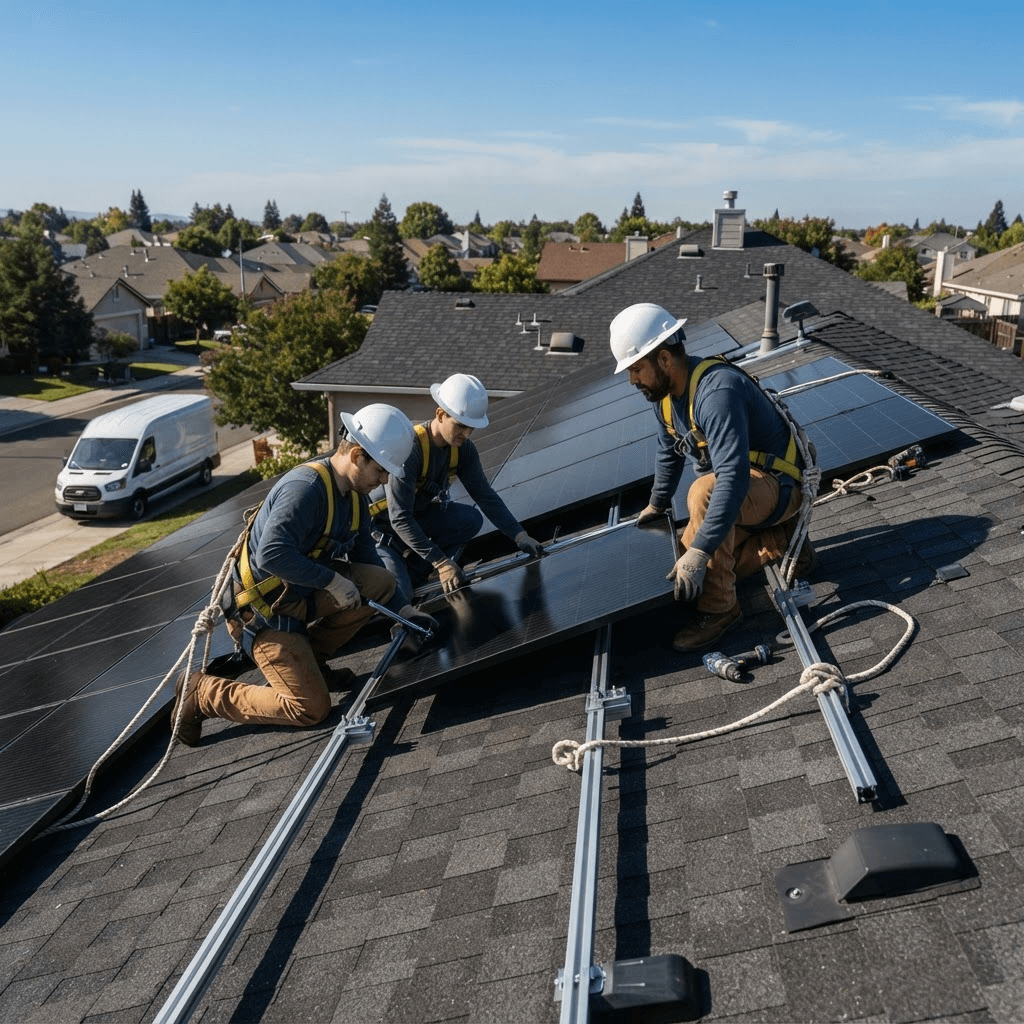
- Racking and mounting hardware hold the panels at the right angle to the sun
- Wiring carries the current safely
- Monitoring equipment lets you see how much you're producing
- Optional battery storage banks excess daytime energy so you can use it after sunset, which is increasingly popular as battery prices fall
What Affects How Much Power a Panel Produces
Several things affect how much a panel produces. More intense, direct sunlight yields more power, so orientation and tilt matter, as does the time of year. Shade is the enemy, since even partial shading can cut output significantly. Panels also lose a little efficiency in high heat, and they degrade very gradually, typically producing around 85 to 90 percent of their original output even after 25 years.
Do Solar Panels Need Heat or Just Light?
It's worth clearing up a common misconception: panels don't need heat to work, they need light. In fact they operate slightly more efficiently in cool, bright conditions than in scorching ones. That's why solar performs well even in cold, sunny climates, and why a crisp winter day can be surprisingly productive.
The Bottom Line: How Solar Power Works, Simplified
Put it all together and the picture is elegantly simple. Sunlight frees electrons in silicon, a built-in electric field marshals them into a current, an inverter converts that current into household electricity, and any excess flows to the grid or a battery. No fuel, no combustion, no moving parts, just light in and power out, quietly, for decades.
The Full Components of a Solar System
A working solar setup is more than panels. The panels capture sunlight, the inverter converts DC to AC, mounting hardware secures the array at the right angle, and wiring ties everything to your electrical panel. Many systems add a production meter, monitoring software so you can track output from your phone, and increasingly a battery for storing surplus energy. Rapid shutdown devices and disconnects are also required by electrical code so first responders can safely de-energize the system.
Grid-Tied, Off-Grid, and Hybrid Systems
Most homes use a grid-tied system, which stays connected to the utility and uses the grid as a virtual battery through net metering. Off-grid systems, common for remote cabins and RVs, rely entirely on batteries and have no utility connection. Hybrid systems combine grid connection with battery storage, giving you both net metering credits and backup power during outages. The right choice depends on whether backup power and energy independence matter to you, or whether pure bill savings are the goal.
What Happens to Excess Power
On a sunny afternoon, your panels often produce more than your home is using. In a grid-tied system, that surplus flows to the grid and earns a net metering credit. In a system with a battery, the surplus charges the battery first, and only the remainder is exported. After sunset, you either draw down your credits or discharge the battery, which is how solar covers evening and nighttime usage even though the sun is down.
Panel Types You Will Encounter
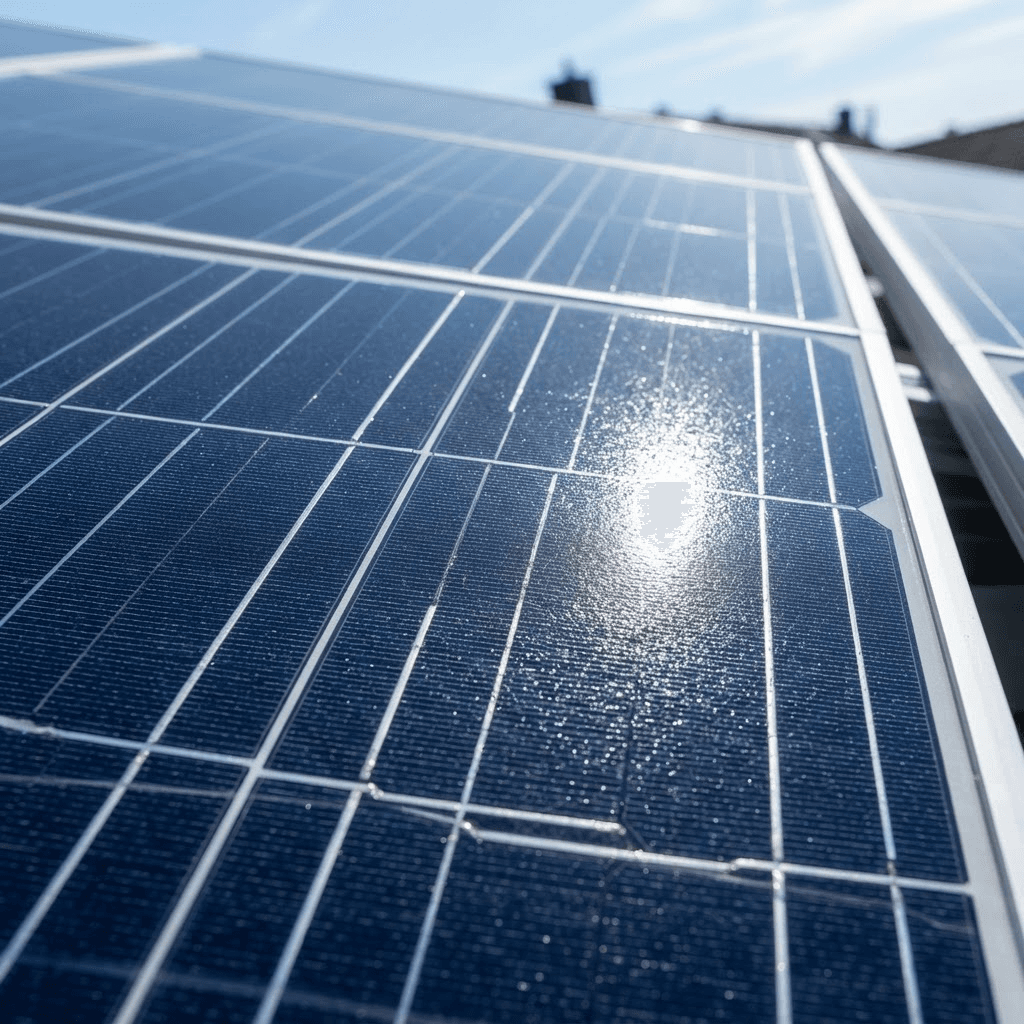
Residential panels are almost always monocrystalline today, recognizable by their uniform black appearance and high efficiency. Older or budget installations sometimes use polycrystalline panels, which have a bluish, speckled look and slightly lower efficiency. Thin-film panels exist mainly for large commercial or specialty uses. For a typical home, monocrystalline is the standard because it delivers the most power per square foot of roof.
This is the foundation for everything else in our solar learning center, from sizing a system to comparing financing.
Frequently Asked Questions
Do solar panels work on cloudy days? Yes. Panels still capture diffuse light through clouds, producing at a reduced rate, often 10 to 30 percent of their clear-sky output. Annual estimates already account for typical cloudy weather.
Do solar panels work during a power outage? A standard grid-tied system shuts down during an outage for safety. To keep power flowing during a blackout, you need a battery or a hybrid inverter designed to island your home from the grid.
How long do solar panels last? Most panels are warrantied for 25 years and often keep producing well beyond that at gradually reduced output. Inverters typically need replacement once during the system's life.
Do panels require much maintenance? Very little. Occasional cleaning and keeping them free of debris and shade is usually enough, since panels have no moving parts.