What Is the Best Fertilizer for Grass? (How to Fertilize Your Lawn)
How to choose and apply the right lawn fertilizer — what the N-P-K numbers mean, slow-release vs quick-release, organic vs synthetic, and correct timing by grass type.
What Is the Best Fertilizer for Grass? (How to Fertilize Your Lawn)
Ask ten lawn experts for the best fertilizer for grass and you'll get ten answers, because the honest truth is that the "best" fertilizer depends on your grass type, your soil, and the season. What doesn't change are the principles for choosing wisely and applying correctly. Once you understand what's actually in a bag of fertilizer and how to put it down, picking the right product for your lawn becomes straightforward.
Understanding the N-P-K Ratio
Start with the three numbers on every fertilizer bag, the N-P-K ratio. These stand for nitrogen (N), phosphorus (P), and potassium (K), the three nutrients grass needs most.
Nitrogen drives green, leafy top growth and is the nutrient lawns crave most, which is why the first number is usually the highest. Phosphorus supports root development and is especially useful when establishing new grass. Potassium boosts overall hardiness, helping the lawn resist drought, disease, and cold. A typical maintenance fertilizer might read something like 24-0-6, heavy on nitrogen with a bit of potassium.
Slow-Release vs. Quick-Release
The next choice is between slow-release and quick-release formulas, and for most homeowners slow-release wins. Slow-release (or controlled-release) fertilizers feed the lawn gradually over six to eight weeks or more, producing steady, even growth and making it very hard to burn the grass.
Quick-release fertilizers deliver a fast green-up but are used up quickly, must be applied more often, and can scorch the lawn if overapplied or put down in heat. Unless you need an immediate boost, a slow-release product is the easier, safer, and more forgiving option.
Organic vs. Synthetic
You'll also choose between organic and synthetic. Organic fertilizers, made from natural materials like compost, manure, or bone meal, release nutrients slowly and improve the soil's structure and biology over time, though they act more gradually.
Synthetic fertilizers deliver precise, fast-acting nutrients and tend to cost less, but they don't build soil health the way organics do. Neither is strictly "better," it's a trade-off between long-term soil improvement and immediate, predictable results.
Test Your Soil Before You Buy
The single smartest move before buying anything is a soil test. For a few dollars, a soil test tells you your lawn's pH and exactly which nutrients it's lacking, so you can buy the fertilizer your grass actually needs instead of guessing.
Many lawns already have plenty of phosphorus, for instance, and adding more just wastes money and pollutes waterways. Testing turns fertilizing from guesswork into precision, and it often reveals that a simple pH fix, like adding lime to acidic soil, matters more than the fertilizer itself.
Timing and Technique
When it comes to how to fertilize, timing and technique are everything. Feed cool-season grasses (fescue, ryegrass, bluegrass) in spring and fall, with the most important application in fall; feed warm-season grasses (Bermuda, zoysia, St. Augustine) during their summer growing season, and never fertilize a dormant lawn.
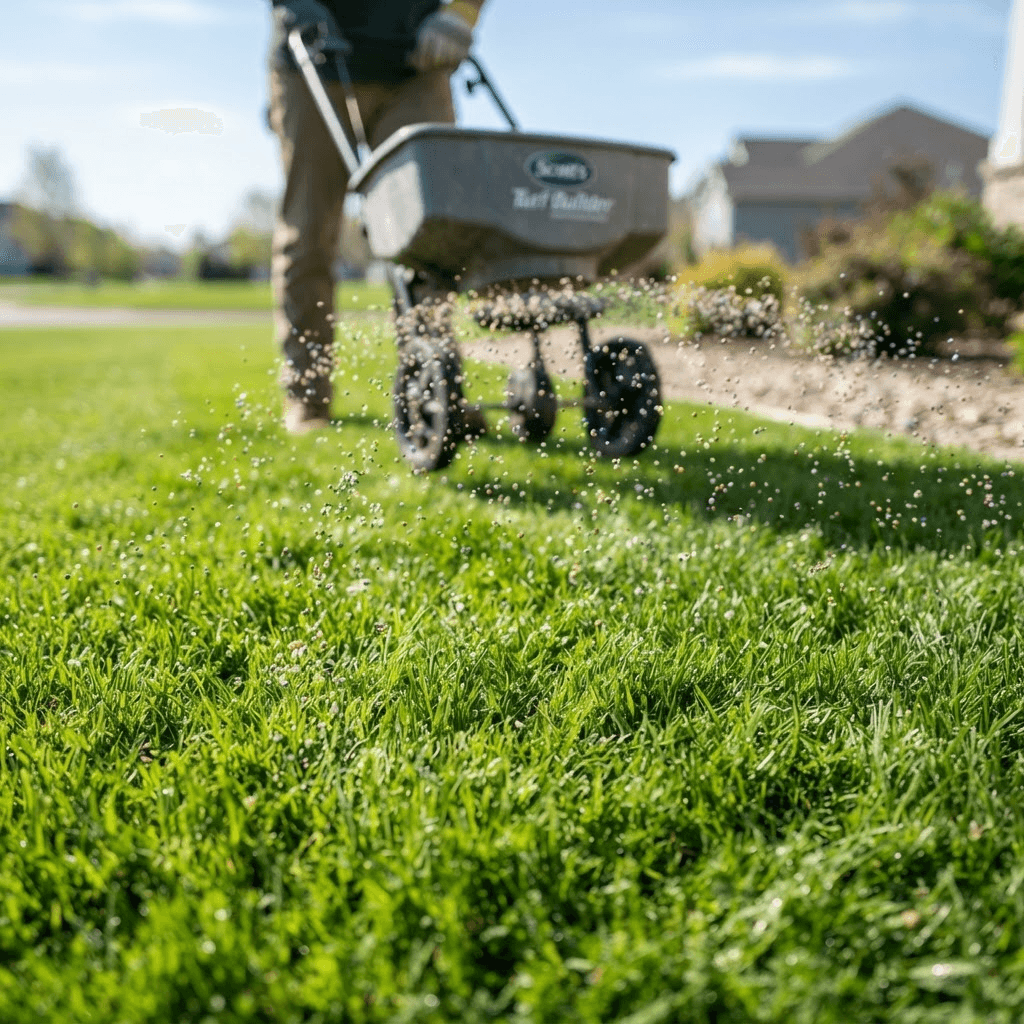
Use a broadcast or drop spreader for even coverage rather than spreading by hand, which causes streaks and burn spots. Apply to a dry lawn, then water lightly afterward to move the nutrients into the soil, and always follow the bag's application rate, since more is not better and overapplying does real harm.
The Bottom Line
The bottom line is that the best fertilizer for your grass is the one matched to your grass type and your soil's actual needs, ideally a slow-release formula with the right N-P-K balance, applied at the correct time of year and spread evenly. Get those pieces right, pair them with good mowing and deep watering, and you'll grow a thick, green lawn without wasting product or money. Fertilizing well is less about finding a magic bag and more about feeding the right thing at the right time.
Reading a Fertilizer Label: N-P-K
The three numbers on every fertilizer bag, the N-P-K ratio, are the key to choosing the right product. They stand for the percentages of nitrogen, phosphorus, and potassium. Nitrogen (N) drives green, leafy growth and is what makes a lawn lush and dark green. Phosphorus (P) supports root development and is important for new lawns. Potassium (K) builds overall hardiness and stress tolerance. For established lawns, nitrogen is the star, so most lawn fertilizers carry a high first number, while a starter fertilizer for new grass has more phosphorus to fuel root growth.
Slow-Release vs. Quick-Release Nitrogen
Beyond the ratio, how a fertilizer delivers its nitrogen matters just as much. Quick-release (water-soluble) nitrogen greens the lawn fast but is short-lived and can burn the grass if over-applied. Slow-release nitrogen feeds gradually over weeks, producing steady, even growth with far less burn risk and fewer applications. For most homeowners, a quality slow-release or controlled-release fertilizer is the better choice, giving consistent color without the surge-and-crash cycle of quick-release products. Many premium fertilizers blend both, offering a quick green-up followed by sustained feeding.
Organic vs. Synthetic Fertilizers
Fertilizers fall into two broad camps, and each has merits. Synthetic fertilizers deliver precise, fast-acting nutrients in exact ratios, making them efficient and inexpensive, though overuse can harm soil life and pollute runoff. Organic fertilizers, derived from materials like compost, manure, and bone meal, release nutrients slowly, improve soil structure, and feed the microbial life that makes a lawn resilient over time. Organics work more gradually but build healthier soil for the long term. Many lawn owners use a blend, relying on organics for soil health and targeted synthetics when a quick correction is needed.
Matching Fertilizer to Your Grass Type
The best fertilizer choice depends on whether you grow cool-season or warm-season grass, because their feeding calendars differ. Cool-season grasses like fescue and bluegrass grow most in spring and fall, so those are the prime feeding windows, with a light touch in summer. Warm-season grasses like Bermuda and zoysia grow in summer heat and are best fed from late spring through summer. Applying nitrogen when the grass is actively growing lets it use the nutrients efficiently, while feeding a dormant or stressed lawn wastes product and can cause damage.
Applying Fertilizer Correctly
Even the best fertilizer fails if applied poorly, so technique matters. Use a broadcast or drop spreader for even coverage, since hand-spreading causes streaks of dark green and burned patches. Follow the label's application rate rather than assuming more is better, as over-fertilizing burns grass and pollutes waterways. Water the lawn after applying granular fertilizer to move nutrients into the soil, and sweep any product off pavement to keep it out of storm drains. A soil test every few years reveals exactly what your lawn needs, preventing wasted applications and guiding smarter feeding.
Feeding is one piece of a healthy lawn, and our lawn fertilizing and care articles cover mowing, watering, and soil work as well.
Frequently Asked Questions
What is the best fertilizer for grass? For established lawns, a slow-release fertilizer high in nitrogen produces steady green growth with less burn risk. New lawns benefit from a starter fertilizer higher in phosphorus to support root development.
What do the numbers on fertilizer mean? They are the N-P-K ratio, the percentages of nitrogen, phosphorus, and potassium. Nitrogen drives green growth, phosphorus supports roots, and potassium builds hardiness and stress tolerance.
Is organic or synthetic fertilizer better for lawns? Synthetic feeds quickly and precisely, while organic releases nutrients slowly and improves soil health over time. Many lawn owners combine both, using organics for soil and synthetics for quick correction.
When should I fertilize my lawn? Feed when the grass is actively growing. Cool-season grasses are best fed in spring and fall, and warm-season grasses from late spring through summer. Avoid feeding dormant or heat-stressed lawns.