Precision Agriculture Robotics: How to Leverage Autonomous Robots in Agriculture
What are precision agriculture robotics? This article explains what autonomous farm robots handle, their benefits, and a practical strategy for leveraging them on your farm.
What precision agriculture robotics are, the tasks autonomous farm robots handle, their benefits, and a practical strategy for leveraging them on your farm.
Precision Agriculture Robotics: How to Leverage Autonomous Robots in Agriculture
Autonomous robots are rapidly moving from futuristic novelty to practical necessity on modern farms, and they sit at the heart of precision agriculture, the data-driven practice of managing crops with pinpoint accuracy. Facing labor shortages, rising costs, and pressure to farm more sustainably, growers are turning to robots that can plant, weed, monitor, and harvest with a precision and tirelessness humans can't match. Understanding what agricultural robots do and how to leverage them is becoming essential knowledge for anyone serious about the future of farming, whether you're running a large commercial operation or a smaller diversified farm looking to close a labor gap.
What Is Precision Agriculture Robotics?
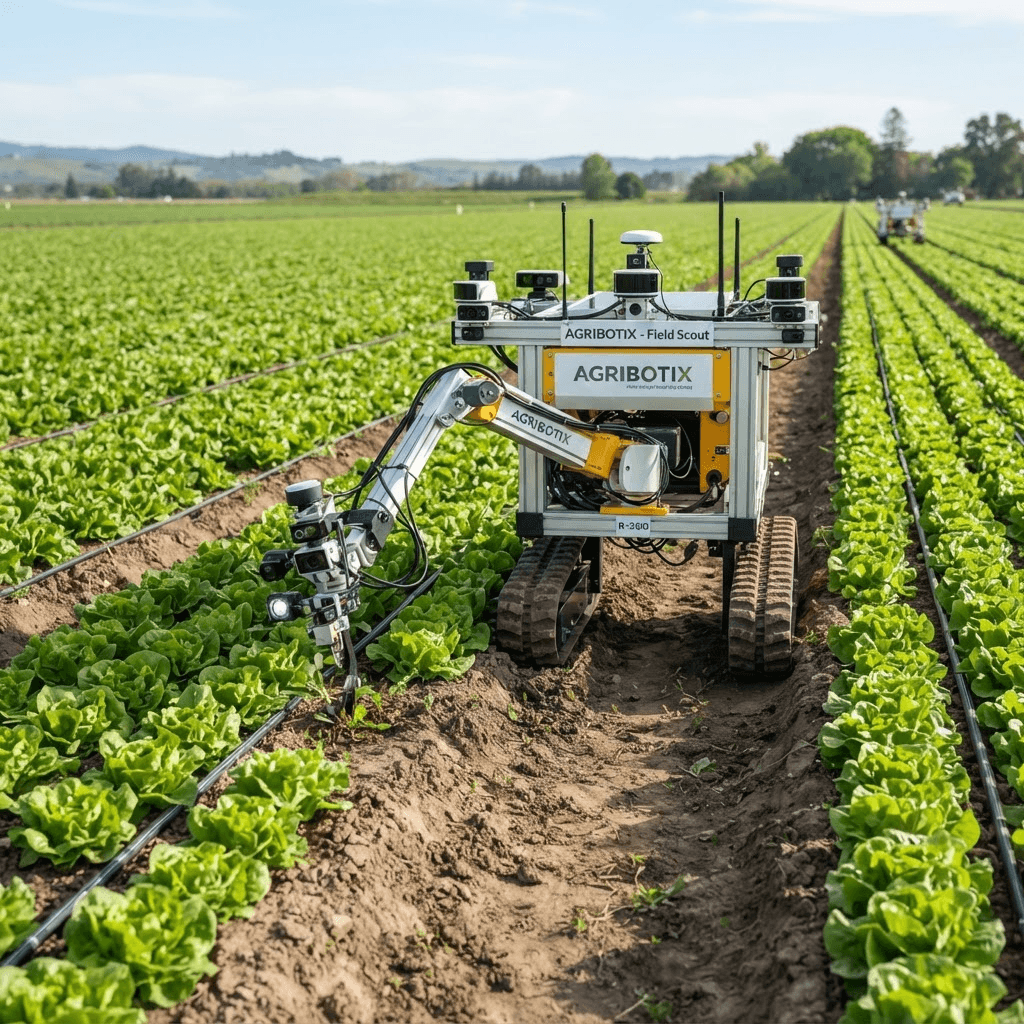
Precision agriculture robotics refers to autonomous or semi-autonomous machines that perform farm tasks with high accuracy, guided by GPS, sensors, cameras, and increasingly artificial intelligence. Unlike a traditional tractor that treats an entire field uniformly, these robots can act at the level of individual rows, plants, or even leaves.
They combine three core capabilities:
- Mobility: wheels, tracks, or flight, letting the robot physically move through the field.
- Perception: cameras and sensors to "see" crops and surroundings.
- Intelligence: software that decides what to do with what it perceives.
Together, these let a robot carry out precise, repeatable work with minimal human intervention, which is exactly what precision agriculture demands: treating each plant, not just each field, as its own decision point.
What Tasks Do Agricultural Robots Handle?
The tasks these robots handle span the whole growing cycle:
- Autonomous and GPS-guided tractors plant and till with centimeter-level accuracy, eliminating wasteful overlap.
- Weeding robots use computer vision to distinguish crops from weeds and remove or spot-spray only the weeds, slashing herbicide use.
- Scouting and monitoring robots, ground-based rovers and aerial drones, continuously assess plant health, moisture, and pest pressure, feeding data back to farmers.
- Harvesting robots use AI vision and gentle robotic grippers to identify ripe produce and pick delicate crops like strawberries, tomatoes, and apples.
- Specialized machines handle seeding, spraying, and even livestock tasks like automated milking.
Between these categories, a farm can now automate meaningful pieces of nearly every stage from planting through harvest.
The Benefits of Farm Robots
The benefits of leveraging farm robots are substantial and interlocking:
- Address labor shortages by handling repetitive, physically demanding, or time-sensitive jobs, and working around the clock without fatigue.
- Cut input costs and environmental impact, applying water, fertilizer, and chemicals only where needed thanks to their precision.
- Boost yields and quality by catching problems early and treating each plant optimally rather than uniformly.
- Generate enormous amounts of data as they work, fueling smarter decisions over time.
- Reduce human exposure to hazardous tasks, like chemical spraying.
In short, they promise to make farming more efficient, sustainable, and resilient, not by replacing every human task at once, but by taking over the specific jobs where precision and repetition matter most.
How to Start Leveraging Agricultural Robots Strategically
To actually leverage robots, the smartest approach is strategic rather than wholesale:
- Identify your biggest pain points, whether that's labor-intensive weeding, harvest bottlenecks, or a lack of field data, and target a robotic solution there first, where the return on investment is clearest.
- Consider low-capital entry points, such as drone-based monitoring or service providers that offer robotic weeding or spraying as a service, before investing in owning large autonomous machinery.
- Ensure supporting infrastructure is in place, GPS accuracy, connectivity, and the ability to use the data these systems produce.
- Factor in training so your team can operate and maintain the technology once it arrives.
Starting with a single, well-defined problem rather than a broad robotics overhaul makes it far easier to measure whether the investment is actually working.
Challenges to Weigh Before Adopting Farm Robotics
It's also important to weigh the challenges realistically:
- High upfront costs for most autonomous equipment.
- The need for technical skills to operate, maintain, and interpret data from these systems.
- Connectivity requirements that can be a genuine obstacle in rural areas.
- The relative immaturity of some harvesting robots, particularly for delicate or irregularly shaped crops.
These factors mean adoption should be phased and matched to genuine needs rather than adopted all at once because the technology is exciting. Begin small, measure results carefully, and scale what proves its worth, treating your first robotic tool as a pilot project with clear success criteria rather than an all-in bet on the technology.
Where Agricultural Robotics Is Headed
As the technology matures and costs fall, robots will increasingly work as a coordinated system: drones scouting, ground robots weeding and monitoring, autonomous tractors and harvesters doing the heavy lifting, all tied together by farm-management software. Rather than isolated tools, the future of precision agriculture robotics looks like a connected fleet where each machine's data informs the others' actions.
To see how robotics fits with the sensors and software it depends on, see our farm automation articles.
Frequently Asked Questions About Agricultural Robots
What is the difference between precision agriculture and agricultural robotics? Precision agriculture is the broader practice of managing crops with data-driven accuracy, adjusting inputs like water and fertilizer at a fine-grained level. Agricultural robotics is one of the key tools that makes this possible, the physical machines that act on that data in the field.
Are agricultural robots affordable for small farms? Ownership of large autonomous equipment is often out of reach for smaller operations, but lower-cost entry points exist, including drone monitoring and robotics-as-a-service providers who handle tasks like weeding or spraying without requiring the farm to own the equipment outright.
What crops benefit most from robotic harvesting? Robotic harvesting has made the most progress with crops that are hard to mechanize conventionally but still identifiable by computer vision, such as strawberries, tomatoes, and apples. Harvesting for many other crops, especially delicate or irregularly ripening produce, remains a developing area.
The Bottom Line
Farmers who start learning and experimenting now, targeting real problems and building the skills and infrastructure to support automation, will be best positioned to reap the productivity, sustainability, and resilience benefits that precision agriculture robotics offers.