Top 10 Smart Farming Tools
The top 10 smart farming tools transforming precision agriculture, GPS tractors, drones, soil sensors, smart irrigation, VRT, and more, and how to start adopting them.
Top 10 Smart Farming Tools for Precision Agriculture
Farming has quietly become one of the most technology-rich industries on the planet. Under the banner of "smart farming" (or precision agriculture), a new generation of tools uses sensors, data, automation, and connectivity to help farmers grow more with less, less water, less chemical input, less guesswork, and less wasted effort. Whether you run a large operation or a small farm, understanding the key smart farming tools available can help you work more efficiently and sustainably, and knowing what each tool actually does, and doesn't do, helps you invest where it will genuinely pay off rather than chasing every new gadget on the market. Here are ten of the most impactful.
1. GPS-Guided and Autonomous Tractors
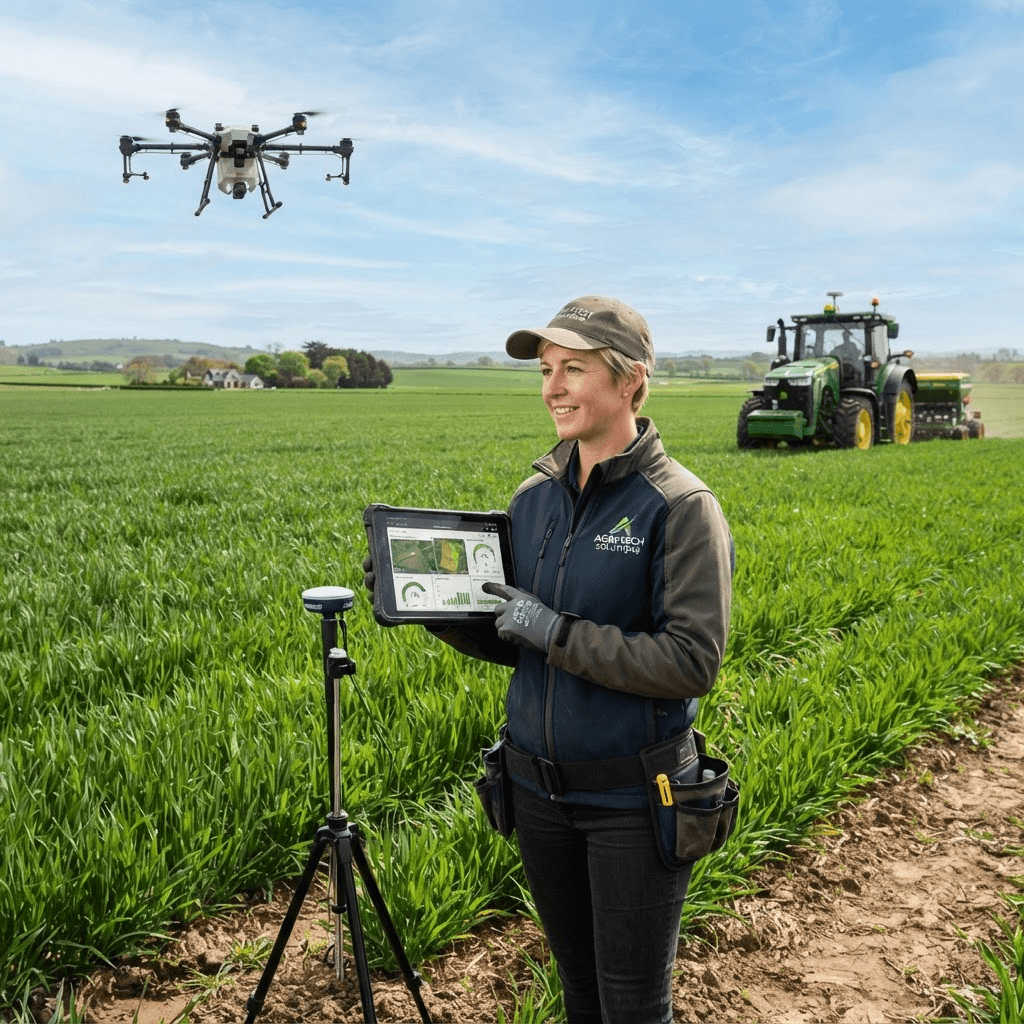
Precision guidance systems let tractors and machinery drive with centimeter-level accuracy, following optimized paths that eliminate overlap and skips. This saves fuel, seed, and inputs, and reduces operator fatigue, while fully autonomous versions can even work with minimal human supervision, running planting or spraying passes around the clock during tight seasonal windows. For operations with large acreage, the fuel and input savings from eliminating overlap alone can add up to a meaningful reduction in per-acre costs over a full season.
2. Agricultural Drones (UAVs)
Drones give farmers a fast aerial view of their fields, capturing imagery that reveals crop health, pest outbreaks, and irrigation issues long before they'd be visible from the ground. Specialized spray drones can apply inputs precisely where needed, covering ground quickly and safely, including on steep or hard-to-reach terrain that ground equipment struggles with.
3. Soil Sensors and IoT Field Monitors
These devices, planted throughout fields, continuously measure soil moisture, temperature, nutrient levels, and more, streaming real-time data so farmers know exactly what their soil needs and when, rather than guessing. Because the data updates continuously, farmers can catch a developing moisture or nutrient problem days before it would show up as visible plant stress.
4. Smart Irrigation Systems
By combining soil-moisture data, weather forecasts, and automated controllers, these systems deliver water precisely when and where crops need it, dramatically reducing water waste while keeping plants healthy, a huge advantage in an era of water scarcity. Some systems go a step further, adjusting mid-cycle in response to an unexpected rain event so water isn't applied on top of a storm.
5. Variable Rate Technology (VRT)
VRT allows equipment to apply seeds, fertilizer, and chemicals at varying rates across a field based on data maps, so each zone gets exactly what it needs instead of a uniform blanket application. This cuts input costs and environmental impact while improving yields, since over-fertilized zones and under-fertilized zones both hurt the bottom line in different ways.
6. Satellite and Aerial Imagery With Remote Sensing
Beyond drones, satellite data and vegetation indices like NDVI let farmers monitor large areas over time, spotting stress, disease, and growth patterns from above to guide targeted action. Because satellite passes happen on a regular schedule, this gives farmers a consistent historical record to compare season over season, not just a single snapshot.
7. Farm Management Software and Platforms
These digital dashboards tie everything together, integrating data from sensors, machinery, and imagery into one place where farmers can plan, track, analyze, and make decisions, turning raw data into actionable insight and better record-keeping. A good platform replaces a drawer full of paper records and disconnected spreadsheets with a single source of truth for the whole operation.
8. Livestock Monitoring and Wearables
For animal operations, smart collars, tags, and sensors track each animal's health, location, activity, and reproductive status, alerting farmers early to illness or problems and improving both welfare and productivity. Early illness detection alone can significantly reduce losses, since catching a sick animal a day or two sooner often makes the difference between a quick recovery and a serious outbreak.
9. Agricultural Robots
Beyond tractors, specialized robots handle labor-intensive tasks: weeding robots that spot and remove weeds using computer vision, robotic harvesters for delicate crops, and automated milking systems, all helping address labor shortages while working tirelessly and precisely. These robots are especially valuable for crops that are difficult to mechanize with traditional equipment, like delicate fruits that bruise easily under conventional harvesting machinery.
10. Weather Stations and Predictive Analytics
On-farm weather stations combined with forecasting and AI-driven analytics help farmers anticipate conditions, time planting, spraying, and harvest, and manage risk from frost, drought, or storms. Hyper-local weather data, measured right on your own field rather than the nearest regional station, often differs meaningfully from general forecasts, especially in areas with varied terrain.
How These Tools Work Together
The real power of smart farming comes when these tools work together as a connected system: sensors and drones gather data, software analyzes it, and precision equipment and automation act on it, closing the loop from information to action. A soil sensor alone tells you moisture is low; connected to a smart irrigation controller, that same data point actually gets water to the plant without you lifting a finger. It's this connection between measurement and action that separates genuinely smart farming from simply owning expensive equipment.
Where to Start: Choosing Your First Smart Farming Tools
You don't have to adopt all ten at once; the smartest approach is to start with the tools that address your biggest challenges. Drone monitoring, soil sensors, or smart irrigation are common, high-value entry points, since they deliver clear, measurable results relatively quickly and lay the data foundation that more advanced tools, like VRT and robotics, depend on later. Expand as you see results, using the savings and efficiency gains from your first tool to help justify and fund the next one.
The Bottom Line
Embraced thoughtfully, these technologies help farms boost yields, cut costs, conserve resources, and build resilience, proving that even the world's oldest industry can be genuinely, powerfully smart.
If you are deciding where to spend first, our farm technology roundups weigh the options by farm size and budget.