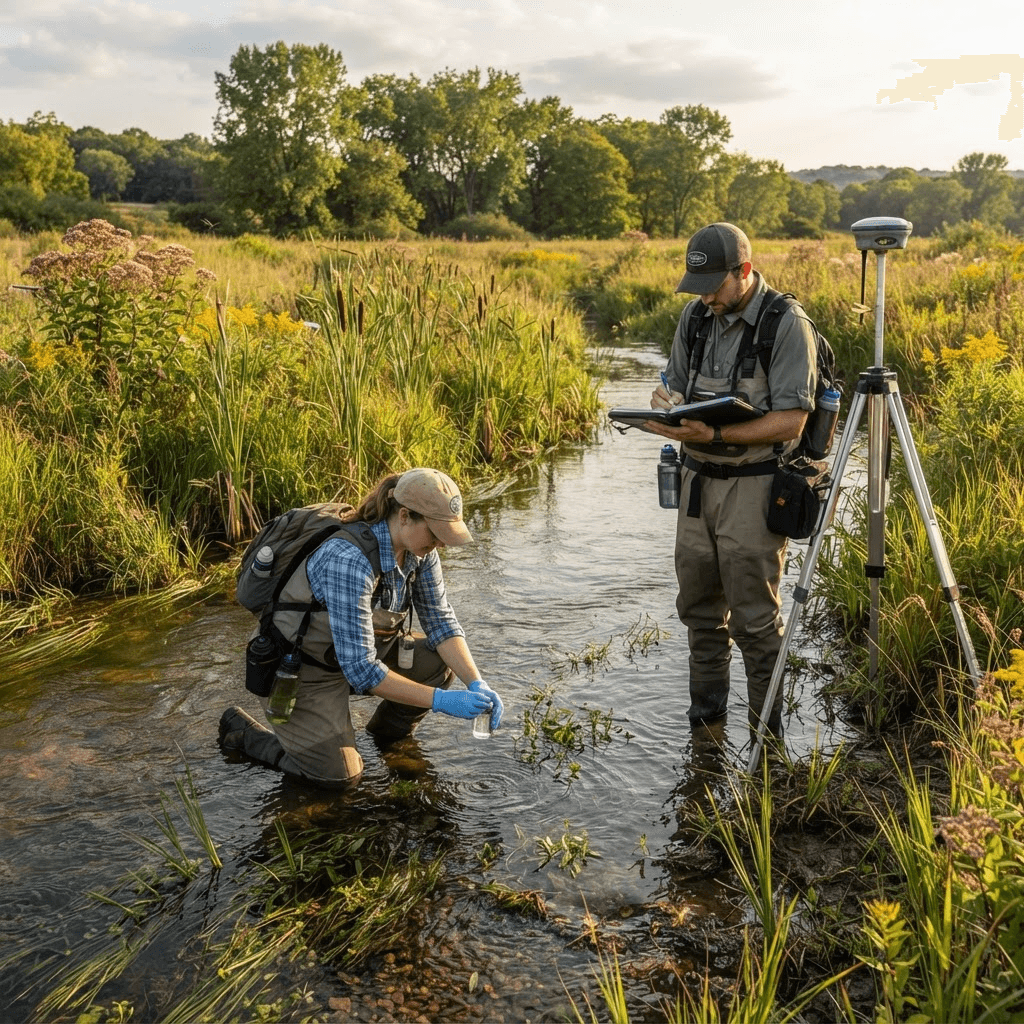
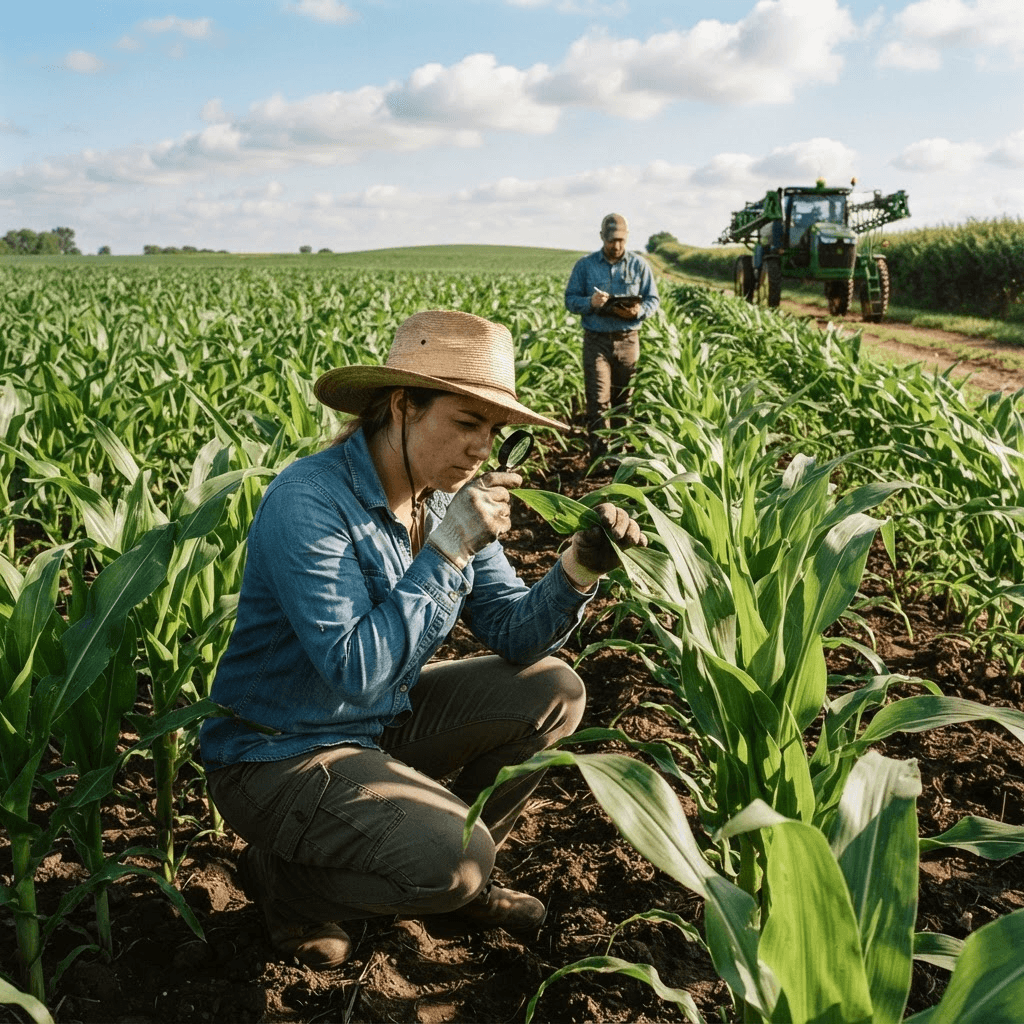
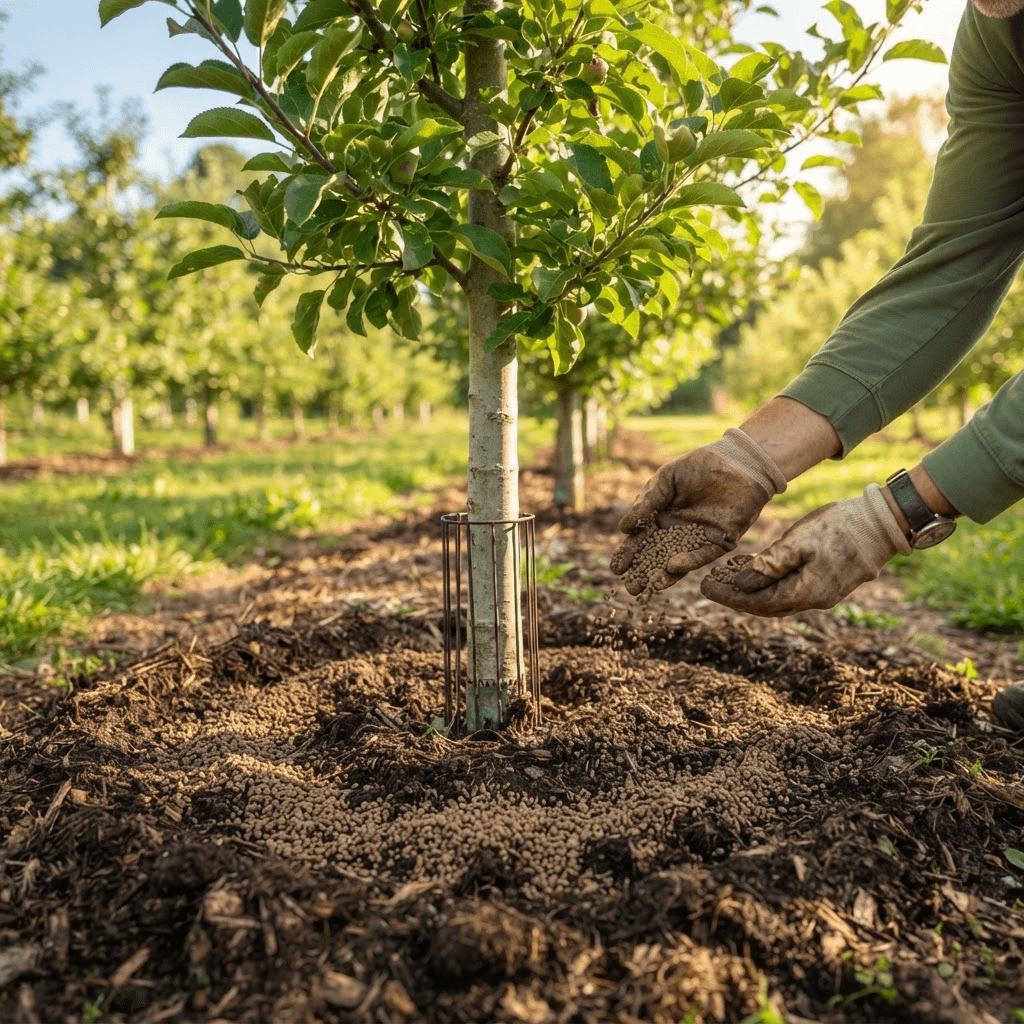
What is Agricultural Farming?
Agricultural farming is the practice of cultivating crops and raising livestock to produce food, fiber, and other goods that sustain society.
What Is Agricultural Farming? A Complete Guide
Agricultural farming is the practice of cultivating land, raising crops, and tending livestock to produce food, fiber, and other materials people depend on every day. It's one of humanity's oldest activities and, at the same time, one of its most rapidly evolving industries, blending ancient knowledge with modern science and technology. Understanding what agricultural farming actually covers, its main types, methods, and the forces reshaping it today, offers a clearer picture of the system that quietly feeds and clothes the entire world.
What Is Agricultural Farming?
Agricultural farming refers to the deliberate cultivation of plants and the raising of animals for human use, whether that use is food, fiber, fuel, or other raw materials. At its core, it's the process of managing land and living organisms to produce something useful in a repeatable, intentional way, rather than simply gathering what nature happens to provide.
This definition covers an enormous range of activity: a single family growing vegetables on a few acres, a large operation cultivating thousands of acres of wheat, a rancher raising cattle on open rangeland, and a greenhouse operation growing tomatoes year-round under controlled conditions are all, in the broadest sense, agricultural farming. What unites them is the deliberate management of biological systems, soil, plants, animals, water, toward a productive outcome.
A Brief History of Agricultural Farming
Farming is often described as the foundation of civilization itself. Roughly ten thousand years ago, communities in several regions of the world independently began shifting from hunting and gathering to deliberately planting seeds and domesticating animals, a shift historians call the Neolithic Revolution. This allowed people to settle in one place, produce food surpluses, and support growing populations, laying the groundwork for towns, specialized labor, and complex societies.
For most of human history, farming remained labor-intensive and closely tied to local conditions, passed down through generations largely unchanged. That began shifting dramatically over the past century, as mechanization, synthetic fertilizers, improved crop breeding, and eventually digital technology transformed how much food a single farmer could produce. Today's agricultural farming is the product of that long arc: ancient biological knowledge combined with modern science, machinery, and data.
The Main Types of Agricultural Farming
Agricultural farming can be categorized several different ways, depending on what's being produced, the scale of the operation, and its underlying purpose.
Subsistence Farming vs. Commercial Farming
The most fundamental distinction is purpose. Subsistence farming is practiced primarily to feed the farmer's own household, with little or nothing produced for sale. Commercial farming produces crops and livestock specifically for sale, and it dominates food production in most developed economies today. Many farms fall somewhere between these poles, selling some output while consuming a portion themselves.
Crop Farming (Arable Farming)
Crop farming, sometimes called arable farming, focuses on growing plants, grains like wheat and corn, vegetables, fruits, and fiber crops like cotton. This is what most people picture when they think of farming: fields plowed, planted, and harvested on a seasonal cycle, ranging from small diversified vegetable operations to enormous single-crop grain farms.
Livestock Farming (Pastoral Farming)
Livestock farming, or pastoral farming, centers on raising animals, cattle, sheep, goats, pigs, poultry, for meat, milk, eggs, wool, or other products. This can take the form of open-range grazing, confined feeding operations, or smaller-scale mixed operations raising a handful of animals alongside other farm activities.
Mixed Farming
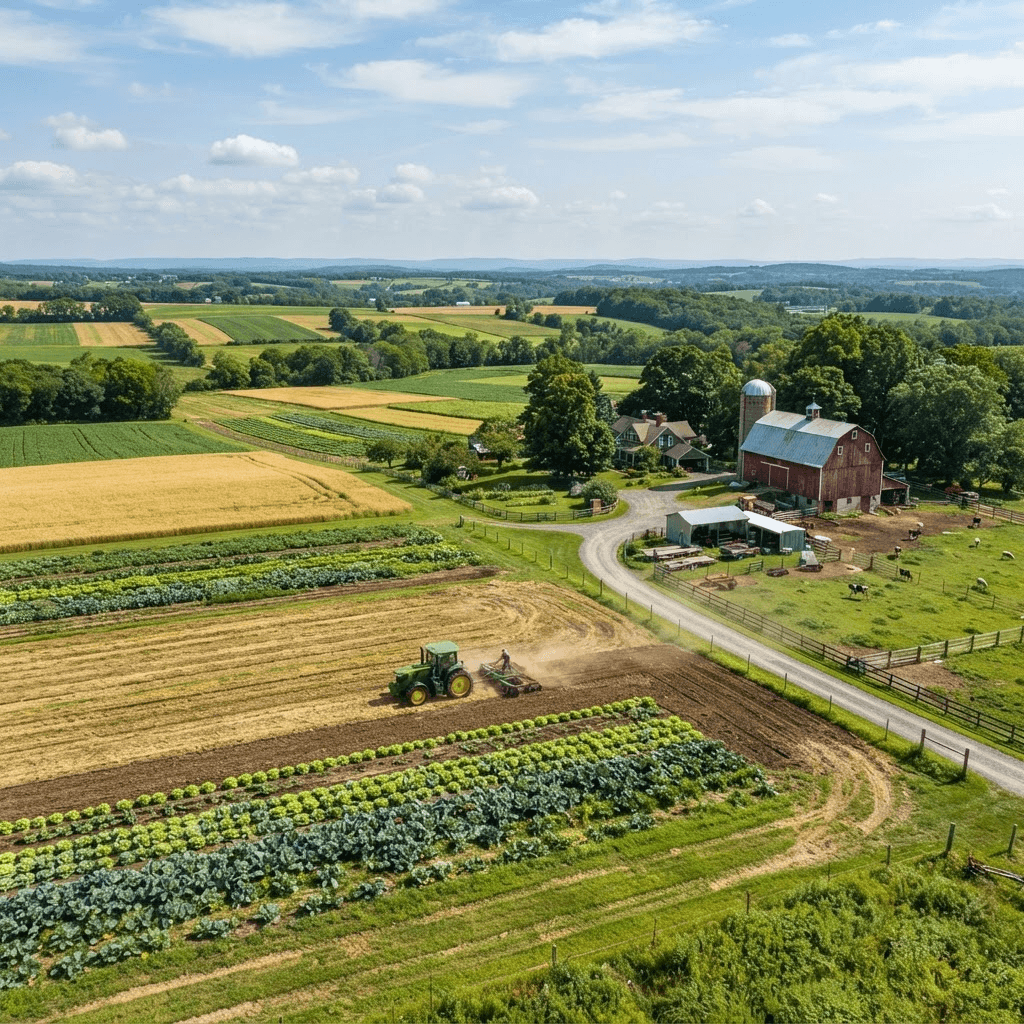
Mixed farming combines crop and livestock production on the same operation, often deliberately, since the two can support each other. Livestock manure fertilizes cropland, and crop residues or pasture feed the animals, creating a more self-contained, resilient system than specializing in only one. Many smaller and traditional farms operate this way.
Farming by Method and Philosophy
Beyond what's produced, farms are also distinguished by how they're managed.
Conventional Farming
Conventional farming refers to mainstream, input-intensive agriculture that relies on synthetic fertilizers, pesticides, and often significant mechanization to maximize yield and efficiency. It's the dominant approach across most commercial agriculture today, valued for its productivity and relatively lower cost per unit of output.
Organic Farming
Organic farming avoids synthetic fertilizers, pesticides, and genetically modified organisms, relying instead on natural inputs like compost, crop rotation, and biological pest control. It typically costs more to produce and often yields somewhat less per acre than conventional methods, but it appeals to consumers and producers prioritizing environmental impact, soil health, and the absence of synthetic chemical residues.
Sustainable and Regenerative Farming
Sustainable and regenerative farming practices aim to maintain or actively improve the health of the land over the long term, through techniques like cover cropping, reduced tillage, and careful water management. Rather than a strict rulebook like organic certification, this is more of a philosophy that can be applied within either conventional or organic systems, with the explicit goal of leaving the land better than it was found.
Intensive vs. Extensive Farming
Intensive farming applies large amounts of labor, capital, or inputs to a relatively small area of land to maximize output per acre, common in densely populated regions where land is scarce. Extensive farming, by contrast, uses relatively low inputs over large areas of land, common where land is abundant and cheap relative to labor and capital, such as large-scale ranching or dryland grain farming.
Key Components of Agricultural Farming
Regardless of type or method, virtually all agricultural farming depends on a similar set of underlying components:
- Soil: the foundation for crop production, whose fertility and structure directly determine what and how much can be grown.
- Water: delivered through rainfall, irrigation, or both, and essential at every stage of growth.
- Seeds and breeding stock: the genetic starting point for crops and livestock, refined through selective breeding and biotechnology.
- Inputs: fertilizers, pest and weed control, and animal feed that support growth and protect against loss.
- Labor: the human effort involved in planting, tending, harvesting, and managing animals.
- Machinery and infrastructure: tractors, irrigation systems, storage, fencing, and buildings that make modern-scale farming possible.
The balance among these components looks very different on a small organic vegetable farm than on a large mechanized grain operation, but every farm is, at its core, managing some combination of all six.
Why Agricultural Farming Matters
Agricultural farming underpins nearly every other part of human society, in ways that are easy to overlook precisely because they're so foundational.
Food security is the most obvious: farming is how the vast majority of the world's food gets produced, and the productivity and resilience of the agricultural system directly determines whether populations have reliable access to food.
Economic impact is significant as well. Agriculture employs a substantial share of the global workforce, particularly in developing economies, and supports enormous secondary industries in equipment, food processing, transportation, and retail.
Environmental stewardship is increasingly recognized as a core function of farming too, since agricultural land management directly affects soil health, water quality, biodiversity, and carbon storage across a huge share of the world's land surface.
Cultural and social significance rounds out the picture. Farming shapes rural communities, traditions, and identities well beyond its economic output, and in many parts of the world it remains as much a way of life as a business.
Modern Trends Shaping Agricultural Farming
Agricultural farming today looks meaningfully different from even a generation ago, driven by several converging trends.
Precision agriculture uses GPS, sensors, and data analytics to manage fields at a fine-grained level, applying water, fertilizer, and pesticides only where and when needed, rather than uniformly across an entire field.
Automation and robotics increasingly handle tasks once done entirely by hand, from autonomous tractors to robotic harvesters, addressing labor shortages while improving consistency and precision.
Biotechnology and improved genetics continue to produce crop varieties and livestock breeds with better yields, disease resistance, and tolerance for challenging conditions like drought or heat.
Climate-smart practices are gaining ground as farmers adapt to more volatile weather, incorporating drought-tolerant crops, improved water management, and soil practices that build resilience.
Controlled-environment and vertical farming are expanding what "agricultural farming" even means, growing food indoors under precisely managed conditions, independent of outdoor weather or traditional farmland.
Challenges Facing Agricultural Farming Today
Despite its progress, agricultural farming faces serious, interconnected challenges.
Climate change is altering rainfall patterns, increasing extreme weather, and shifting where certain crops can reliably grow, forcing farmers to adapt practices stable for generations.
Resource pressure continues to build, as farming competes for scarce water and land with growing populations and urbanization, while soil degradation slowly erodes existing farmland's productive capacity.
Labor shortages affect agriculture in many regions, as fewer people pursue farm work and rural populations age, pushing the industry toward greater automation out of necessity as much as opportunity.
Economic volatility, from fluctuating commodity prices to rising input costs, makes farming a financially precarious business for many operations, particularly smaller and beginning farmers.
Balancing productivity and sustainability remains an ongoing tension, since practices that maximize short-term yield don't always align with those that preserve long-term soil and environmental health.
Each of these challenges gets fuller treatment in our agriculture fundamentals library.
Frequently Asked Questions About Agricultural Farming
What is the difference between agriculture and agricultural farming? Agriculture is the broader term covering the science, art, and industry of producing food, feed, fiber, and other products from plants and animals, including research, policy, and supporting industries. Agricultural farming refers specifically to the hands-on practice of cultivating land and raising livestock, the production activity at the center of the broader agricultural system.
What are the four main types of agricultural farming? Categorizations vary, but farming is commonly divided by purpose (subsistence vs. commercial), by product (crop vs. livestock vs. mixed), by method (conventional, organic, sustainable), and by intensity (intensive vs. extensive). Most real farms combine elements from more than one category.
Is agricultural farming still important in modern economies? Yes. Even in highly industrialized economies, agricultural farming remains essential, since it's the ultimate source of food supply regardless of how advanced other sectors become. Its share of total economic output has declined in many developed countries, but its functional importance has not.
How is technology changing agricultural farming? Technology is making farming more precise and data-driven, from sensors and drones that monitor crop and soil conditions to automated equipment and software that helps farmers make better decisions with less guesswork, generally aiming to raise yields and efficiency while cutting waste and environmental impact.
The Bottom Line
Agricultural farming is, at its heart, the deliberate cultivation of the land and animals that feed and sustain human life, an ancient practice that continues to evolve through modern science and technology. Understanding its main types, methods, and the pressures it faces today makes clear just how much of daily life, from the food on our plates to the fabric in our clothes, traces directly back to what happens on a farm.
Defining Agricultural Farming
Agricultural farming is the practice of cultivating soil, growing crops, and raising animals to produce food, fiber, and other products people depend on. At its core it is the deliberate management of plants and animals for human use, transforming natural resources like soil, water, and sunlight into harvests. It ranges from a small family plot growing vegetables to vast commercial operations spanning thousands of acres. As one of humanity's oldest and most essential activities, agricultural farming underpins civilization by providing the food supply and raw materials that societies are built upon.
Crop Farming and Livestock Farming
Agricultural farming divides broadly into two complementary branches. Crop farming, or arable farming, involves growing plants, grains like wheat and rice, vegetables, fruits, and fiber crops such as cotton, through cycles of preparing soil, planting, tending, and harvesting. Livestock farming raises animals such as cattle, poultry, sheep, and pigs for meat, milk, eggs, wool, and more. Many farms practice mixed farming, combining both so that crops feed animals and animal manure fertilizes fields, creating a balanced, self-supporting system. The choice among these depends on climate, land, market, and the farmer's goals.
Subsistence vs. Commercial Farming
Another key distinction lies in purpose and scale. Subsistence farming produces mainly to feed the farmer's own family and community, with little surplus for sale, and remains common in many developing regions. Commercial farming, by contrast, grows crops and raises animals primarily for sale in local or global markets, often at large scale with significant investment in machinery, inputs, and technology. Between these lies a spectrum of small and medium farms that sell surplus while meeting household needs. Understanding this range explains the very different ways farming is practiced around the world.
The Essential Steps of Farming
Whatever its form, farming follows a recognizable cycle of work. It begins with preparing the land, tilling or otherwise readying soil and ensuring fertility, followed by planting seeds or seedlings at the right time and spacing. Through the growing season farmers tend the crop, irrigating, fertilizing, and protecting it from weeds, pests, and disease, or care for livestock by feeding, sheltering, and safeguarding their health. The cycle culminates in harvest, gathering mature crops or collecting animal products, after which produce is stored, processed, or sent to market and the land is prepared to begin again.
Modern Farming and Its Importance
Today agricultural farming blends age-old knowledge with modern science and technology. Improved seeds, machinery, irrigation, fertilizers, and increasingly digital tools help farmers produce more efficiently to feed a growing global population. Alongside productivity, there is rising emphasis on sustainable practices that protect soil, water, and ecosystems for the future. However it is practiced, farming remains indispensable: it supplies the food on every table, raw materials for countless industries, and livelihoods for a large share of the world's population, making it a cornerstone of both economy and daily life.
Frequently Asked Questions
What is agricultural farming? Agricultural farming is the practice of cultivating soil, growing crops, and raising animals to produce food, fiber, and other products, turning natural resources like soil, water, and sunlight into useful harvests.
What are the main types of farming? Farming divides into crop (arable) farming and livestock farming, often combined as mixed farming. It is also classified as subsistence farming, mainly for the farmer's own use, or commercial farming, grown primarily for sale.
What is the difference between subsistence and commercial farming? Subsistence farming produces mainly to feed the farmer's own family with little surplus, while commercial farming grows crops and raises animals primarily for sale in markets, usually at larger scale with more investment.
What are the basic steps of farming? Farming follows a cycle: preparing the land, planting, tending the crop or caring for livestock through the season, and finally harvesting, after which produce is stored, processed, or sold and the land is readied again.